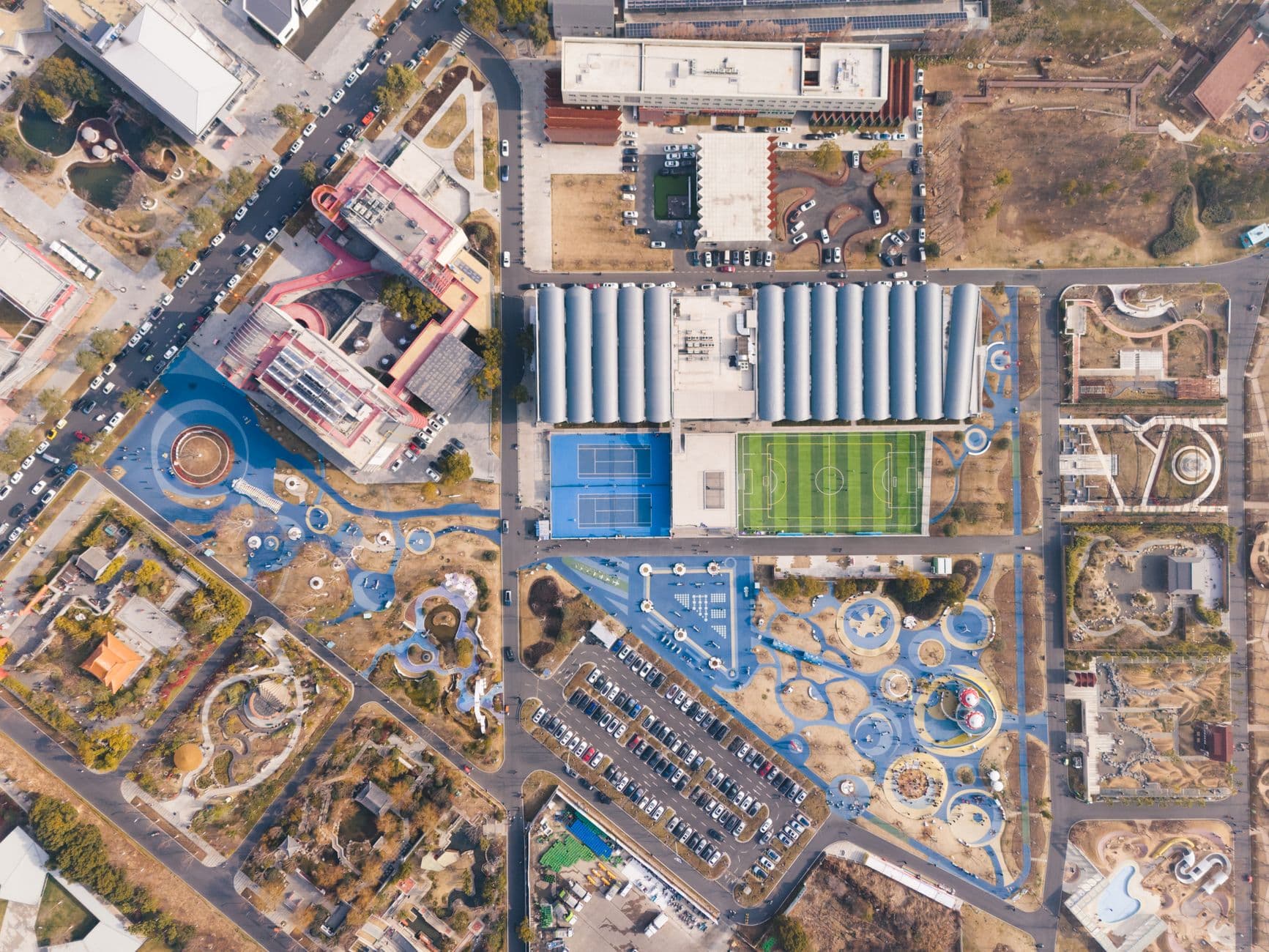
The Logic of building a Cathedral for 22 Men
Morocco has decided that the best way to handle the 2030 World Cup is to build a stadium that could comfortably house the entire population of a mid-sized European city. The Grand Stade Hassan II isn't just a place to watch people kick a ball; it is apparently the cornerstone of a brand-new 'satellite city' near Casablanca. It is a bold, visionary strategy that assumes the best way to grow an economy is to build a giant concrete bowl and pray that a high-speed rail line makes people want to live next to a structure that is empty 340 days a year.
Historically, World Cup stadiums have a charming habit of becoming 'white elephants'—expensive, decaying husks that local governments can’t afford to demolish. Morocco’s solution to this is truly innovative: if the stadium is too big to be a white elephant, just call it an 'infrastructure hub' and build a city around it. It’s the urban planning equivalent of buying a pair of size 14 shoes for a toddler and hoping the kid grows into them before they trip and break their neck.
By 2030, this $500 million monument to ambition will sit at the center of a logistical web. The theory is that the stadium will attract investment, which will attract residents, who will then presumably enjoy the aesthetic of living in the shadow of a tent-inspired roof that looks like it was designed by an architect who had a very stressful camping trip. It’s a flawless plan, provided you don't look at any other stadium project from the last fifty years.
Solving Traffic with 115,000 Extra People
There is a certain genius in placing a mega-stadium at the heart of a new urban center. Usually, planners try to put stadiums near existing transit to minimize chaos. Morocco is flipping the script by creating the chaos first and then building the transit as a desperate rescue mission. The Al Boraq high-speed rail line is being extended because, as we all know, there is no better way to spend national funds than ensuring 100,000 people can leave a single location at the exact same time twice a month.
Photo by Theo Felten on Pexels
The 'satellite city' model is particularly inspired. Instead of fixing the existing, crumbling infrastructure in Casablanca or Rabat, the government has opted for the 'New Game' button on the urban planning simulator. Why deal with the messy reality of ancient sewers and narrow streets when you can start fresh in the dirt? It’s much easier to imagine a utopia when there are currently no people there to ruin the rendering with their actual needs.
This isn't just about football; it’s about 'redefining the Global South.' We are told this stadium will be a beacon of progress. It will certainly be a beacon of something, mostly likely a beacon of light pollution that can be seen from Mars, but calling it an anchor for a city is a bit like calling a massive anchor the most important part of a boat. It keeps the boat from moving, which is exactly what a massive debt-servicing project does to a national budget.
The Intercontinental Handshake
The 2030 World Cup is already a logistical fever dream, spanning three continents and six countries. Morocco, Spain, and Portugal are the main hosts, but Argentina, Uruguay, and Paraguay are getting 'celebratory' matches because FIFA’s internal logic operates on the same plane of reality as a Salvador Dalí painting. In this sprawling madness, Morocco wants to stand out by having the biggest room in the house.
If you're going to share a tournament with five other nations, you have to assert dominance. You don't do that with 'sensible seating capacities' or 'multipurpose community spaces.' You do it by building a 115,000-capacity stadium that requires its own zip code. It’s a geopolitical power move disguised as a sports venue. Spain might have the history, but Morocco will have the most stairs.
This 'Stadium-as-Infrastructure' gamble assumes that the spectacle of the World Cup will leave behind more than just memories of overpriced concessions and VAR controversies. It assumes that a sports venue can function as a heart for a living, breathing city. If it fails, Morocco doesn't just have a white elephant; it has a white elephant the size of a mountain, surrounded by a ghost town that has really, really fast trains passing through it.
What This Actually Means
At its core, the Grand Stade Hassan II is a $500 million bet that the 'build it and they will come' philosophy works better in the 21st century than it did in the 20th. By labeling the stadium as 'infrastructure' rather than 'entertainment,' the Moroccan government is attempting to bypass the decades of evidence suggesting these projects are fiscal black holes. They aren't building a stadium; they are building a reason for the world to look at Morocco and ignore the fact that the money could have probably paved every road in the country twice over.
This is the new playbook for the Global South: using mega-events to force-march urban development into existence. It’s high-speed, high-risk, and extremely high-capacity. If it works, Morocco looks like a visionary leader in 'stadium-centric' urbanism. If it fails, they’ve just built the world’s most expensive place to watch a 0-0 draw between two teams that didn't even want to fly that far in the first place.
Ultimately, the stadium will be completed, the VIPs will drink their champagne, and the high-speed trains will whisper past the massive concrete tent. Whether anyone actually lives in the 'satellite city' five years later is secondary to the fact that for one month in 2030, Morocco had the biggest chair at the table. And in the world of international prestige, size is the only thing that actually seems to matter to the people holding the checkbook.
Quick Answers
Is a 115,000-seat stadium actually necessary for football?
No, unless you are planning to host a match between the two most popular religions on Earth. Most clubs struggle to fill 40,000 seats, making this the ultimate 'just in case' purchase.
Will the 'satellite city' actually happen?
It will exist on paper and in beautiful 3D renderings for years. Whether it becomes a thriving metropolis or a collection of luxury apartments owned by offshore holding companies is the $500 million question.
Why build it in the middle of nowhere?
Because it’s very hard to fit 115,000 people and a giant tent into an existing city without knocking down things people actually use, like houses and businesses. Empty dirt doesn't complain about noise violations.