
There is a specific brand of madness reserved entirely for people who look at a 24-foot rowboat, look at the Pacific Ocean, and think, "Yes, I will use my literal arms to drag myself across that." It takes about 30 to 60 days to row from California to Hawaii. That is two full months of sitting on a wet plastic seat, sliding back and forth, and looking at water. Just water. Blue water under a blue sky, meeting at a blue horizon.
Eventually, your brain realizes it has been unplugged from the sensory grid. Human brains are drama queens; they cannot handle quiet time. When you deprive them of gossip, traffic, and grocery store receipts, they start manufacturing their own reality. This is the sensory monotony paradox. You aren't losing your mind because something terrifying is happening; you are losing your mind because absolutely nothing is happening.
The Brain is a Terrible Roommate
Imagine your subconscious is a toddler left in a room with no toys. For the first few days, it’s fine. By week three, it is drawing on the walls with its own feces. In the middle of the ocean, this manifests as "The Third Man" phenomenon, where solo rowers suddenly become convinced they have a passenger.
This isn't a vague, ghostly feeling. It is highly specific. Rowers have reported trying to hand a freeze-dried beef stroganoff to a non-existent co-pilot. They worry that the imaginary guy in the bow cabin isn't getting enough sleep.
You are burning 8,000 calories a day, your hands are covered in salt sores, and now you have to play host to a ghost who doesn't even help with the rowing. It is the ultimate psychological tax. Your mind gets so starved for a chat that it literally hallucinates a guy named Gary just so you can argue about whose turn it is to scrape barnacles off the rudder.
When the Ocean Starts Singing Sea Shanties
It gets weirder than imaginary friends. The human auditory system is basically a giant microphone with the gain turned up to maximum. In the silence of the deep ocean, the rhythmic slap-slap of waves against a carbon-fiber hull starts to sound like a playlist.
Athletes report hearing full symphony orchestras, distant cocktail parties, or a stadium of people chanting their name. One rower reported hearing a phone ringing continuously for four days. Do you know how stressful it is to hear a phone ringing in the middle of the ocean? You can’t answer it. What if it’s the IRS? What if it’s a scammer asking about your boat's extended warranty?
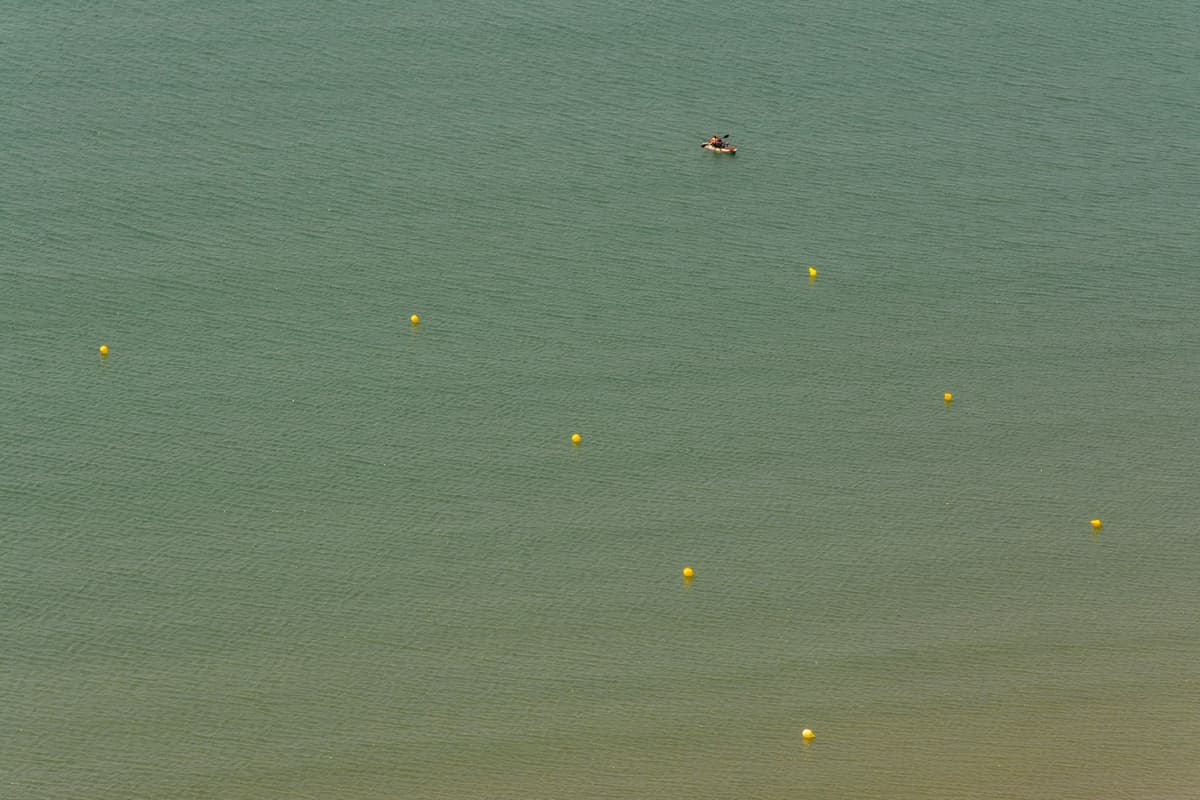
Photo by Jan van der Wolf on Pexels
Your brain is trying to find patterns in white noise. It takes the white noise of the wind and the sloshing water and tries to EQ it into something recognizable. Unfortunately, your brain has terrible taste in music, so instead of Mozart, you usually get a looped version of the local news jingle from your childhood town.
The $10,000 Vacation to Go Insane
People pay actual money to do this. The entry fee for some ocean rowing races can top $10,000, and that doesn't include the boat. You are paying five figures to experience a psychological breakdown that you could easily achieve for free by staying awake for four days in a Costco parking lot.
- Day 1-5: "I am one with nature. The sea is my mother."
- Day 10: "The sea is a terrible mother. I am cold."
- Day 20: "I believe the clouds are plotting to steal my peanut butter."
- Day 30: "My left oar is married to my right boot, and I am the priest officiating their wedding."
We love to romanticize these expeditions. We write books about the triumph of the human spirit. But if you talk to these rowers after they land in Oahu, they don't look like triumphant conquerors. They look like people who have just been released from a very damp, very long hostage situation where the kidnapper was their own prefrontal cortex.
What This Actually Means
Our brains did not evolve to be alone in a blue room. We are tribal monkeys designed to bicker over berries and complain about the weather with other monkeys. When you strip away the noise of civilization, you don't find inner peace; you find a desperate, clawing hunger for input.
This sensory breakdown proves that sanity is not a default state. Sanity is an active maintenance project that requires external inputs to stay calibrated. We need the lampposts, the terrible drivers, and the annoying emails to remind us where we end and the universe begins.
So, the next time you feel overwhelmed by the modern world and think about "getting away from it all," maybe just go to a park. Do not buy a rowboat. Your brain is a terrible entertainer, and if you leave it alone in the ocean, it will make you throw a dinner party for a bucket of sea slops.
Quick Answers
Do solo rowers actually see things that aren't there?
Yes. They see everything from phantom cargo ships that disappear when they get close, to imaginary islands, to cartoon characters sitting on the bow of their boat.
Why does the brain hallucinate in empty spaces?
When the brain receives zero sensory input, it gets desperate and turns up its internal signals, mistaking its own thoughts and memories for external reality.
How do athletes cope with these hallucinations?
Most experienced rowers just learn to accept them. They treat the hallucinations like a weird television show, acknowledging the fake people and then going back to rowing.