The monopoly on complex theoretical physics has quietly collapsed. For decades, the path to contributing to fundamental science was rigid: secure admission to an elite undergraduate program, endure the grueling gatekeeping of a PhD, and compete for a dwindling pool of underpaid postdoc positions. Without the backing of a major research university, you were effectively locked out of the conversation, denied access to the necessary literature, computational clusters, and peer groups.
That wall has been breached. The release of comprehensive, open-access curricula—most notably Susan Fowler’s seminal "So You Want to Learn Physics" guide, updated in 2021—has provided a rigorous, step-by-step roadmap that replicates a Stanford or MIT education from a home desk. Combined with open-access repositories like arXiv, cheap cloud computing, and decentralized funding models, we are witnessing the rise of the unaffiliated physicist. This is not a hobbyist class playing with amateur astronomy; it is a cohort of hyper-specialized researchers bypasssing the university system entirely to do real, publishable work.
The Decentralized Toolkit
To understand how this shift became possible, one must look at the democratization of the tools of the trade. Twenty years ago, running complex quantum mechanics simulations required access to a university-owned supercomputer. Today, a standard consumer desktop equipped with an Nvidia RTX 4090 GPU—retailing for around $1,600—possesses more raw computational power than the supercomputers of the late 1990s.
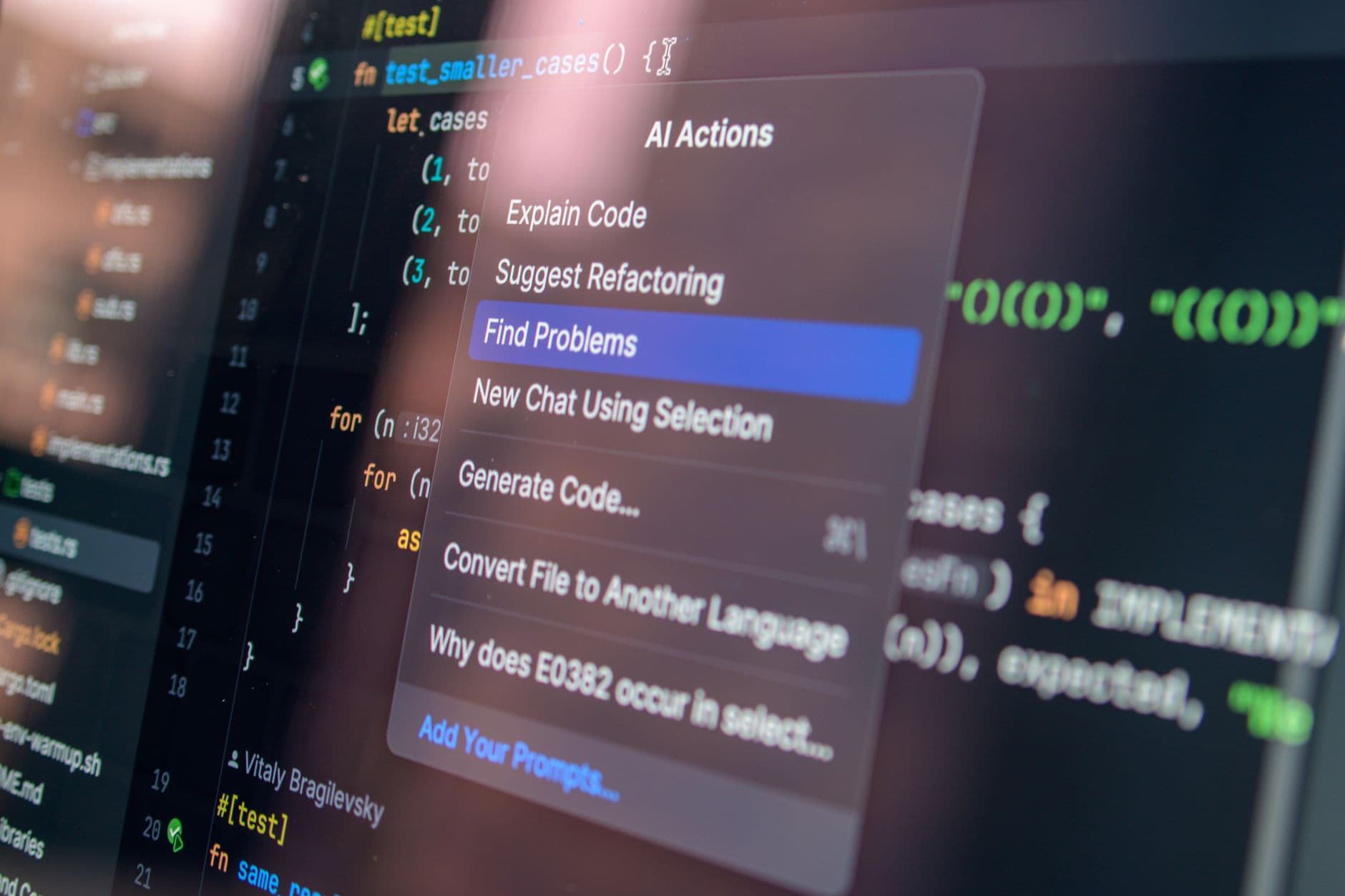
Software has followed a similar trajectory of radical accessibility. High-level mathematical computation packages, once protected by prohibitively expensive institutional software licenses costing thousands of dollars per user, have been superseded by open-source alternatives. Python libraries like QuTiP for quantum optics, or Julia for differential equations, are free, constantly updated by global communities, and running on personal machines worldwide.
- Literature access: Platforms like arXiv and Sci-Hub have rendered the traditional university library card obsolete for theoretical work.
- Computation: Cloud platforms allow independent researchers to rent massive computing clusters by the hour for the cost of a cup of coffee.
- Curricula: Structured guides map out every textbook and problem set from classical mechanics to quantum field theory.
This technological convergence has eliminated the material advantages that universities once held over the individual. The only remaining bottleneck is time, and increasingly, independent researchers are finding ways to fund that too.
The Autodidact’s Paradox
Yet, this democratization introduces a profound systemic tension: the Autodidact’s Paradox. Because these independent researchers do not answer to university departments, grant committees, or the pressure to publish frequently in legacy journals, they possess an unprecedented degree of intellectual freedom. They can spend five years pursuing a highly speculative, high-risk theory that a tenure-track professor would be forced to abandon in favor of safer, incremental papers.
However, this freedom comes at the cost of isolation. Without the daily friction of department seminars, peer review, and casual hallway debates, independent physicists risk falling into intellectual echo chambers. They can easily spend thousands of hours mastering incredibly complex mathematics, only to realize they have spent years solving a problem that was resolved in 1982, or worse, pursuing a theory that is mathematically beautiful but physically irrelevant.
Photo by Tima Miroshnichenko on Pexels
The challenge for the modern self-taught physicist is no longer acquiring the knowledge; it is maintaining a rigorous feedback loop. Without institutional guardrails, the line between unrecognized genius and highly sophisticated eccentricity becomes dangerously thin.
Funding Outside the Gates
The traditional academic funding model is notoriously risk-averse. The National Science Foundation and other major grant-giving bodies favor established researchers with proven track records, leaving little room for unorthodox theories. Independent physicists are bypassing this bureaucracy by turning to decentralized funding, micro-grants, and crowd-sourced patronage.
Platforms like Patreon, Substack, and specialized scientific crowdfunding portals are allowing researchers to pitch their ideas directly to the public or wealthy tech philanthropists. A researcher working on quantum gravity can now secure $4,000 a month in recurring donations from a global audience of science enthusiasts. This is not enough to build a particle accelerator, but it is more than enough to cover rent, coffee, and cloud computing costs for a theorist.
This shift is creating a new class of scientific content-creators who are also active researchers. They publish their progress in public-facing journals, write explanatory essays on Substack, and release their code on GitHub. The peer-review process is happening in real-time, in public, among a global network of peers, rather than behind the closed doors of legacy publishing houses.
What This Actually Means
We are not headed toward a future where universities become obsolete. The massive experimental infrastructure required for high-energy physics—such as the Large Hadron Collider at CERN, which cost over $4.4 billion to build—will always require state backing and massive institutional collaboration. The home-bound physicist is not going to discover a new fundamental particle in their garage.
Instead, we are seeing a bifurcation of scientific labor. Universities will remain the custodians of big, capital-intensive experimental science. Meanwhile, the frontier of theoretical physics, mathematical modeling, and computational simulation will increasingly be pushed forward by independent operators working outside the traditional hierarchy.
This academic bypass is a net positive for scientific progress. By lowering the barrier to entry, we are inviting a broader, more diverse set of minds into the field—minds that are not conditioned by the conformity of graduate school. The next major breakthrough in theoretical physics may not come from an Ivy League blackboard, but from a quiet apartment, funded by a thousand strangers who simply wanted to see what happens next.
Quick Answers
Can someone actually learn graduate-level physics without going to university?
Yes. The mathematical and theoretical frameworks of modern physics are entirely public. With disciplined study using structured guides like Susan Fowler's curriculum, a dedicated individual can reach equivalent technical proficiency at home.
How do independent physicists get their work peer-reviewed?
They bypass traditional journals by publishing preprints on arXiv and sharing their methodology and code openly on platforms like GitHub. Peer review occurs dynamically through community scrutiny, public discussions, and collaboration with other researchers.
Is this trend limited to theoretical physics?
Yes, largely. Theoretical and computational physics only require a computer and mathematical skill. Experimental physics, which requires cleanrooms, particle accelerators, or cryogenic equipment, remains firmly locked behind university and government walls.