The Joy of Inconsistent Math
I’ve always admired the tech industry’s commitment to making the simple act of existing online as transparent as a glass house in a spotlight. While we were all busy worrying about cookies or cross-site tracking, the real betrayal was happening deep inside the silicon. Since Chromium 148, it turns out that Math.tanh—that lovely little function that calculates a hyperbolic tangent—is actually a highly efficient digital serial number. It’s a beautiful irony: the one thing computers are supposed to be good at is being consistent, and yet their tiny, hardware-specific failures are exactly what makes us trackable.
Hardware determinism is the fancy way of saying that your Intel chip and your neighbor’s Apple M2 chip don't actually agree on what math looks like. They’re like two students who both get the answer right on a test, but one uses a slightly different colored pen, and that’s enough for a surveillance capitalist to build a profile on you. We were promised a world where software was platform-agnostic, but your processor’s specific way of rounding a decimal point at the fifteenth digit is apparently a more reliable ID than your social security number.
The Silicon Signature You Didn't Ask For
Most people assume that 1+1 equals 2 regardless of whether you’re using a toaster or a supercomputer. In the world of floating-point math, that’s a dangerously optimistic assumption. Because different CPU architectures implement the IEEE 754 standard with their own little quirks and optimizations, the result of a complex calculation like Math.tanh(1.0) can vary by a few quadrillionths. To a human, that’s a rounding error. To a script running in your browser, that’s a fingerprint as unique as a smudge on a window.

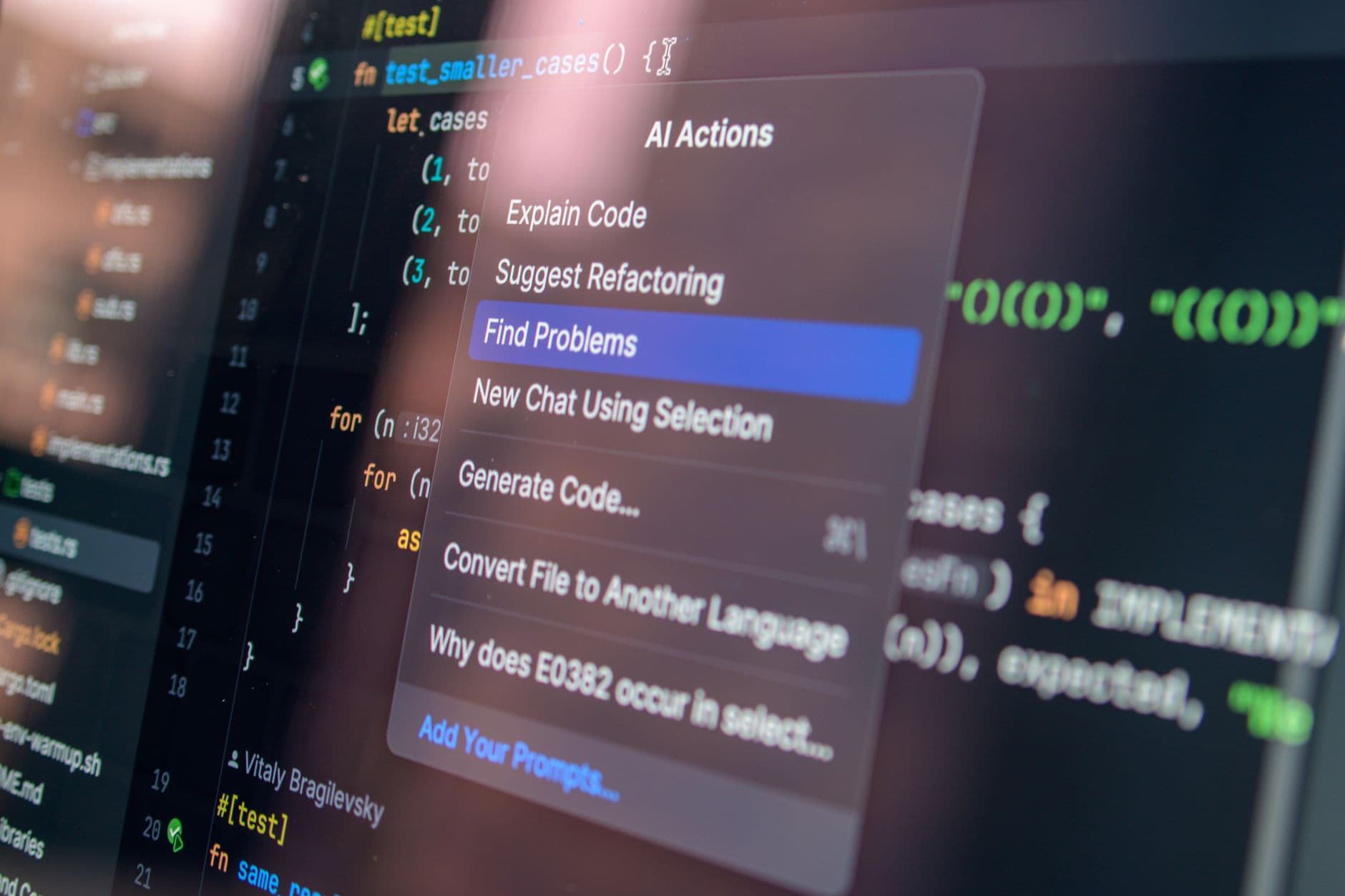
Photo by Turgay Koca on Pexels
This isn't a bug; it's a feature of the physical reality of manufacturing chips. You can’t just make a billion transistors behave exactly the same way across different brands and generations. So, while you think you’re just loading a webpage, the site is quietly asking your CPU to do some trigonometry. It then looks at the microscopic variance in the result and says, "Ah, yes, this is a 2019 Intel Core i7 running Windows 10 with these specific microcode updates." It’s like being identified by the specific way you sneeze.
Browsers: The Great Enablers
Chromium 148 didn't necessarily break math, but it certainly highlighted the futility of the privacy arms race. We have spent a decade building complex blockers for trackers, only to be undone by the fundamental physics of the hardware we’re using to run the blockers. It’s a masterclass in futility. You can clear your cache, rotate your IP address, and wear a tinfoil hat, but as long as your CPU still calculates tangents the way it was born to, you are a known entity.
What’s truly impressive is the sheer scale of this. This isn't some niche exploit that requires a PhD and a laboratory. It’s built into the engine that powers roughly 70% of the world's web browsing. Every time a browser update "optimizes" how math is handled to squeeze out another 0.5% of performance, they effectively sharpen the resolution of the image they're taking of your hardware's soul. We traded our anonymity for slightly faster loading times on cat videos, and honestly, that tracks for our species.
What This Actually Means
At the end of the day, this is just another reminder that "privacy" in the digital age is a polite fiction we all agree to maintain so we don't lose our minds. The tension between cross-platform software—which wants everything to be the same—and silicon reality—which is messy and unique—is a gap that advertisers have learned to bridge with surgical precision. Your hardware is a snitch, and it’s been whispering your specs to every server you’ve talked to for years.
There is no "fix" for this that doesn't involve making all computers slower or less efficient. To hide the fingerprint, browsers would have to force every CPU to fake a standardized, lower-precision result, which defeats the purpose of having high-performance hardware in the first place. We are trapped in a cycle where the very tools that make our devices powerful are the same ones that make us inescapable.
So, the next time you feel a sense of digital autonomy, just remember Math.tanh. It’s sitting there, waiting for a script to call it, ready to tell the world exactly who you are based on a rounding error. It turns out the most effective way to track a human isn't through their behavior, but through the unique, flawed heartbeat of their processor.
Quick Answers
Can I disable Math.tanh to stay private?
No, because half the internet would break, and your browser would just find another one of the dozen mathematical functions that also leak your hardware ID.
Does using a VPN help with this?
Not even a little bit; a VPN hides your location, but it doesn't change the way your Intel chip handles floating-point arithmetic.
Is this only a problem for Chrome users?
Technically no, but since Chromium powers almost everything—Edge, Brave, Vivaldi—you're likely affected unless you're using a very specific, very slow hardened browser.
Why don't they just standardize the math?
Because "standardizing" math across different chip architectures would require every chip manufacturer to agree on the exact same shortcuts, which would kill the competitive performance gains they all brag about.