The launch of Hackney on Hacker News looks, at first glance, like just another useful consumer tool. It is a simple interface that aggregates pricing across Uber, Lyft, Waymo, and other robotaxi services, letting users optimize their commute down to the dollar. But beneath this clean utility lies a stark macroeconomic revelation. By placing human-driven services side-by-side with autonomous fleets in a single, real-time marketplace, the software exposes a massive, structural pricing divergence. We are no longer watching a standard competition between brands; we are watching a capital-intensive machine fleet systematically underbid human labor.
This is the beginning of what economists call the "robotaxi deflation." For a decade, the ride-hailing industry relied on a fragile balance of venture capital subsidies and flexible human labor to artificially lower prices and build passenger volume. That era is over. The entry of autonomous vehicles into aggregated marketplaces changes the metric of success from market share to pure utilization math.
The Fatal Flaw of the Human Balance Sheet
Human labor carries a hard floor of marginal cost. A driver requires a minimum wage, gas, insurance, and vehicle maintenance, none of which scale down with volume. When an Uber driver sits idle in a parking lot waiting for a ping, their cost to the platform is low, but their personal economic viability plummets. Human beings cannot survive on zero-utility hours.
Autonomous fleets operate under an entirely different accounting ledger. A Waymo vehicle represents a massive upfront capital expenditure—often estimated at over $100,000 per vehicle when factoring in lidar, sensor suites, and redundant systems. Once that asset is on the road, however, the marginal cost of a single mile drops to near zero. The primary financial enemy of an autonomous fleet is not labor cost, but depreciation.
Because hardware depreciates whether it is moving or sitting still, a robotaxi operator must keep its vehicles moving constantly to amortize that massive upfront capital cost. This creates an intense pressure to lower prices to ensure the vehicles are never idle. A human driver cannot afford to drop their rates by 60% during a Tuesday morning lull; a robotaxi fleet manager not only can, but absolutely must, to keep utilization rates above the critical threshold.
The Aggregator as a Pricing Guillotine
Platforms like Hackney act as an accelerant for this dynamic. In a fragmented market, information asymmetry protects high prices. If a consumer has to open three different apps to compare prices, they often default to convenience. Aggregators eliminate this friction, forcing direct, head-to-head price competition on every single trip.

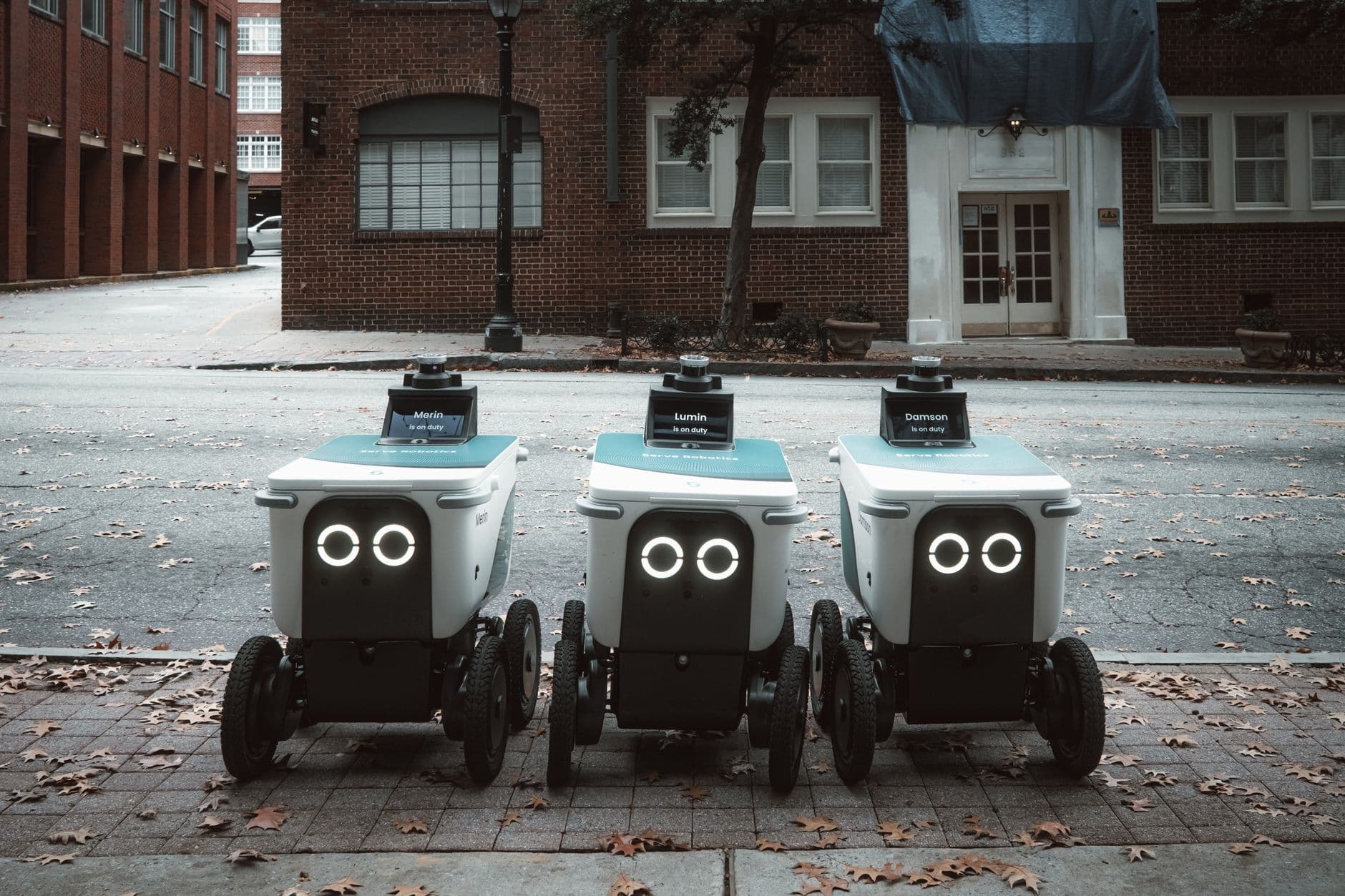
Photo by Roger Brown on Pexels
When a robotaxi fleet is plugged into a real-time aggregator, its algorithms can detect drops in demand instantly and slash prices to undercut human drivers. This is not predatory pricing in the traditional antitrust sense; it is the logical result of managing high-fixed-cost, low-marginal-cost assets. The machine can afford to price its service at just a fraction above the cost of electricity and tires because any revenue that contributes to paying down the hardware depreciation is better than zero.
This creates a downward pressure on pricing that human drivers simply cannot survive. The data suggests this is already happening in early-adoption markets like San Francisco and Phoenix. As autonomous fleet density increases, the price-per-mile of an autonomous ride is projected to drop below $1.00, compared to the current human-driven average of roughly $2.00 to $3.00. No amount of human hustle can bridge a 60% structural cost deficit.
The New War for Real-Time Utilization
The battlefield of urban transportation has officially shifted. The early phase of ride-hailing was a land grab for passenger volume, funded by billions in venture capital. The current phase is an optimization war. Winning no longer means having the most users; it means having the most sophisticated routing, maintenance, and dispatch algorithms to keep expensive hardware active.
Consider the operational complexity of managing a fleet of 10,000 autonomous vehicles in a dense metropolis. Every minute a vehicle spends recharging, undergoing sensor calibration, or sitting in deadhead transit between fares is a loss. Operators are forced to invest heavily in predictive demand modeling. They must position vehicles not where demand is right now, but where it will be in twenty minutes, down to the specific city block.
- Predictive repositioning: Moving vehicles ahead of demand spikes to minimize empty miles.
- Dynamic maintenance routing: Scheduling cleaning and charging during localized lulls to maximize peak-hour availability.
- Multi-modal integration: Automatically shifting vehicles between passenger transport, package delivery, and mapping runs to ensure 24/7 utilization.
This level of optimization requires a scale of infrastructure and data processing that individual human contractors cannot replicate. The gig worker, once hailed as the ultimate flexible labor force, is revealed to be a temporary bridge. They filled the gap while the technology and capital markets matured, and they are now being squeezed out by the sheer efficiency of centralized asset management.
What This Actually Means
The rise of tools like Hackney marks the transition of autonomous vehicles from a novel tech experiment to a disruptive macroeconomic force. The deflationary pressure of machine fleets will inevitably force a restructuring of urban labor markets. Millions of people globally rely on driving as a primary or secondary source of income; that safety net is actively being unraveled by the cold logic of depreciation schedules.
Furthermore, this shift will redefine city infrastructure. As autonomous rides become significantly cheaper than owning a vehicle or even using public transit, we will see a surge in total vehicle miles traveled. Cities will be forced to manage congestion not through parking restrictions, but through active curb management and congestion pricing to prevent empty autonomous vehicles from constantly circling the blocks to avoid parking fees.
Ultimately, the robotaxi deflation is a preview of the broader automation wave. It proves that when machines enter a labor-intensive market, they do not just compete; they rewrite the financial rules. The victory will not go to the platform with the most loyal drivers or the best brand affinity. It will go to the operators who can run their hardware at 95% utilization, squeezing every possible cent of value out of a depreciating asset before the next generation of technology renders it obsolete.
Quick Answers
Why are robotaxis able to price rides so much lower than human drivers?
Robotaxis have high fixed costs but extremely low marginal costs per mile. Once the vehicle is purchased, the operator must keep it moving to offset depreciation, allowing them to price rides near the cost of electricity and maintenance during low-demand periods.
Will human ride-hail drivers disappear entirely?
Yes, in dense urban areas where autonomous fleets can operate efficiently. Humans will likely be relegated to niche roles, rural areas, or specialized transport services where human assistance is a premium requirement.
How do aggregators like Hackney change the market dynamics?
Aggregators eliminate price friction and information asymmetry, forcing different platforms into direct, real-time price competition. This accelerates price deflation by forcing autonomous fleets to aggressively lower rates to maximize their utilization metrics.