The Genius Who Scaled Down
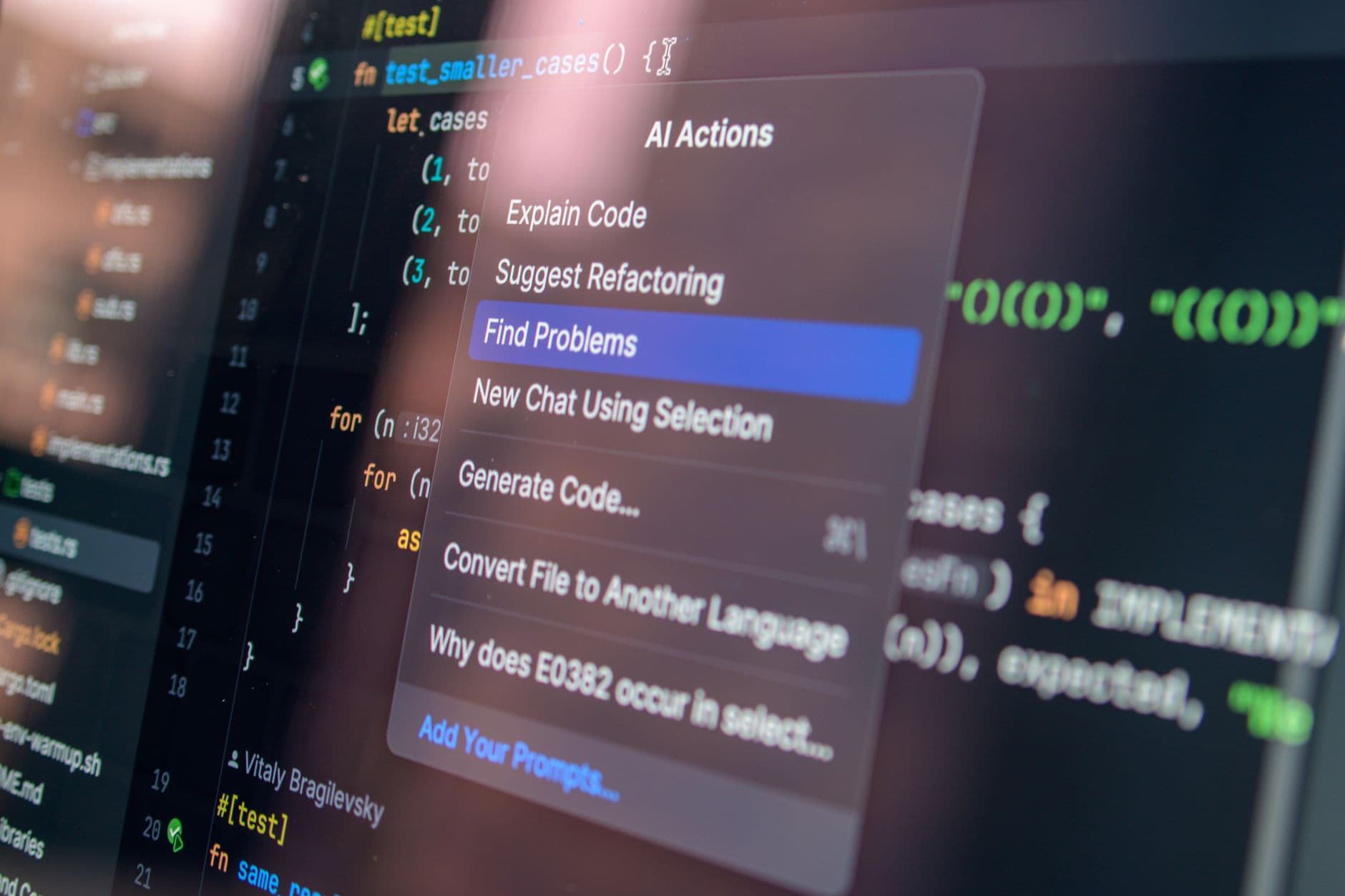
Terry Tao is a man who solves mathematical problems that would make a supercomputer sweat, yet he’s spent a non-trivial amount of his recent time coaxing AI agents into fixing niche Mac apps and building custom utilities. It is truly heartening to see one of the greatest minds of our generation relegated to the same role as a junior DevOps intern, haggling with a Large Language Model over why a specific Python library won't load on macOS Sonoma. We’ve reached the peak of human civilization: the smartest man in the room is now a glorified prompt engineer for a glorified calculator.
There is a delicious irony in watching a Fields Medalist play with these toys. While Silicon Valley spent a decade trying to convince us that we needed a centralized, curated, and heavily taxed App Store for every minor task, Tao is out here proving that most software is actually just a collection of vaguely coherent thoughts that a sufficiently patient robot can assemble on the fly. He’s not waiting for an update from a developer who went defunct in 2014; he’s just forcing the AI to perform digital necromancy on dead codebases.
The Death of the Polished Product
We used to value things like "UI consistency" and "user experience design." Now, we value the ability to yell at an LLM until it spits out a functional .dmg file that does exactly one thing. This is the new 'Just-In-Time' software architecture. Why bother learning Swift or Rust when you can just describe a vibe to a coding agent and hope the hallucinations are kept to a minimum? It’s the ultimate democratization of mediocrity, and frankly, it’s about time.
The barrier to entry for software creation has been lowered so far it’s currently a tripping hazard in the basement of the internet. We are moving toward a fragmented reality where everyone has their own bespoke, slightly buggy version of a calculator or a file converter. This isn't just prototyping; it's a rejection of the idea that software needs to be a product. Software is now just a temporary solution to a temporary problem, as disposable as a paper plate and twice as likely to fall apart if you put too much weight on it.
Photo by khezez | خزاز on Pexels
The Rise of the Automated Script-Kiddie
Let’s be honest about what is actually happening: we are replacing skilled craftsmanship with high-speed automated guesswork. Tao is showing us that for 95% of what we actually need computers to do, the "correct" way to write code is irrelevant. If the script runs and the data moves from point A to point B without summoning a literal demon, it’s a success. The era of the $150,000-a-year engineer who specializes in CSS padding is looking increasingly like a historical anomaly we’ll struggle to explain to our grandchildren.
- No more waiting for 'Product Managers' to approve a feature.
- No more 'Roadmaps' that lead nowhere.
- No more 'Community Guidelines' on how a button should look.
- Just a man, a prompt, and a terrifyingly large amount of unoptimized boilerplate code.
This "Prototyping Populism" means the internet is about to get a lot weirder and a lot more broken. We are trading the slick, sterile walls of the Apple ecosystem for a chaotic bazaar of AI-generated scripts that only work on the machine they were birthed on. It’s glorious. It’s like watching someone build a car out of duct tape and sheer willpower, except the duct tape is made of tokens and the willpower belongs to a server farm in Iowa.
What This Actually Means
The real shift isn't that AI is "smart" enough to code; it’s that we’ve finally admitted most of our software needs are incredibly basic and don't require a committee to solve. When a guy like Terry Tao uses these tools to bypass the traditional software lifecycle, he isn't just being efficient. He’s announcing that the professional software developer is now competing with a very fast, very obedient intern who never sleeps and doesn't ask for equity.
We are headed for a world of 'Ephemeral Apps'—software that exists for forty-five minutes to solve a specific data visualization problem and is then deleted forever. The concept of a "software version" will become a relic of the past, as quaint as a physical map or a landline phone. If you can’t generate your own tools in real-time, you’re just a consumer in a world that has moved on to being a creator of disposable garbage.
Ultimately, this is the end of the 'App Store' era. We don't need a store if we have a factory in our pocket. Sure, the factory occasionally produces a toaster that explodes if you ask for rye bread, but at least you didn't have to pay $4.99 for a subscription to the Toaster Pro Max edition. We’ve traded stability for autonomy, and I for one can’t wait to see the first major infrastructure collapse caused by a piece of code that was written by a chatbot and 'verified' by a mathematician who was just trying to convert a PDF.
Quick Answers
Is coding dead?
No, but the prestige of knowing where the semicolons go is currently being liquidated for pennies on the dollar.
Should I learn to prompt like Terry Tao?
Unless you also have a Fields Medal, your prompts will likely just result in the same mediocre 'To-Do List' app everyone else is making.
Is this the end of centralized software?
It’s the beginning of the end for mid-tier utility apps that charge you $20 a year to do something a Python script can do in four lines.