The Most Expensive Domino Tipping Contest in History
If you want to understand the current AI economy, stop looking at neural networks and start looking at the pawn shop. We have officially reached the 'Inception' level of corporate finance where companies like CoreWeave and Nebius are taking their Nvidia H100s—which cost roughly as much as a well-appointed suburban home—and handing them to lenders as collateral. They then take that borrowed cash, run back to Jensen Huang’s doorstep, and scream 'Give me more!' like a toddler who just discovered sugar. It is a closed loop of insanity that would make a subprime mortgage broker from 2008 weep with joy.
Imagine going to a bank, showing them your Honda Civic, and getting a loan based on the value of that Civic. Standard stuff. Now imagine using that loan to buy five more Civics, then using those five Civics to get a bigger loan to buy twenty more Civics. Eventually, you own a parking lot with a thousand cars, you owe the bank forty million dollars, and your entire net worth depends on the hope that the price of a used Honda Civic never, ever goes down. If people suddenly decide they prefer walking, or if a better car comes out, you aren't just broke—you are the epicenter of a localized tectonic shift.
Nvidia is essentially the only store in town, and they are selling the shovels for a gold rush where nobody has actually found any gold yet, but the shovels themselves are being traded like bars of bullion. We aren't just in a bubble; we are in a bubble that is being used as collateral to blow a second, even more translucent bubble inside the first one. It’s bubbly all the way down.
The Hardware-Backed Shadow Bank
This isn't just a quirky business strategy; it’s a shadow banking system where the 'gold standard' has been replaced by the 'H100 standard.' In a normal world, you borrow money based on your cash flow, which is a boring way of saying 'the money you actually make.' In the AI world, you borrow money based on your hoard of chips. CoreWeave managed to secure a $7.5 billion debt facility recently. For context, that is enough money to buy the professional sports team of your choice and still have enough left over to buy a small island where you can hide when the repo man comes for your Blackwell chips.
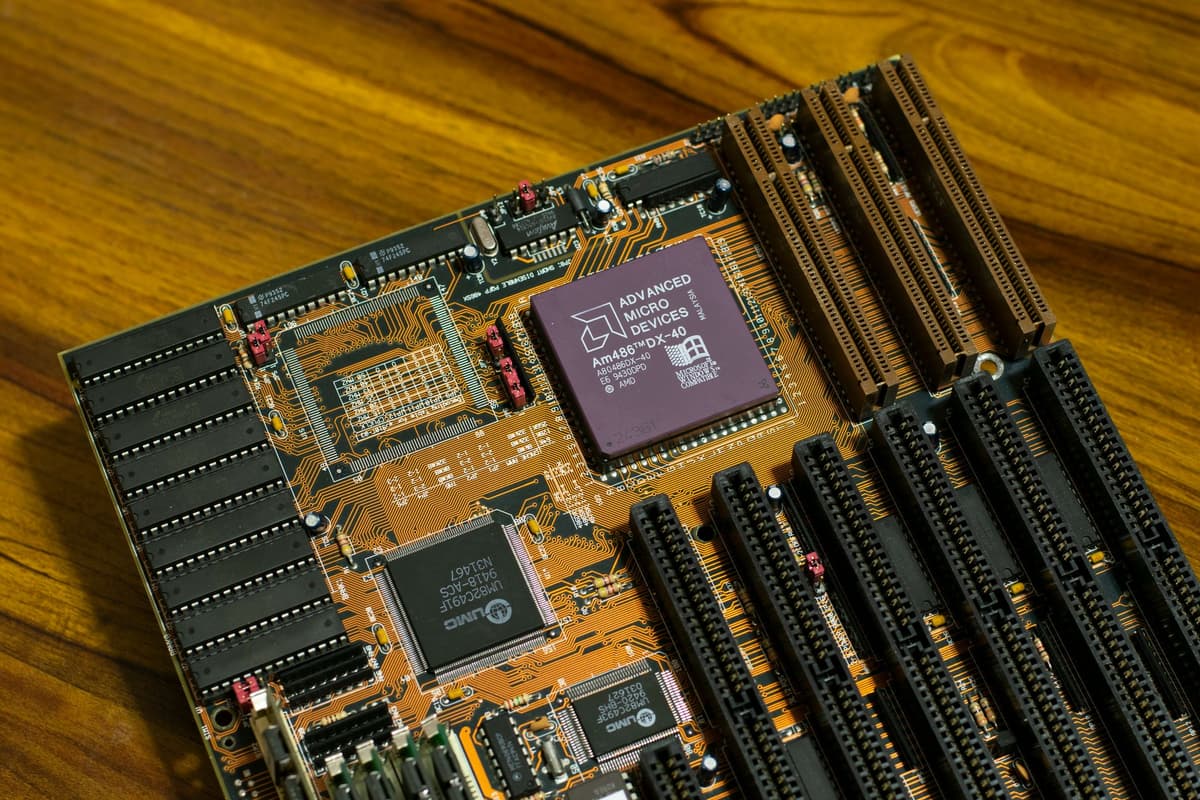
Photo by Nicolas Foster on Pexels
Lenders are falling over themselves to fund this because they believe these chips are liquid assets. They think they can flip an H100 on eBay if a startup goes belly up. And sure, right now, an H100 is more valuable than a kidney on the black market. But liquidity is a fickle mistress. The moment Microsoft or Google decides they have enough chips, or the moment a software breakthrough makes these specific cards obsolete, that 'collateral' turns into very expensive, very power-hungry paperweights. We are currently treating high-tech hardware, which depreciates faster than a banana in the sun, like it’s a plot of land in Manhattan.
There is something deeply hilarious about the circularity here. Nvidia invests in these startups. The startups then use that prestige to borrow billions. The startups then give those billions back to Nvidia. Jensen Huang gets to report record earnings, the startup gets a higher valuation, and the lenders get to pretend they are part of the 'future.' It’s the financial equivalent of a perpetual motion machine, and as any physics teacher will tell you right before they fail you, those eventually explode.
Why This Is Funnier Than It Is Scary
I find this funny because it reveals that for all our talk about 'Artificial General Intelligence' and the 'Singularity,' the actual backbone of the industry is just a classic leverage play. We are trying to build God, but we’re financing the project like a 19-year-old with his first credit card at a Best Buy. If I tried to tell a banker I wanted to collateralize my laptop to buy a better laptop, they would call security. If a startup does it with ten thousand laptops, they get a profile in the Wall Street Journal.
We have created a situation where Nvidia is the central bank, the manufacturer, and the primary beneficiary all at once. They are the casino, the dealer, and the guy outside selling watches. If the AI 'killer app' doesn't show up soon to pay off these massive debts, we’re going to see the most spectacular fire sale in human history. I look forward to buying a slightly used H100 for forty bucks in 2027 so I can play Minecraft at ten thousand frames per second while the global economy recovers from the Great GPU Deleveraging.
What This Actually Means
Ultimately, this 'GPU-collateralized' madness is a massive bet on the permanence of the hardware shortage. The entire house of cards stays standing only as long as demand outstrips supply. The second supply catches up—or demand craters because turns out, nobody wants to pay $20 a month for a chatbot that writes mediocre poetry—the value of that collateral vanishes. When the collateral vanishes, the loans get called. When the loans get called, the startups evaporate.
This isn't a tech trend; it's a game of musical chairs played with server racks. Nvidia is playing the music, and they own all the chairs. It’s brilliant business for them in the short term, but it builds a systemic fragility that should make anyone with a 401(k) a little sweaty. We’ve replaced 'too big to fail' with 'too many transistors to fail,' and I suspect the result will be roughly the same.
In the end, we’re witnessing the birth of a new kind of asset class that is half-commodity and half-delusion. It’s fascinating, it’s lucrative, and it’s arguably the funniest way to risk a global recession I’ve seen in at least a decade. Just make sure you aren't the one holding the bag when the music stops and the only thing left is a pile of very hot, very expensive fans.
Quick Answers
Is my GPU actually a bank account now?
No, your gaming rig is still a liability, but if you have 10,000 of them and a pitch deck, Wall Street will give you enough money to start a small country.
Why would banks accept chips as collateral?
Because they have FOMO and currently believe Nvidia chips are more stable than the US Dollar, which is a terrifying thought if you spend more than five seconds thinking about it.
What happens if AI turns out to be a dud?
The secondary market for GPUs will become so flooded that you’ll be able to get a supercomputer for the price of a Taco Bell Cantina Chicken Bowl.