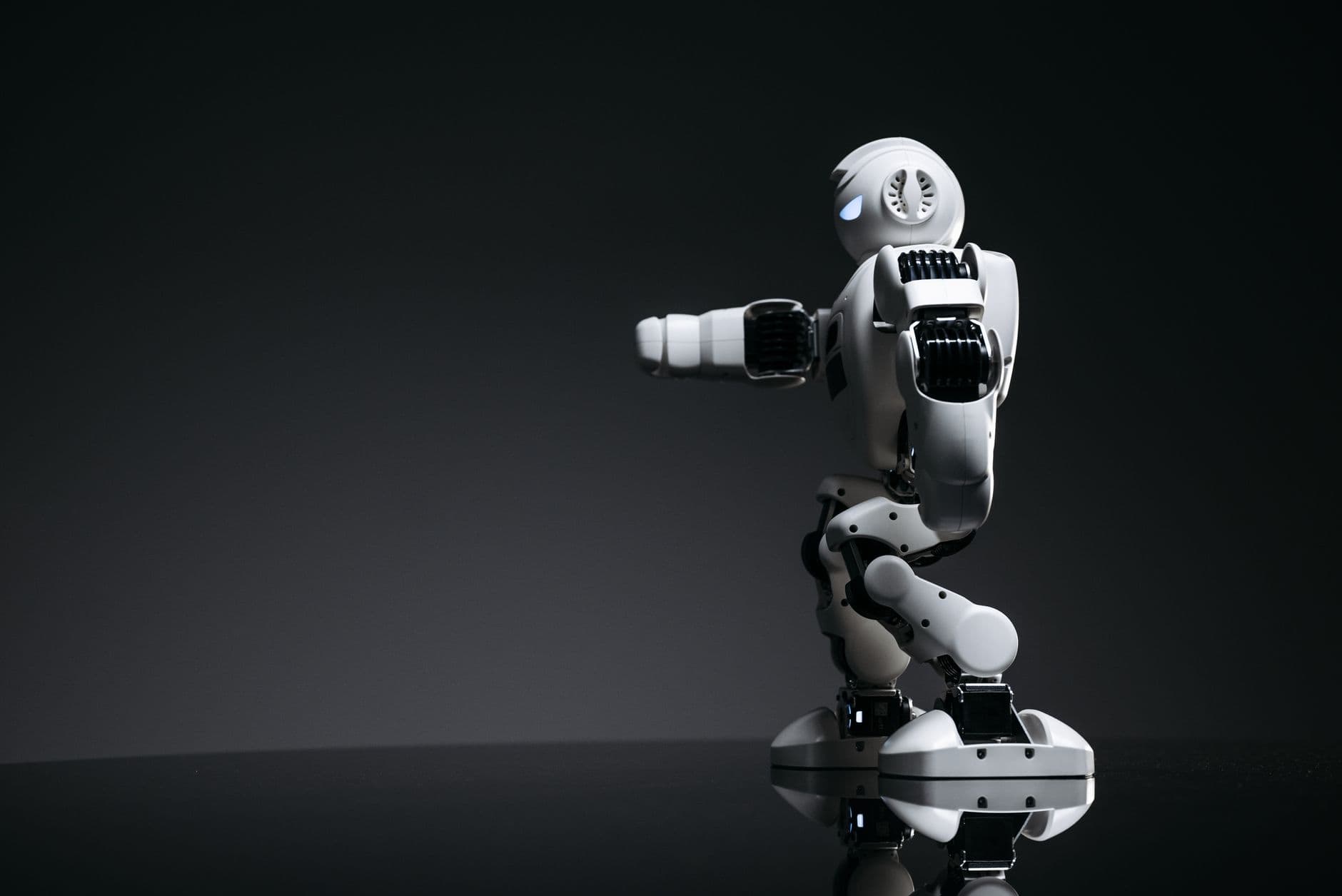
We have been lying to ourselves about how smart our robots are. For years, the pinnacle of consumer robotics has been a disk-shaped vacuum cleaner that spends forty-five minutes aggressively humping the base of a barstool because its lasers told it a portal to the fourth dimension might be hidden inside the chrome. We call this SLAM—Simultaneous Localization and Mapping—and it is essentially the art of screaming into a dark room and measuring how long it takes for the echo to bounce back. It is tedious, it is rigid, and it is profoundly stupid.
Then came Mistral’s announcement of Robostral Navigate. Instead of relying on a billion precise distance measurements to build a sterile coordinate grid, this new model attempts to give robots a semantic understanding of the world. It turns out that teaching a machine to recognize "that is a pile of laundry" is infinitely more useful than letting it calculate that a 0.4-meter obstacle exists at coordinate X: 14.2, Y: -8.9.
The Screaming Laser Method Has Failed Us
To understand why Robostral is a big deal, you have to appreciate the sheer, stubborn idiocy of traditional robotic navigation. Since the early 2000s, we have relied on LiDAR and SLAM. A robot equipped with SLAM operates like an extremely anxious surveyor. It shoots out lasers, measures the reflections, and constructs a highly detailed, completely lifeless map of empty space versus occupied space.
To a SLAM robot, there is no difference between a solid concrete wall and a hanging bed skirt. Both are simply "impenetrable void-boundaries." If you toss a crumpled-up receipt on the hardwood floor, the robot's sensors register a sudden, terrifying mountain range that must be bypassed at all costs.
This is why your robot vacuum gets trapped in a corner by a single discarded sock. It doesn't know what a sock is. It just knows that the universe has suddenly shrunk by three inches in the Z-axis, and its internal geometry engine is now having a panic attack. It has no concept of "pushing past soft fabric." It only knows the cold, hard geometry of despair.
Enter the Semantic Revolution
Robostral represents a shift from "where is this object" to "what is this object and should I care?" By utilizing vision-language-action models, the robot looks at a room the way a human does. Well, perhaps not a human who has had three coffees, but at least a human who can identify household objects.
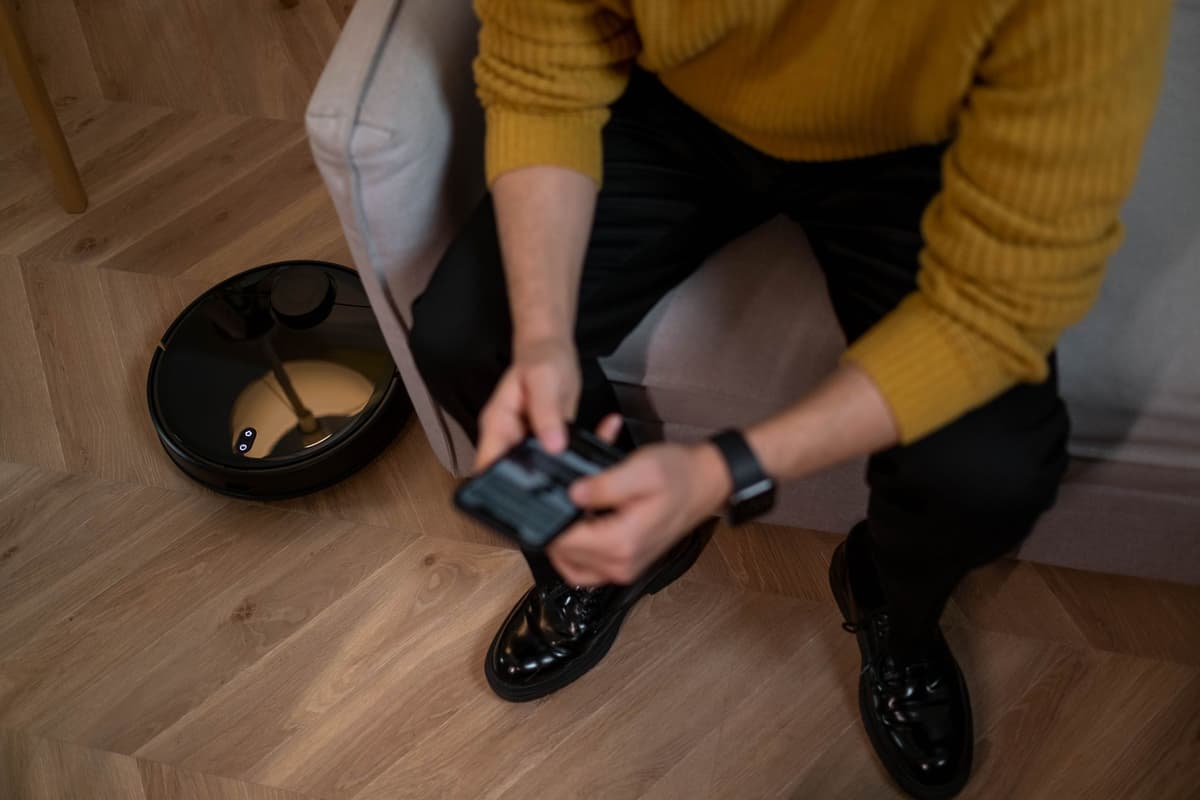
Photo by cottonbro studio on Pexels
When a Robostral-powered machine enters an unfamiliar kitchen, it doesn't need to spend ten minutes bouncing off the cabinets to map the room. It sees a refrigerator and instantly understands that the space in front of it is a high-traffic zone. It sees a dog bowl and makes a mental note that this area is highly likely to contain wet, sticky obstacles that should not be smeared across the living room rug at 3:00 AM.
This is semantic navigation. It is the transition from navigating by coordinates to navigating by context. If you tell a traditional robot to "go to the kitchen," it needs a pre-loaded map and a pathfinding algorithm that calculates a trajectory around your coffee table. If you tell a semantic robot to "go to the kitchen," it looks for the room with the refrigerator, the sink, and the lingering smell of burnt toast.
The $200 Million Quest to Not Bump into Walls
The financial stakes here are absurd. Companies have poured billions into making warehouse robots that can move boxes without decapitating the human staff. Up until now, the solution has been to turn warehouses into highly controlled, sterile environments where nothing ever changes. If a worker drops a clipboard on the floor, the entire assembly line shuts down because a robot's coordinate grid has been compromised.
With semantic models, we are finally moving past this fragile paradigm. In early tests of similar vision-based navigation models, robots were able to navigate entirely novel environments—like a messy office they had never seen before—with a 90% success rate on the first try.
Imagine a world where you don't have to "robot-proof" your house before you turn on the vacuum. You don't have to pick up every shoe, tuck in every chair, and tape down every loose cable like you're preparing a nursery for an incredibly fragile, expensive toddler that eats dirt. The robot will simply see the shoe, recognize that it is a shoe, and decide to go around it because shoes do not need to be vacuumed.
What This Actually Means
We are witnessing the death of the coordinate grid. For the last fifty years, computer science has tried to force the messy, chaotic, fluid reality of our world into neat little boxes of X, Y, and Z. We wanted the world to be a spreadsheet so our machines could understand it.
Models like Robostral prove that it is much easier to make the machine adapt to our mess than it is to make our mess adapt to the machine. By giving robots the ability to categorize the world conceptually, we are finally treating them like intelligent agents rather than glorified, motorized tape measures.
Will this lead to the inevitable robot uprising? Probably not anytime soon. But at the very least, it means that when the machines do eventually take over, they won't get thwarted by a stray bathmat on their way to enslave humanity.
Quick Answers
Does this mean my current robot vacuum is obsolete?
Yes, but it was already obsolete the moment it decided your black rug was a bottomless pit and refused to cross it.
How does Robostral navigate without a map?
It uses visual sensors and a deep neural network to recognize objects and predict where pathways should be based on common-sense layouts.
Can a semantic robot get lost?
Only in the existential sense, though it might still get confused if you live in an upside-down house or a funhouse made of mirrors.