The Glorified Junk Drawer of Menlo Park
For years, the tech industry has operated on the sacred principle of planned obsolescence, a religious devotion to the idea that if your hardware is more than thirty-six months old, it should be ground into dust and fed to the sea. Meta has decided to commit heresy. By developing a custom bridge chip that allows ancient DDR4 memory to talk to modern DDR5-based AI clusters, they have essentially admitted that the billions we spent on 'next-gen' upgrades were perhaps a bit dramatic. It is the computational equivalent of putting wooden wagon wheels on a Ferrari and realizing it still gets you to the grocery store just fine.
We are witnessing the birth of 'computational necromancy,' a term that sounds far more metal than 'cost-saving measures in a high-interest rate environment.' Meta isn't doing this because they have a sudden, bleeding heart for the environment or a desire to reduce e-waste. They are doing it because the demand for AI infrastructure is so ravenous that they’ve run out of new toys to buy. When you’ve exhausted the global supply of H100s, you start looking at the pile of discarded servers in the corner with a predatory glint in your eye.
A Bridge to Somewhere Cheaper
This custom bridge chip is the real star of the show. It acts as a translator for hardware that was never meant to coexist, bridging the gap between the blazing-fast standards of today and the 'vintage' 2018 tech currently gathering dust. Usually, the von Neumann bottleneck—the speed limit on how fast data moves between memory and the processor—is something engineers try to solve with faster, shinier components. Meta’s solution is to just add more lanes to the highway, even if those lanes are paved with gravel and broken dreams.
By embracing memory-heterogeneity, Meta is effectively telling the hardware industry that their rigid upgrade cycles are a suggestion at best. They are architecting a world where a server is no longer a single, cohesive unit, but a patchwork quilt of silicon generations. It’s an elegant solution to a supply chain nightmare, provided you don't mind your cutting-edge AI being powered by the digital equivalent of a 2012 Honda Civic's transmission.
- The bridge chip manages the timing differences between DDR4 and DDR5.
- It allows Meta to leverage existing inventory worth hundreds of millions of dollars.
- It bypasses the artificial limitations set by chip manufacturers who would much rather sell you a whole new motherboard.

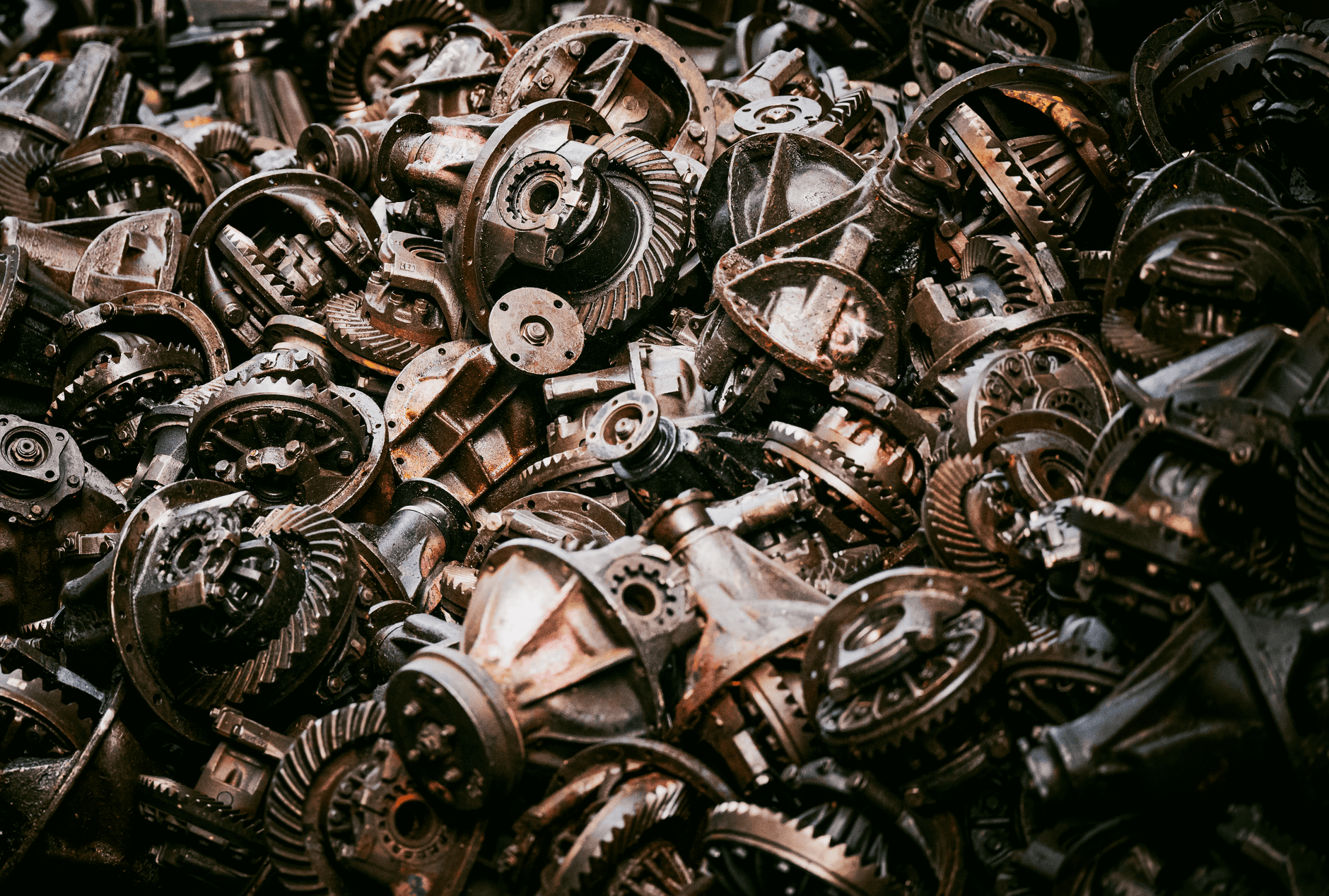
Photo by panumas nikhomkhai on Pexels
The Death of the Up-Sell
Think of the poor hardware vendors. They’ve spent decades perfecting the art of the 'socket change,' that magical moment where they change the shape of a connector by half a millimeter so you have to throw away everything you own. Meta just bypassed the entire racket. If this trend catches on, we might actually have to start using things until they break, rather than until a marketing department tells us they’re 'obsolete.' It’s a terrifying prospect for people who sell shiny boxes for a living.
This shift moves us away from the 'rip and replace' model and toward something that looks suspiciously like sustainability, though calling it that feels like giving a billionaire credit for finding a twenty-dollar bill in their old coat pocket. It’s a radical shift in computer science born entirely out of desperation. If the AI bubble requires this much hardware to sustain itself, we’ll be seeing 'bridge chips' for 10-year-old hard drives and discarded GPUs by Christmas.
What This Actually Means
This isn't about a breakthrough in physics; it’s a breakthrough in stubbornness. Meta has realized that the 'bottleneck' isn't just a technical limitation, but a financial one. By spending the engineering hours to build a custom silicon bridge, they’ve proven that the 'forced' transition to DDR5 was more about industry momentum than actual necessity for every single workload. It turns out that 'old' RAM is still remarkably good at holding bits of data, a shocking revelation to anyone who hasn't been blinded by a spec sheet.
Ultimately, this signals the end of the 'monolithic' server era. We are entering the age of the Frankenstein Cluster, where the value of an engineer is determined by how well they can make a pile of electronic scrap behave like a supercomputer. It’s a win for efficiency, a win for Meta’s bottom line, and a devastating blow to anyone who enjoys the smell of a brand-new, overpriced enterprise server.
Quick Answers
Is my old PC now a supercomputer?
No, unless you happen to have a team of world-class silicon engineers and a few million dollars to bake a custom bridge chip for your motherboard.
Does this mean RAM will get cheaper?
Probably not for you, but it means Meta doesn't have to buy as much of it, which they will surely pass on to you in the form of more targeted ads.
Is 'Computational Necromancy' a real technical term?
It is now, mostly because it sounds much cooler than 'repurposing depreciated enterprise assets to satisfy shareholders.'