The Original Cubicle Hell
While the rest of the 8th-century world was busy hitting each other with blunt objects or dying of dysentery, a small group of guys in Xultun, Guatemala, decided to spend their afternoons staring at walls covered in tiny, repetitive numbers. We used to call this "sacred ritualism" because it makes for better museum gift shop sales, but let's be honest: this was a data center. These people weren't chanting to the moon; they were debugging a celestial operating system using nothing but red paint and a very high tolerance for boredom.
The discovery of these astronomical tables proves that the Maya were the first civilization to realize that if you track enough variables, you can eventually predict exactly when you’ll have to deal with another annoying eclipse. They weren't just marking days; they were synchronizing the cycles of Mars, Venus, and the Moon into a singular, unified data set. It is the most impressive feat of pre-modern mathematics ever recorded, and they used it to make sure their calendars didn't drift by a single afternoon over the next seven thousand years. Talk about over-engineering a solution.
Big Data, Small Brushes
Modern data scientists like to think they’re special because they have Python and cloud computing, but the Xultun astronomers were doing predictive modeling on a literal rock. They used a system of recursive arithmetic—math that feeds back into itself—to align planetary cycles that don't naturally fit together. It’s the mathematical equivalent of trying to fold a fitted sheet, except the sheet is the entire solar system and if you mess up, the King thinks the sun is broken forever.
- They tracked the 780-day cycle of Mars with terrifying precision.
- They accounted for the 584-day cycle of Venus despite the planet being a visual nightmare to track.
- They projected these cycles out for 7,000 years, presumably just to flex on future civilizations.
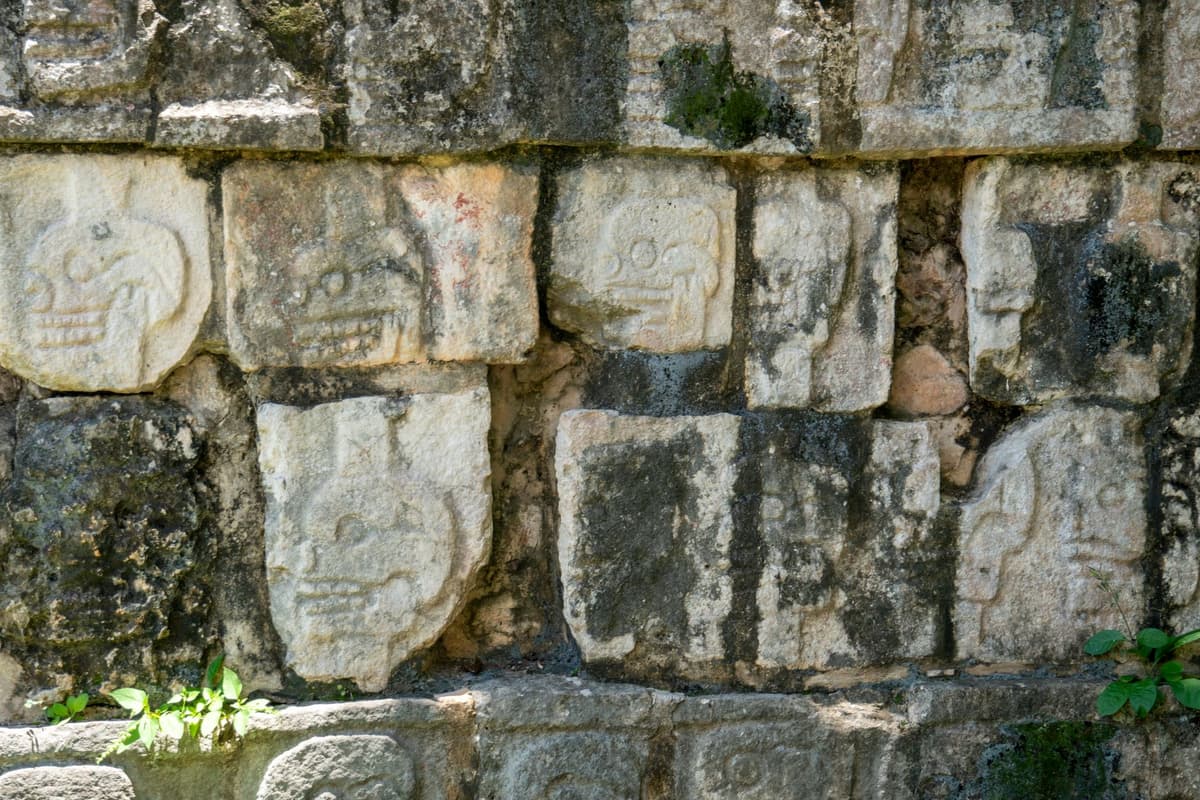
Photo by Ollie Craig on Pexels
What’s truly humbling is the realization that these "spreadsheets" weren't meant for public consumption. This wasn't a billboard for the peasants; it was a workspace. The room in Xultun is small, cramped, and tucked away—a classic developer’s den. They were writing code on the walls because they ran out of scratchpad space. It’s comforting to know that 1,200 years ago, there was a guy named Hunik who probably skipped lunch because he couldn't get his Mars calculation to compile correctly.
The Myth of the End of the World
We really need to apologize to the Maya for that whole 2012 disaster movie phase. The Xultun texts explicitly show calculations that extend vastly beyond the supposed "end" of the Long Count calendar. They weren't predicting the end of the world; they were just running out of wall space. It turns out the Maya were much more worried about long-term data integrity than they were about a cosmic reset button.
This "predictive data science" was likely used to schedule festivals, wars, and tax season with the kind of accuracy that would make a McKinsey consultant weep. Imagine having the audacity to calculate the lunar phase for a Tuesday in the year 3500 just because you can. It’s not mysticism; it’s an obsession with accuracy that borderlines on a collective personality disorder. They didn't want to talk to the gods; they wanted to audit them.
What This Actually Means
This discovery effectively kills the trope of the "mystical ancient." The people at Xultun weren't staring at the stars and feeling a deep, spiritual connection to the cosmos; they were doing the heavy lifting of observation and calculation to minimize uncertainty. They lived in a world where the weather was unpredictable and the gods were fickle, so they used the only thing that stayed consistent: the math.
We have spent decades treating Maya ruins like sets from an Indiana Jones movie, full of hidden traps and blood sacrifices. In reality, a significant portion of their urban centers were probably just offices for the most dedicated bookkeepers in human history. They turned the sky into a clock and the walls into a hard drive, all so they could know exactly when Venus would show up late to the party.
Ultimately, the Xultun find reminds us that human nature hasn't changed. We have always been a species of obsessives who want to put numbers in boxes until the universe starts to make sense. The only difference is that when the Maya did it, they didn't have to deal with software updates or blue light filters. They just had the cold, hard certainty of a 7,000-year forecast and a very sharp stylus.
Quick Answers
Did the Maya really predict the end of the world?
No, they were just very good at math and ran out of room on their stone spreadsheets; the Xultun tables prove they expected time to keep going for millennia.
What is recursive arithmetic in this context?
It’s a method where the output of one calculation is used as the starting point for the next, allowing them to find the "least common multiple" for messy planetary orbits.
Why did they write on the walls?
Because paper (bark cloth) decays in the jungle, and when you’re building a 7,000-year model, you want a medium that doesn't dissolve when it rains.