The Man Who Is Everywhere at Once
I’ve been tracking the travel schedules of the Senate lately, and Lindsey Graham’s passport must look like a fever dream of modern conflict zones. Most Senators go on 'CODELs'—those stiff, choreographed congressional delegations where they take photos with generals and eat at the embassy. Graham doesn't do that. He flies into Riyadh, Jerusalem, or Kyiv, often alone or with a tiny circle, and sits down for hours of deep-tissue negotiations with heads of state who usually only talk to the President or the Secretary of State.
What fascinates me isn't just that he goes; it’s that he stays relevant regardless of who is sitting in the Oval Office. He was the 'Trump whisperer' on foreign intervention one year, and then suddenly he’s the guy Joe Biden relies on to bridge the gap with the Saudi Crown Prince the next. It makes me wonder if we’ve accidentally created a new branch of government: the Perpetual Envoy. He’s operating in a gray space that the Constitution didn't exactly plan for, acting as a high-stakes intermediary while holding exactly zero executive authority.
The Paradox of the Unofficial Badge
There is a specific kind of power in being 'unofficial.' When Secretary of State Antony Blinken walks into a room, he carries the heavy, rigid weight of official U.S. policy; if he says the wrong word, it’s a diplomatic incident. But when Graham sits down with Mohammed bin Salman, he can speak in the subjunctive. He can say 'The Senate might do this' or 'Trump would probably feel that.' It’s a conversational lubricant that official channels just can't replicate.

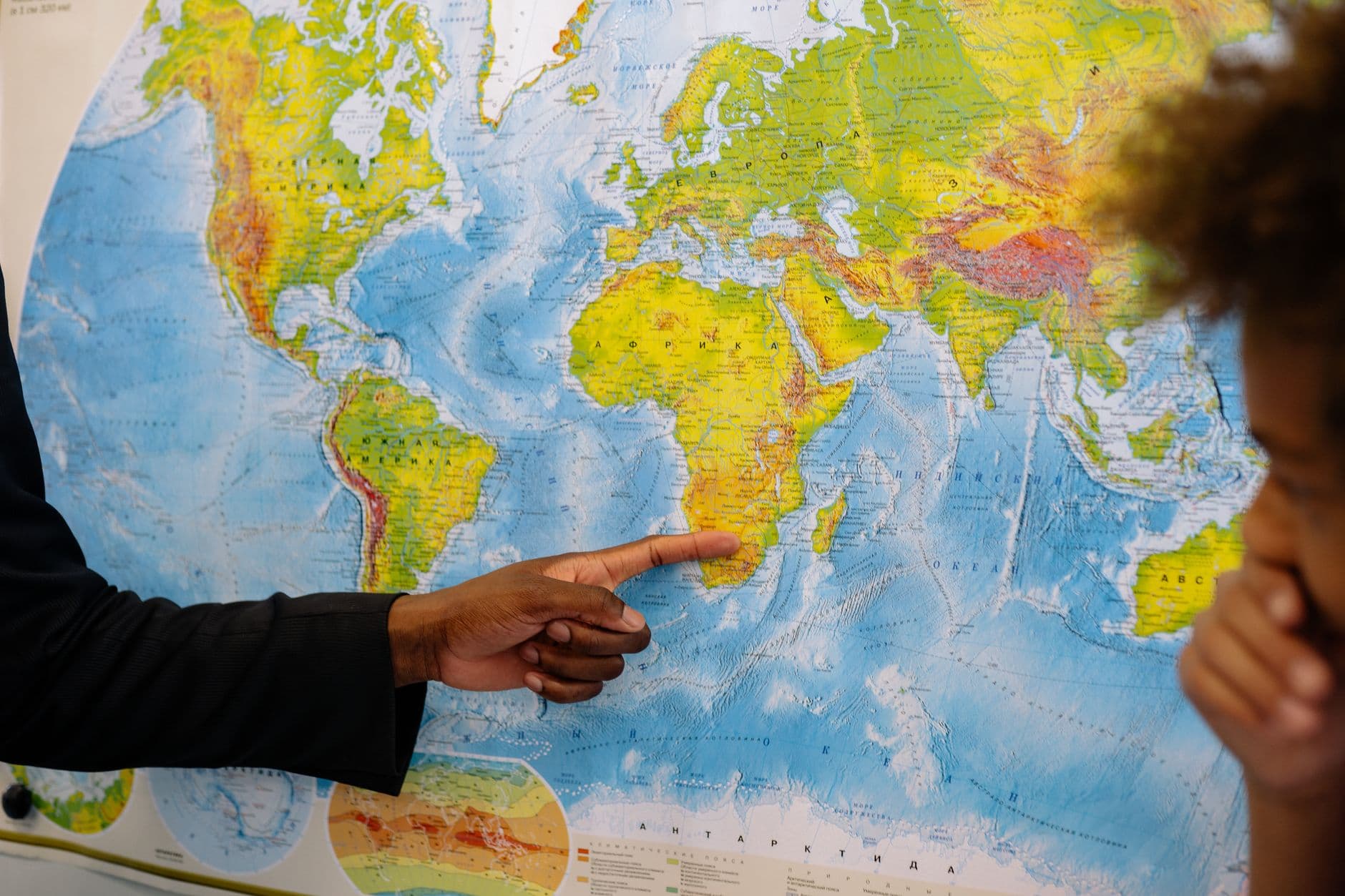
Photo by RDNE Stock project on Pexels
This creates a bizarre feedback loop. Foreign leaders realize that talking to the 'Legislative Envoy' is sometimes more productive than talking to the actual State Department. If Graham can guarantee a vote on an arms sale or a defense treaty, his word starts to carry the weight of a signature. On March 20, 2024, Graham was in Kyiv, suggesting that Ukraine should transition to a loan-based aid system—a move that eventually became a key part of the $61 billion aid package passed weeks later. He isn't just observing policy; he’s beta-testing it in real-time.
A Glitch in the Separation of Powers
I keep coming back to the Logan Act, that 1799 law that technically forbids private citizens from messing with foreign disputes. Of course, Graham isn't a private citizen, but he isn't the Executive Branch either. We are watching a fundamental shift in how the separation of powers functions. If a Senator can negotiate the broad strokes of a Middle East peace deal—like the one Graham has been nudging along between Israel and Saudi Arabia—where does the President's 'sole organ' of foreign affairs power end?
- It bypasses the traditional vetting process of the State Department.
- It gives individual lawmakers leverage that their 99 colleagues don't possess.
- It creates 'policy whiplash' when the envoy’s personal priorities shift.
Maybe this is just how a hyper-polarized Washington survives. When the formal gears of government are jammed with grit and partisan spite, maybe you need a ghost in the machine who can float between the gears. But I can't help but wonder what happens when the next Senator tries this, and they aren't as seasoned or as connected. Is this a Lindsey Graham quirk, or is this the new blueprint for how America talks to the world?
What This Actually Means
We are witnessing the 'freelancing' of American hegemony. For decades, the world relied on the idea that America spoke with one voice, even if that voice changed every four to eight years. Now, the world is learning to listen to the harmonies and the dissonant chords coming from Capitol Hill. It’s a more transparent form of diplomacy, in a way, because the legislative hurdles are being discussed right there at the table instead of being hidden behind 'diplomatic protocol.'
However, it also means that American foreign policy is becoming increasingly personality-driven. The institutional memory of the State Department is being traded for the personal relationships of a few long-serving politicians. If Graham's personal diplomacy succeeds, it validates a system where 'who you know' in the Senate matters as much as 'what the treaty says.' It’s a high-wire act with no net, and we are all just watching to see if he slips.
I’m not sure if this makes us more agile or just more confusing to our allies. It’s possible that in a world of 24-hour news cycles and instant digital communication, the slow, formal channels of the 19th century are simply obsolete. If the official front door is locked, people are going to start using the side windows. Graham has just turned window-climbing into a professional art form.
Quick Answers
Is what Lindsey Graham doing illegal?
No, because as a Senator, he has broad authority to conduct oversight and meet with foreign leaders, provided he isn't literally signing treaties on behalf of the U.S.
Does the White House actually like this?
It’s complicated; they often find it annoying when he goes 'off-script,' but they frequently use him as a scout to see what foreign leaders are willing to concede without committing the President to a stance.
Has any other Senator done this before?
Not to this scale. While figures like John McCain or Joe Biden (when he was in the Senate) traveled extensively, Graham’s role as a specific bridge between the Trump and Biden eras is historically unique.