The Ghost in the Radiator
I’ve been staring at a chart from the Central Statistics Office of Ireland that feels like a glitch in the simulation. In 2023, datacenters consumed more metered electricity in Ireland than all the rural dwellings in the country combined. We are looking at a scenario where 82 facilities are inhaling nearly a quarter of a nation's power grid just to keep the 'cloud' from melting. It’s easy to get angry about the raw consumption, but I find myself fascinated by the pivot: if we can't stop the heat, why aren't we bathing in it?
There is something strangely poetic about a family in Dublin staying warm on a Tuesday night because a teenager in California is uploading a high-res video of their cat. We are witnessing the birth of the 'Data-Urban' exchange, a mandatory architectural marriage where the datacenter stops being a concrete fortress on the edge of town and becomes the primary furnace for the neighborhood. It’s no longer just infrastructure; it’s an organ in the body of the city.
Building Around the Exhaust
Dublin’s new district heating schemes, like the Tallaght District Heating Network, are the first real-world experiments in this industrial symbiosis. Amazon’s datacenter there is now the heat source for about 3,000 square meters of public space and 135 affordable apartments. Engineers are essentially hooking up a giant straw to the back of a server rack and blowing that 25°C to 35°C air into a heat pump.
I wonder what this does to the way we design a city block. For a century, we built houses around a chimney. Then we built them around a gas line. Now, the masterplans are being legally mandated to sit within a specific radius of a server farm. If you move too far away from the 'compute,' you lose your heat source. It creates a new kind of digital geography where human comfort is physically tethered to the proximity of high-frequency trading and cloud storage.

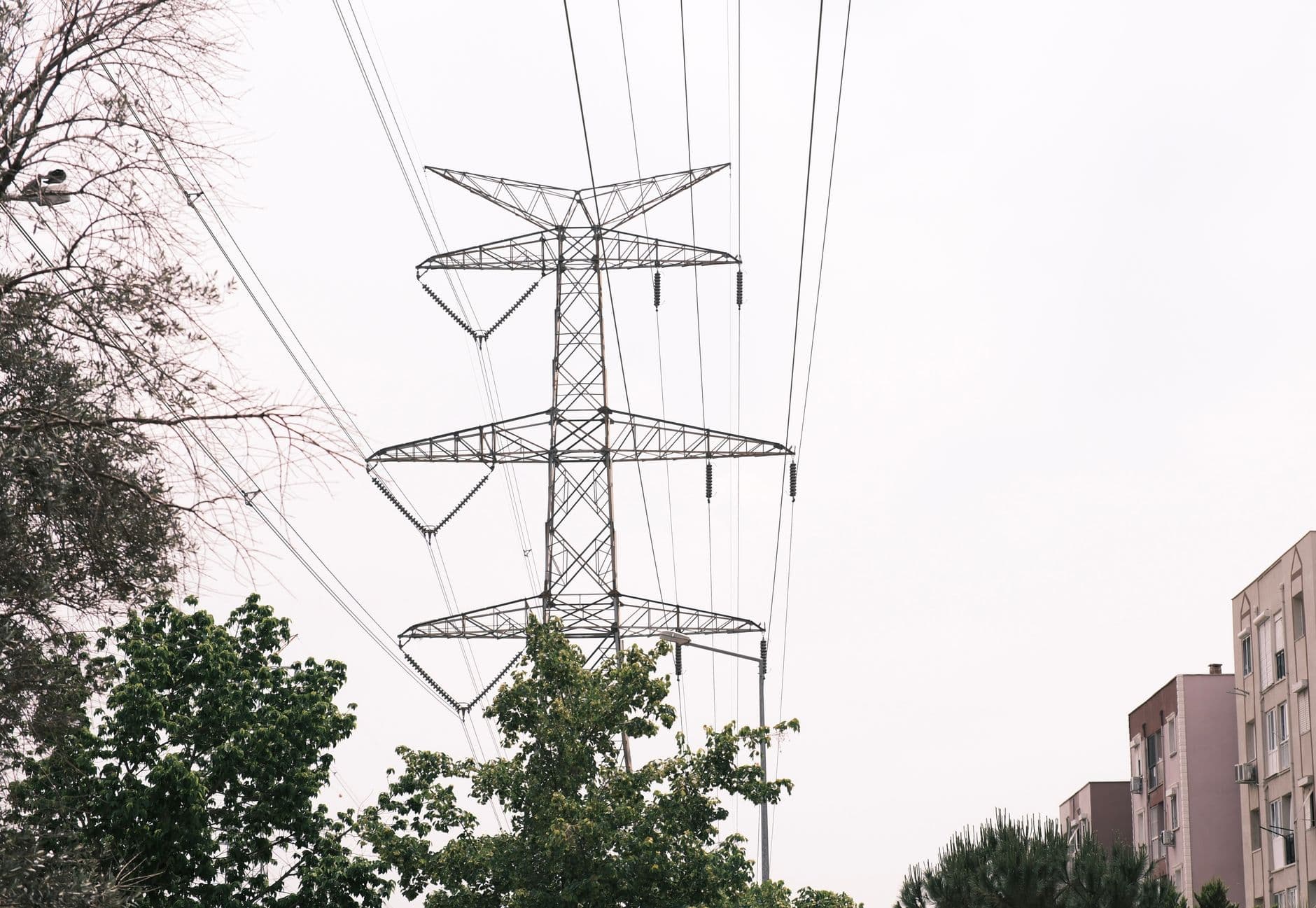
Photo by Jan van der Wolf on Pexels
This isn't just a clever engineering hack; it's a fundamental shift in how we value waste. We used to treat heat as a nuisance to be vented into the atmosphere as quickly as possible. Now, that waste is a commodity. In a world where Ireland’s datacenter power demand grew by 20% in a single year, the 'waste' is becoming the most reliable resource the city has.
The Fragility of the Cloud Hearth
What happens to the neighborhood if the tech company decides to move? This is the question that keeps me up. If an entire residential district is engineered to rely on the byproduct of a specific corporate entity, the 'cloud' is no longer an abstract service you pay for—it’s a utility you can’t survive without. We are essentially subcontracting the survival of our cities to the uptime of a private server farm.
- Dependency: If the datacenter goes offline for maintenance, does the floor get cold?
- Scalability: Can a neighborhood grow faster than the server farm it relies on?
- Legality: Who owns the heat once it leaves the server rack, and can they charge you for it?
There is a strange irony in the fact that our drive for 'dematerialized' digital lives is resulting in the most heavy-duty, physical infrastructure we’ve seen in decades. You can’t have a district heating system without massive, underground insulated pipes and industrial-scale heat exchangers. The more we move our lives into the digital realm, the more we have to entrench ourselves in the physical earth to manage the fallout.
What This Actually Means
This shift toward 'Industrial Symbiosis' is the first time the internet has become truly tangible for the average person. You don’t feel the internet when you click a link, but you will feel it when you step into a warm shower. We are moving toward a future where the city is a closed-loop machine, and the distinction between 'industrial zone' and 'residential zone' is completely dissolving.
It makes me wonder if we will eventually see 'thermal zoning' where the cost of your rent is tied to the processing power of the building next door. If a company upgrades its servers to more efficient models that run cooler, do the neighbors freeze? Or do we demand that companies run less efficient code just to keep the radiators humming? We are starting to treat data as a thermodynamic fuel, and that changes every rule of urban economics we’ve ever written.
Ultimately, Ireland is a laboratory for the rest of the world. As we demand more AI, more streaming, and more storage, the heat has to go somewhere. Turning our homes into the heat-sink for the internet is either the most brilliant recycling project in history or a terrifying new form of corporate dependency. I suspect it’s both.
Quick Answers
Is the heat from a datacenter actually hot enough to warm a house?
By itself, server exhaust is lukewarm (around 30°C), but when piped into a large-scale industrial heat pump, it can be boosted to the 60°C to 80°C required for domestic heating and hot water.
Does this make my internet faster?
No, it just makes the physical presence of the internet more useful. The data stays in the cables; only the ambient heat from the machines doing the work is transferred to the water pipes.
What happens if the datacenter shuts down?
Most district heating designs include backup boilers (often electric or gas) to ensure residents don't lose heat if the servers go dark or the company moves its operations elsewhere.