Your House Is Screaming in Infrared
There is nothing quite like the realization that your favorite sun-drenched breakfast nook is actually a tactical liability. For decades, we obsessed over floor-to-ceiling windows and 'bringing the outside in,' which was a lovely sentiment until the outside started carrying a payload. Your current apartment is essentially a glowing beacon of mammalian life, radiating a steady 98.6 degrees against the cool, indifferent concrete of the sidewalk. You might as well paint a bullseye on your forehead in glowing neon.
Enter the new era of thermal-diffractive geometry. We are no longer designing for aesthetics or, god forbid, human comfort. We are designing to baffle a sensor that costs more than your college tuition. The goal is simple: make a human being look exactly like a discarded toaster oven or a particularly warm patch of gravel. It’s the ultimate form of modesty. Why show off your silhouette when you can look like a jagged mess of non-Euclidean shadows?
Architects are finally moving away from the 'glass box' phase and into the 'impenetrable bunker that looks like a pile of metallic origami' phase. It’s a bold stylistic choice. It says, "I value my privacy, and also I would prefer not to be identified as a heat source by a loitering munition from three kilometers away."
Brutalism With a Survivalist Twist
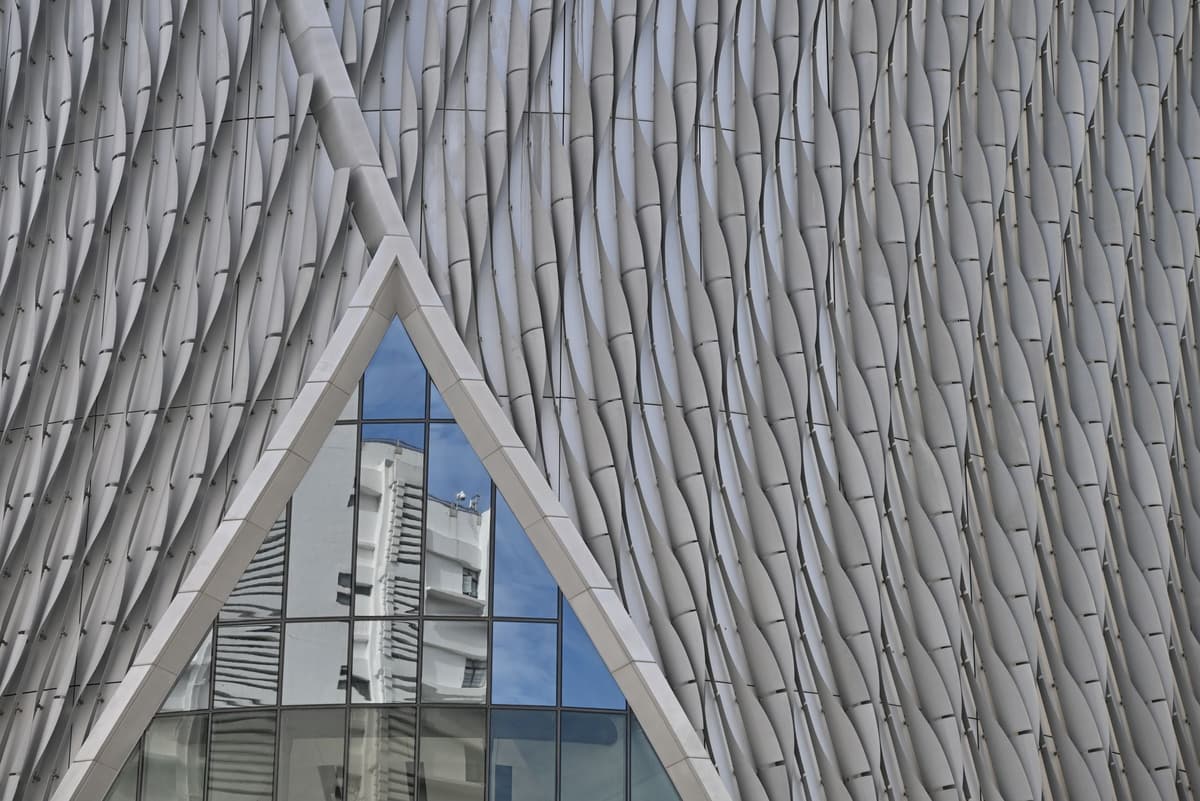
The aesthetic of the future is remarkably jagged. We’re talking about facades engineered with passive thermal-diffractive geometry—which is a fancy way of saying we’re making buildings look like they were designed by a glitching AI. By using materials like specialized aerogels and metallic foams, we can now break up a human heat signature into a thousand tiny, unidentifiable pixels. It’s like a privacy filter for your entire existence.
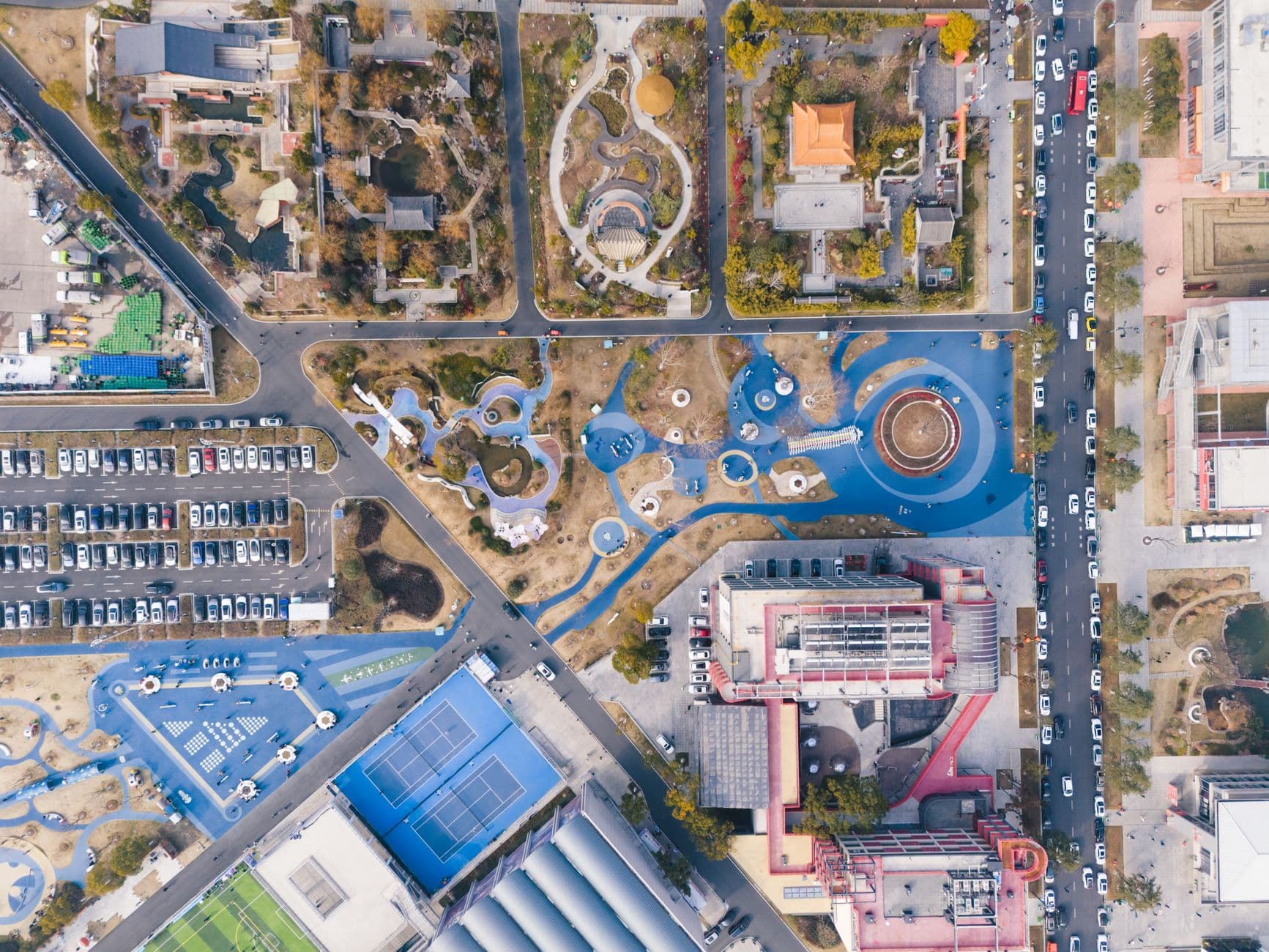
Imagine walking through a public square where every bench, planter, and lamppost has been angled to specifically redirect infrared radiation. It’s not just 'urban design' anymore; it’s a massive game of hide-and-seek where the seeker is an autonomous algorithm with no sense of humor. These spaces aren't meant to be inviting. They are meant to be confusing. If a human can’t find a comfortable place to sit, chances are an AI can’t find a clear target to lock onto either. It’s a win-win for everyone involved in not dying.
- Low-emissivity coatings are the new granite countertops.
- Heat-sink plazas that mimic the thermal signature of a parking lot.
- Facades that use 'shadow-casting' fins to hide the occupants' metabolic heat.
This shift represents a true democratization of stealth technology. Why should B-2 bombers have all the fun? Now, your local library can also benefit from the same radar-absorbent principles. We are effectively turning our cities into a series of giant, habitable stealth fighters. It’s the kind of progress that makes you wonder why we ever bothered with things like 'parks' or 'natural light' in the first place.
The Luxury of Being Invisible
Of course, like all great architectural movements, thermal-agnosticism will start with the ultra-rich. Expect to see 'Signature-Free' penthouses hitting the market in Dubai and London by 2026. These will be marketed to people whose net worth is inversely proportional to their desire to be seen by a thermal camera. It’s the ultimate status symbol: owning a home that doesn't technically exist according to a FLIR sensor.
The rest of us will have to make do with retrofitting our stucco houses with aluminum foil and prayer. Or perhaps the government will offer subsidies for 'Thermal-Masking Siding' in the same way they do for solar panels. It’s a beautiful thought. You get a tax break for making it harder for a rogue drone to identify you as a biological entity. That is the kind of civic engagement that really builds community spirit.
Eventually, we’ll reach a point where the only way to be 'seen' is to be poor. If you can’t afford the diffractive geometry, you’re stuck being a high-contrast blob in a world of low-signature ghosts. It’s a fascinating new class divide. The wealthy will live in cool, dark, jagged voids, while the rest of the population glows like embers in a dark room. It really puts a new spin on the phrase 'shining city on a hill.'
What This Actually Means
We are witnessing the final death of the 'open' city. The dream of transparent, accessible urban spaces was a brief, naive intermission in a much longer history of people hiding behind thick walls. We’re just trading stone ramparts for infrared-diffracting metamaterials. The technology has changed, but the fundamental desire to not be liquidated while eating a sandwich remains remarkably consistent.
This isn't just about drones; it’s about the total loss of the 'public' in public space. When every square inch of a city is engineered to deceive a sensor, it becomes fundamentally hostile to the people living in it. We are building cities for an audience of machines, and we are the inconvenient biological noise that needs to be filtered out. It’s a masterpiece of engineering and a tragedy of social planning, which is pretty much the tagline for the 21st century.
In the end, we’ll have perfectly safe, thermally-invisible cities where no one wants to live because the buildings are sharp enough to cut you and there isn't a single window that lets in a pleasant breeze. But hey, at least the autonomous hovering death-machines will be confused. And in the world of modern urbanism, that’s what we call a successful deployment.
Quick Answers
Can I just wear a space blanket to go get coffee?
You could, but you’ll look like a baked potato and the drone might mistake you for a discarded Mylar balloon, which is a different kind of risk.
Will these buildings be incredibly ugly?
Beauty is in the eye of the beholder, but if the beholder is a computer vision algorithm, then yes, they will be breathtakingly hideous by human standards.
Is there any way to opt out of the drone-era urbanism?
Sure, you can move to a cave, but caves have terrible Wi-Fi and even worse thermal-diffraction ratings unless you go really deep.
Does this mean I should stop buying glass houses?
If you value your privacy and your continued existence as a non-perforated individual, a glass house is currently the architectural equivalent of wearing a 'Kick Me' sign in a playground full of bullies.