The Peak of Human Achievement
We have reached the logical conclusion of the digital age. After decades of engineers sweating over signal-to-noise ratios, back-illuminated sensors, and computational photography that can literally map the craters on the moon from a handheld device, we have decided that what we actually need is less. Specifically, we need the 0.014-megapixel power of a Nintendo Game Boy Camera. A hobbyist recently made headlines by rigging this 1998 peripheral to a massive telescope to photograph Jupiter, proving once and for all that if a job is worth doing, it is worth doing with hardware that has less processing power than a modern toaster.
There is something deeply moving about using a device designed to take grainy selfies of seven-year-olds to capture a gas giant 365 million miles away. The resulting image is a masterclass in minimalism. You can almost see the planet. Or maybe it’s a thumbprint. It’s hard to tell when you’re working with a palette of four shades of greenish-gray, but that’s the beauty of "intentional hardware degradation." It’s not a bad photo; it’s a brave rejection of the tyranny of detail.
The Agony of Too Much Information
Modern smartphones are frankly exhausting. They use AI to fill in textures, stack dozens of exposures to eliminate noise, and generally try to show us what things actually look like. Who asked for that? The "Lo-Fi Astrophotography" movement correctly identifies that the problem with the universe is that it’s too high-resolution. By forcing the light of the largest planet in our solar system through a CMOS sensor that was obsolete before the turn of the millennium, we finally strip away the distractions of "scientific data" and "visual clarity."
This isn't just about being contrarian; it’s about the "raw physics of light." Apparently, you can’t truly appreciate a photon until you’ve forced it to struggle through a plastic lens and into a sensor that barely recognizes its existence. It’s the visual equivalent of listening to a symphony through a tin can tied to a string. Sure, you lose the woodwinds and the strings, but you really get a feel for the string’s vibration. That’s where the soul lives. In the vibration. And the soul of Jupiter is apparently a very small, very square cluster of noise.
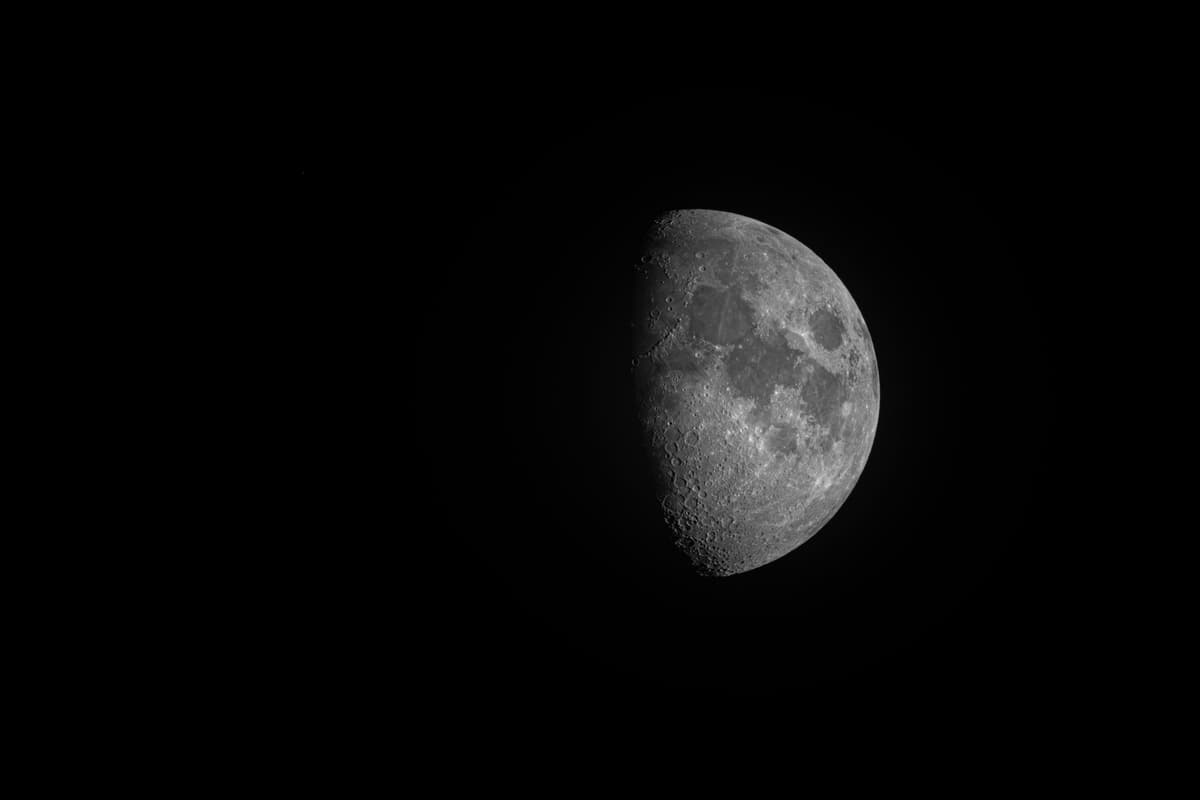
Photo by Arian Fernandez on Pexels
A Tutorial for the Masochistic
The creator of this masterpiece didn't just stop at taking the photo; they published a tutorial. This is essential, because without a guide, you might accidentally take a high-quality photo with a Nikon and ruin the whole vibe. The process involves custom 3D-printed adapters, specialized software to extract the data from a proprietary Nintendo cartridge, and a level of patience usually reserved for monks or people waiting for the DMV. It is a staggering amount of work to achieve a result that a sketch artist with a blunt pencil could surpass in thirty seconds.
Following this tutorial allows you to bypass "computational perfection." We’ve all been there—looking at a crisp, colorful image of the Great Red Spot and thinking, "This is just too easy. I don't feel the struggle of the 8-bit era." Now, for the low price of several hundred dollars in vintage gear and mounting hardware, you too can produce images that look like security footage from a haunted laundromat. It’s about the journey, specifically a journey that involves a 4.19 MHz processor trying its absolute best not to catch fire.
- Spend $2,000 on a telescope.
- Spend $150 on a yellowing piece of plastic from eBay.
- Spend 4 hours calibrating the alignment.
- Receive a 128-pixel smear of gray.
- Post it on Reddit for 15,000 upvotes.
The Future of Regressive Tech
Where does this stop? If the Game Boy Camera is the gold standard for celestial observation, perhaps we should look into using a 1980s Casio watch to track GPS coordinates. We could use a rotary phone to host a podcast. The possibilities for making things unnecessarily difficult are endless. We are currently living in a world where "high fidelity" is a dirty word, and if you aren't squinting at your screen trying to figure out if you're looking at a moon of Saturn or a dead pixel, are you even a real enthusiast?
There is a certain irony in using the internet—the most complex communication network in history—to share a tutorial on how to make a $10,000 optics setup perform like a $5 toy. It’s the ultimate flex. It says, "I have mastered modern technology so thoroughly that I am now bored by its competence." We are so good at taking photos now that the only way to feel anything is to take a really, really bad one on purpose.
What This Actually Means
This movement is the ultimate luxury of a society that has solved all its actual technical problems. We have reached "Peak Tech," where the only way to innovate is to go backward. It’s aesthetic masochism. We crave the "raw physics" because the reality provided by our $1,200 iPhones is too polished, too curated, and too easy. We want to work for our mediocrity. We want to look at a blurry dot and tell ourselves we’re seeing the music of the spheres, rather than just the limitations of 25-year-old hardware.
Ultimately, the Game Boy Jupiter photo is a monument to human boredom. It’s what happens when brilliant people have too much time and access to 3D printers. It doesn't tell us anything new about Jupiter, but it tells us everything we need to know about ourselves: we are a species that will climb the highest mountain just to see if we can do it while wearing flip-flops. We don't want the view; we want the difficulty of the climb.
Quick Answers
Is the photo actually good?
No, it’s objectively terrible by every metric of photography, but that is exactly why people like it. It’s an aesthetic choice, like wearing distressed jeans that cost more than a tuxedo.
Why not just use a modern camera?
Because a modern camera would produce a clear image, and clear images don't get you featured in tech blogs for your "revolutionary" use of obsolete trash.
Does this help science?
Absolutely not. NASA is not currently trading in their Hubble time for a refurbished Game Boy Pocket, though the budget savings would be significant.
Should I try this at home?
Only if you find joy in spending three weeks of your life making a high-end telescope perform with the visual acuity of a legally blind pigeon.**