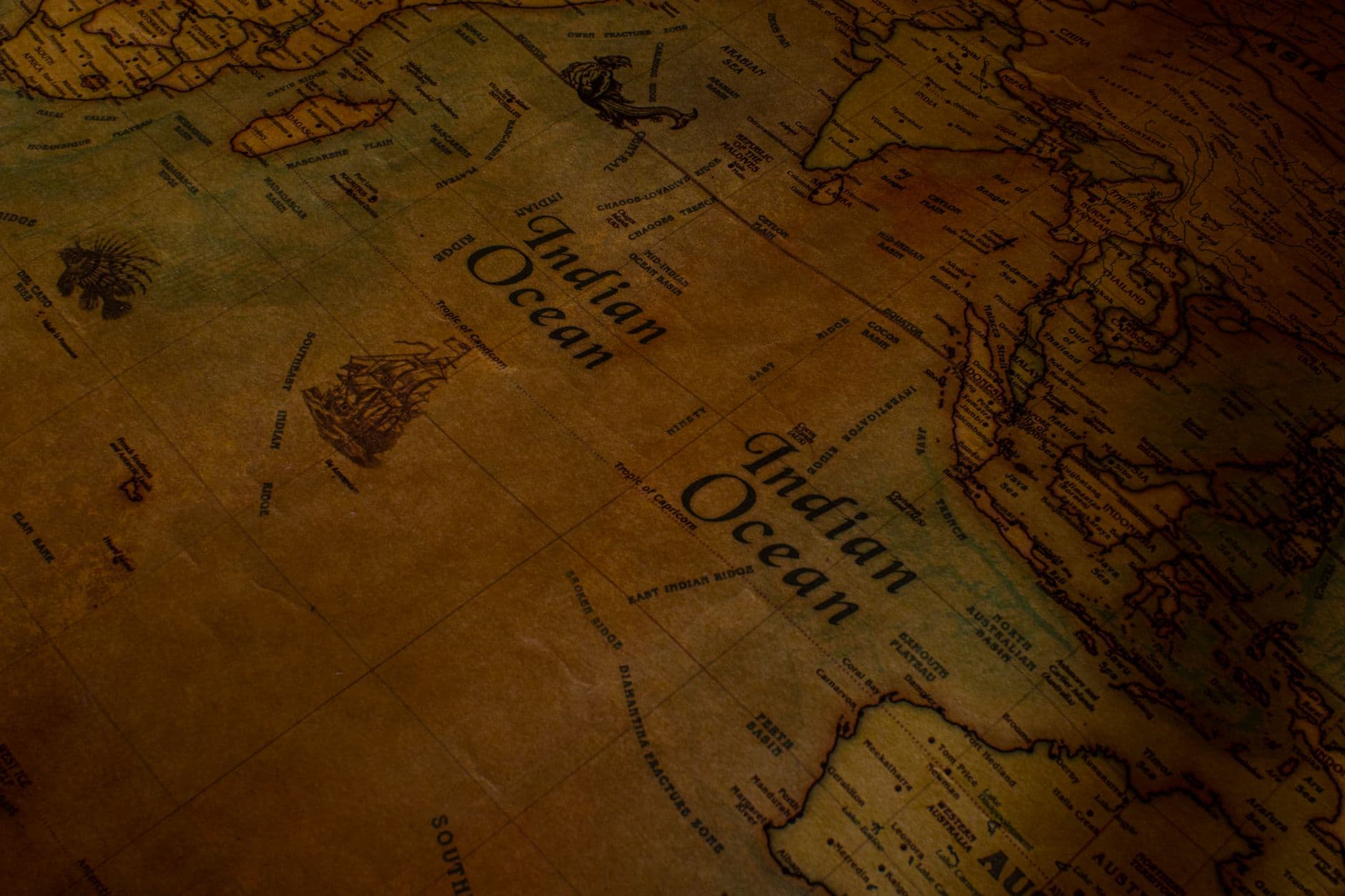
We keep looking up for answers, but the blueprint for exploring the cosmos is currently sitting 390 meters beneath the cold waters of Labrador. This past June, a team of researchers found the Quest, the steam-schooner that served as the final vessel for legendary Antarctic explorer Sir Ernest Shackleton. He died aboard it in 1922. For over a century, the ship remained lost to the deep, a silent footnote to the heroic age of polar exploration. Now that we have found it, the method of its discovery is making me rethink how we approach the edge of our own maps.
The search didn't succeed because of old diaries or lucky guesses. It succeeded because we used the same sonar arrays and autonomous underwater vehicles (AUVs) being developed to search for life under the ice of Jupiter's moon, Europa. It is a strange, beautiful loop. The technology designed to search the stars had to be pointed backward at our own history first, almost as if the machines needed to practice on our past before they could tackle the future.
The Extreme Sandbox of the Labrador Sea
Deep ocean exploration and deep space exploration are essentially the same sport played in different outfits. Both environments feature crushing pressure, absolute darkness, temperatures hovering just above freezing, and a total hostility to human biology. To find a 111-foot wooden ship in the vast, murky depths of the Northwest Atlantic, scientists couldn't rely on traditional search patterns. They needed smart, highly autonomous systems.
The team used high-resolution side-scan sonar mounted on untethered robotic submersibles. These are not the remote-controlled toys of the past decade. They are decision-making machines. When you send a probe to Europa, which lies roughly 628 million kilometers away, you cannot joystick it from a desk in Pasadena. The time delay is too great. The probe must navigate, map, and react to hazards on its own.
By dropping these autonomous prototypes into the freezing, high-pressure corridor where the Quest sank, engineers got to test their navigation algorithms in the closest analog to an alien ocean we have on Earth. The wreck wasn't just a historical prize; it was a giant, wooden calibration target.
Why Wooden Wrecks Matter to Astrobiologists
It sounds absurd to suggest that a century-old pile of oak and steel can teach us about planetary science. But the connection lies in how we detect anomalies. When an AUV scans the flat, sediment-covered seabed of Labrador, it is looking for something that does not belong. It is looking for structure, geometry, and materials that nature does not easily produce.
- Acoustic signatures: How does decaying wood reflect high-frequency sound waves compared to surrounding basalt or silt?
- Magnetic variance: Can sensors detect the iron fasteners of a 19th-century boiler through meters of mud?
- Chemical plumes: How do artificial materials interact with the local chemistry over a century?
Photo by Tima Miroshnichenko on Pexels
On Europa or Saturn's moon Enceladus, we won't be looking for sunken schooners, of course. We will be looking for hydrothermal vents, prebiotic chemical deposits, or structural anomalies in the ice shell. The algorithms that successfully separated the silhouette of the Quest from the surrounding glacial debris are the direct ancestors of the software that will one day scan the dark seafloor of alien worlds.
The Poetry of the Loop
There is a quiet irony in using space-age tech to find Shackleton. He was a man who pushed the absolute limits of human endurance using wood, canvas, and coal. When his famous ship, the Endurance, was crushed by Antarctic ice in 1915, his crew survived through sheer willpower and basic navigation by the stars.
Now, those same stars are where his legacy is helping us go. The Quest was his final, modest platform, a vessel that represented the transition from heroic, blind survival to systematic scientific inquiry. That we found it using tools meant to leap off this planet feels less like a coincidence and more like a passing of the torch.
I wonder what Shackleton would make of the fact that his lost ship is now a line item in a planetary defense and exploration database. He was obsessed with the unknown. I suspect he would find it entirely appropriate that his final resting place is serving as a stepping stone to the next ocean.
What This Actually Means
This discovery proves that the division we create between fields of study is entirely artificial. We tend to put maritime history in one museum and aerospace engineering in another. But the universe doesn't care about our academic departments. The physics of searching a dark, pressurized liquid environment remain constant whether you are off the coast of Canada or orbiting a gas giant.
Investing in deep-sea archaeology isn't just about preserving the past; it is a highly practical way to fund the development of deep-space hardware. It is much cheaper and safer to lose a prototype submersible in the Atlantic than it is to lose one in the Jovian system. Every shipwreck found is a successful test run for our eventual departure from this rock.
Ultimately, the search for the Quest reminds us that exploration is a continuous line. We are still using the same curiosity that drove people into the ice a century ago. We have just traded the wooden hulls for titanium casings, and the sails for software.
Quick Answers
Why is Shackleton's Quest historically significant?
It was the ship aboard which the famous polar explorer Sir Ernest Shackleton died of a heart attack in 1922 during his final expedition to Antarctica. It represents the end of the "Heroic Age" of polar exploration.
How does ocean tech help us explore space?
Ocean worlds like Europa have deep liquid oceans beneath thick sheets of ice. The autonomous subs, sonar sensors, and navigation software required to map our own deep, icy oceans are identical to the technology needed to explore these alien seas.
Where was the ship found and how deep was it?
It was located in the Labrador Sea off the coast of eastern Canada. The wreck lies remarkably intact at a depth of 390 meters (approximately 1,280 feet).