We have reached the limits of cash. For a decade, the tech sector operated on a simple premise: build software, print margins, and hoard mountains of cash. Apple, Microsoft, and Alphabet sat on balance sheets that resembled sovereign wealth funds. But the hardware requirements of generative AI have shattered that model. Suddenly, even a $100 billion cash reserve looks like pocket change when you are trying to rebuild the physical infrastructure of the global economy in thirty-six months.
Now, the giants are quietly pivoting. They are not using their own money anymore, nor are they issuing standard corporate bonds that would freak out equity investors who obsess over quarterly balance sheets. Instead, we are witnessing the birth of a bizarre shadow financial system designed to fund silicon and turbines. It makes me wonder if we are watching a brilliant evolution of corporate finance, or the construction of a massive, fragile house of cards.
The Shell Games of Synthetic Debt
How do you spend $50 billion on data centers without letting your shareholders know you spent $50 billion on data centers? You invent a partner.
Tech companies are increasingly turning to complex joint ventures and special purpose vehicles (SPVs) backed by private equity. A massive asset manager like Blackstone steps in, partners with a hyperscaler, and together they create a separate legal entity. This entity issues the debt, buys the land, and purchases the Nvidia H100 GPUs. The tech giant then signs a long-term contract to lease the computing power.
On paper, the tech giant’s balance sheet remains relatively clean. The massive liability is tucked away in a footnote, disguised as an operating expense rather than a mountain of capital expenditure. It is a brilliant accounting trick, but it raises a fascinating question: who actually owns the risk if the projected demand for AI services fails to materialize? The private equity investors believe the tech giants are locked into the leases, while the tech giants believe they have offloaded the risk of hardware obsolescence to the financiers.
Buying the Grid to Power the Model
This isn't just about silicon. The bottleneck has shifted from chips to electricity, leading to some of the most unexpected corporate partnerships of our lifetime.
In March 2024, Amazon Web Services purchased a 950-megawatt data center campus in Pennsylvania directly connected to a nuclear power plant for $650 million. They didn't just buy a building; they bought direct, uninterrupted access to a carbon-free energy grid. We are seeing software companies morph into utility conglomerates, funding private energy infrastructure through power purchase agreements that span decades.
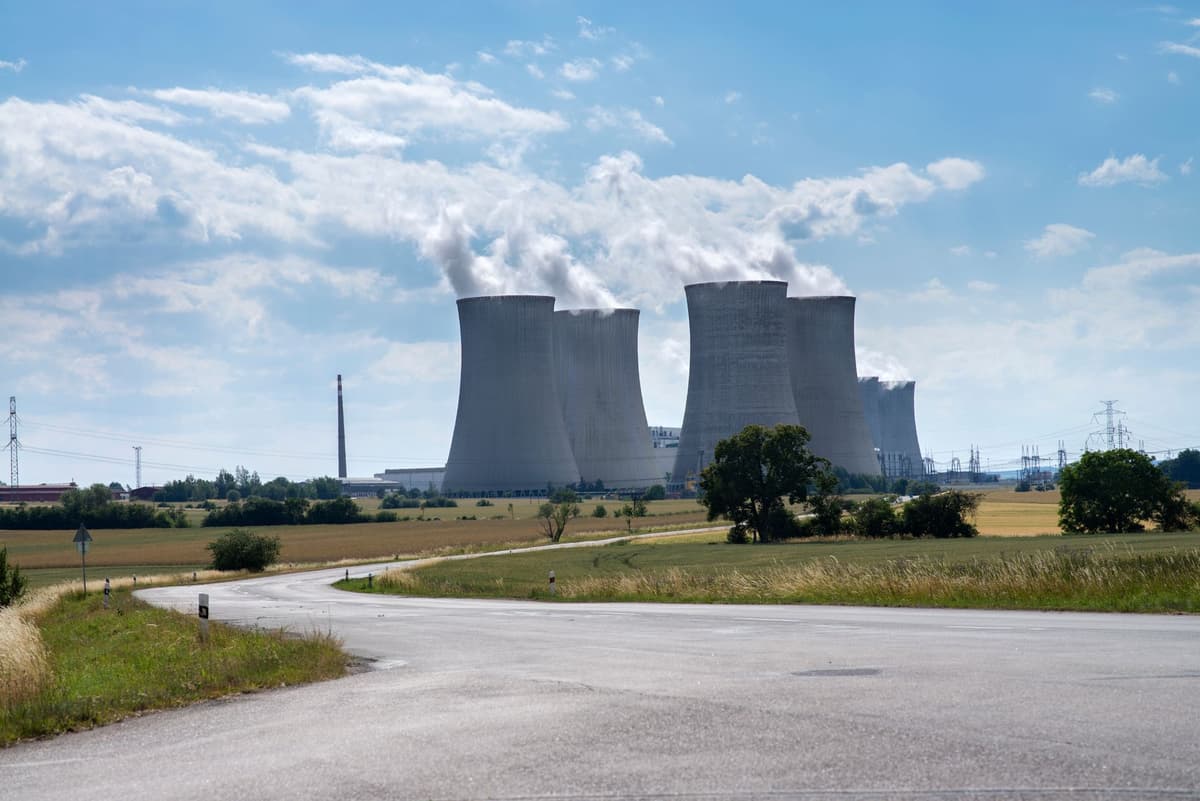
Photo by Vladimír Sládek on Pexels
It is fascinating to watch companies built on intangible code suddenly become the primary funders of concrete, steel, and nuclear reactors. This is a complete reversal of the asset-light software model that defined the 2010s. We are back to the Gilded Age, where monopolists had to build their own railroads and coal mines just to get their products to market. Is this sustainable, or are we diverting critical energy resources away from the public grid to feed a speculative computational hunger?
The Obsolescence Trap
Traditional infrastructure debt is built on the assumption that the asset you are financing will last for thirty years. A bridge, a toll road, or a coal plant depreciates slowly.
Silicon does not behave like concrete. A state-of-the-art GPU cluster built today for $5 billion might be technologically obsolete in three years. This creates an unprecedented mismatch in duration. How do you structure a twenty-year debt instrument against an asset with a three-year shelf life?
- Financiers are forcing tech companies to guarantee the debt with their core business cash flows, not just the hardware itself.
- The salvage value of a used AI chip is entirely unknown, making traditional collateral valuation models useless.
- If a new algorithmic architecture emerges that requires 90% less compute, these multi-billion-dollar clusters could become the world's most expensive paperweights overnight.
This velocity of obsolescence is what makes the current boom so different from the fiber-optic buildout of the late 1990s. Back then, the glass cables laid in the ground remained useful for decades, even after the companies that laid them went bankrupt. If the AI bubble pops, the physical assets left behind might not be nearly as useful to the rest of humanity.
What This Actually Means
We are witnessing the physicalization of the internet. The boundary between the digital economy and the heavy, dirty, physical world is dissolving. When you query an LLM, you are activating a complex financial web that stretches from Wall Street private equity desks to nuclear reactors in Pennsylvania, all held together by accounting structures that did not exist five years ago.
This synthetic debt boom proves that the tech giants are fully committed. They have crossed the Rubicon. They cannot turn back because they have signed long-term, legally binding agreements to fund these gigawatt-scale projects for the next two decades. Even if consumer enthusiasm for AI plateys, the building will continue because the contracts demand it.
Ultimately, this financial engineering is a bet on a future of absolute abundance. If AI transforms productivity as promised, these bizarre debt structures will look like the foundation of a new industrial revolution. If it doesn't, we will be left with a very strange, very expensive landscape of highly specialized, empty warehouses connected to private nuclear reactors, and a lot of very angry pension funds.
Quick Answers
Why can't tech giants just use their own cash to build AI data centers?
Even though companies like Microsoft make billions in profit, the scale of AI infrastructure demands hundreds of billions annually. Using raw cash would deplete their reserves and scare shareholders who expect stock buybacks and dividends.
What is synthetic debt in this context?
It is a financial arrangement where tech companies partner with private equity to fund infrastructure through off-balance-sheet entities, keeping massive debt liabilities out of their main financial reports.
What happens to this debt if the AI boom fails?
The risk is shared, but ultimately tech giants are locked into long-term lease agreements, meaning their highly profitable core businesses (like search and enterprise software) would have to pay off the bad bets.