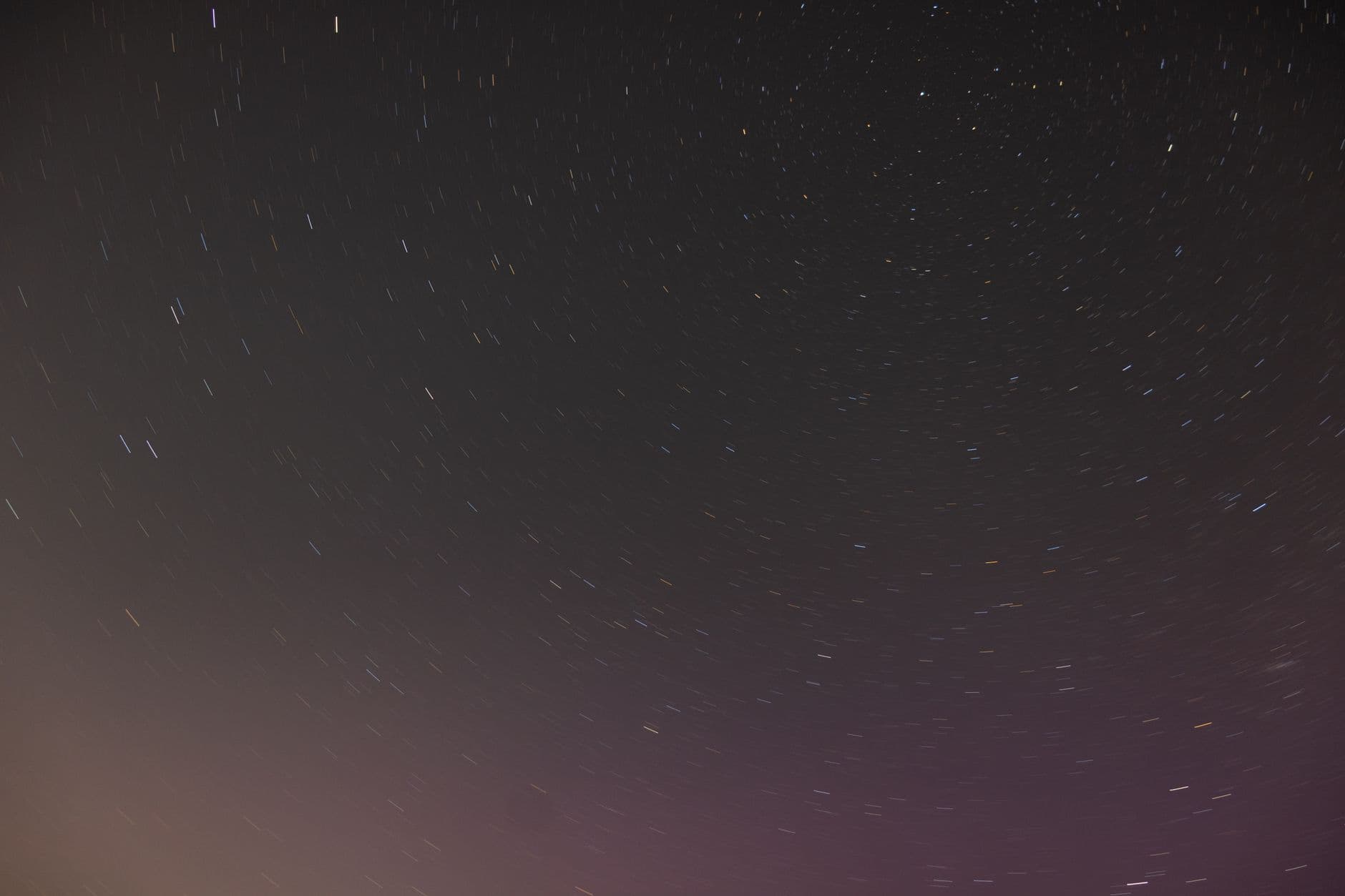
We have spent the last century slowly erasing the night sky from our cities, pushing the stars back behind a haze of neon and LED streetlights. Now, we are preparing to chase the darkness out of the countryside too. The Federal Communications Commission recently approved a license for a startup called Reflect Orbital to test a satellite equipped with a highly reflective mirror. The goal is simple, sci-fi, and slightly terrifying: catch sunlight in orbit and beam a tight spotlight of illumination down to specific spots on Earth after sunset.
Initially, the pitch sounds almost noble. The company wants to sell this sunlight to solar farms, boosting their energy production during the peak demand hours of early evening when the sun has already dipped below the horizon. It is a brilliant hack of physics. But as I sit here looking at the night sky outside my window, I keep coming back to a fundamental question: who decided the night was something we needed to fix?
The Technical Audacity of Orbiting Mirrors
To understand how we got here, we have to look at the sheer scale of what is being proposed. Reflect Orbital plans to launch a prototype satellite into a polar orbit about 310 miles up. At that altitude, a mirror roughly 33 feet across can capture sunlight that would otherwise miss the Earth and focus it into a beam that projects a patch of light on the ground about three miles wide. For about thirty minutes a day, a solar array or a dark city could experience a localized twilight.
I find myself marveling at the math of this. We are talking about targeting a moving patch of light across a spinning planet from a satellite traveling at 17,000 miles per hour. The precision required is staggering. If you had told someone fifty years ago that we would be steering beams of sunshine like flashlight beams on a bedroom ceiling, they would have assumed we were living in a post-scarcity utopia.
Yet, the reality is much more transactional. This is not about lighting up disaster zones or guiding lost sailors. It is about extending the working hours of solar panels to maximize profit margins. It makes me wonder if our relationship with technology has become entirely utilitarian, where every natural cycle is just an inefficiency waiting to be optimized away.
The Silent Cost to the Watchers of the Sky
Astronomers are, predictably, losing their minds over this. Ground-based optical astronomy is already fighting a losing battle against the constellation of tens of thousands of communication satellites currently orbiting the globe. Adding intentional light-reflecting mirrors to the mix feels like a final, devastating blow to a science that relies on absolute darkness.
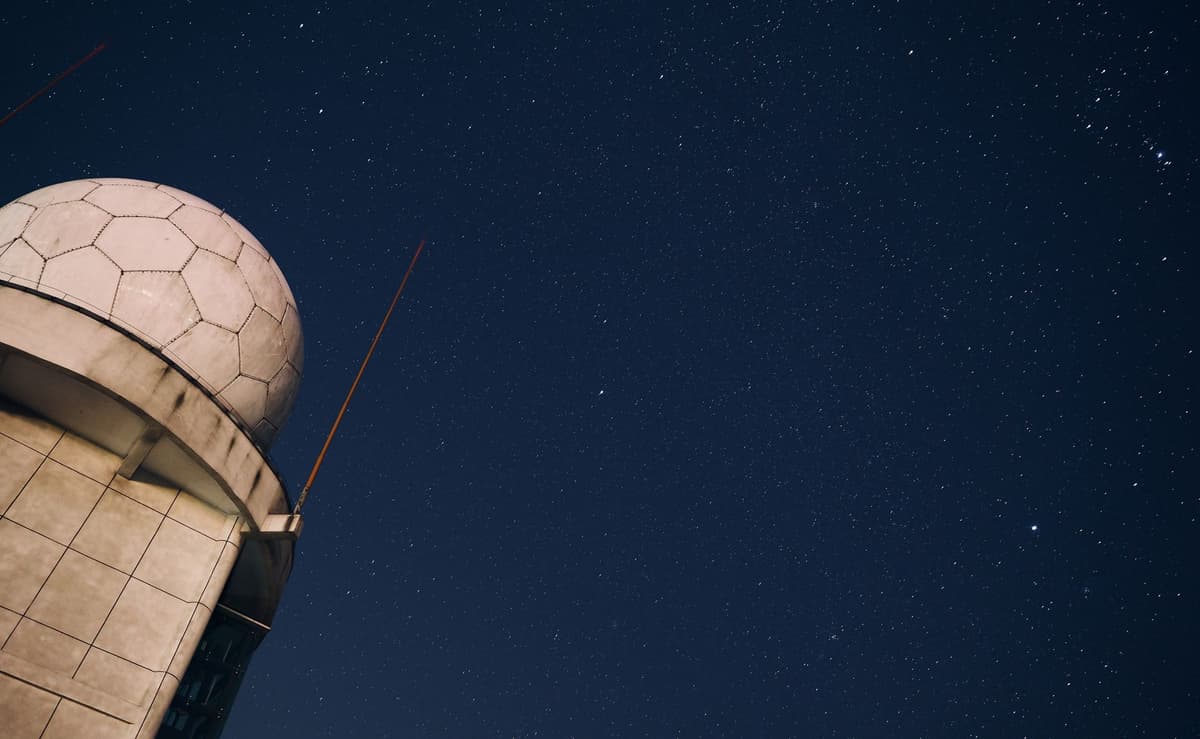
Think about the sensitivity of modern research telescopes. They are designed to capture photons that have traveled for billions of years from the edges of the observable universe. Now, introduce a fleet of orbital mirrors catching the sun. Even if the beam is directed at a specific solar farm in California, the scattering of light in the upper atmosphere—what scientists call skyglow—will bleed outward for hundreds of miles.
- Optical telescopes will see their exposure times ruined by bright streaks of stray light.
- Sensitive detectors could be permanently damaged if they accidentally point too close to a reflected beam.
- The sky, which used to be a shared human heritage, becomes a crowded billboard of corporate lighting projects.
I wonder what happens to our collective imagination when we can no longer look up and feel small. There is something deeply humbling about staring into a truly dark sky. It forces us to confront our insignificance. If we replace that vast, silent void with a patchwork of commercial spotlights, do we lose a piece of our humanity in the process?
The Rhythms We Are About to Disrupt
It is not just the astronomers who should be worried. Every living thing on this planet evolved under a strict, unyielding binary: day and night. The circadian rhythms of plants, insects, birds, and mammals are hardcoded into their DNA. By introducing artificial twilight to the ecosystem, we are running an uncontrolled experiment on the natural world.
Consider migrating birds that navigate by the stars, or nocturnal pollinators that only emerge when the shadows are deepest. A three-mile-wide beam of light hitting a forest at 2:00 AM is a system shock. Trees under constant light do not shed their leaves properly; insects exhaust themselves flying toward the artificial glow until they die.
We have already seen the devastating effects of urban light pollution on coastal sea turtle hatchlings, which crawl toward city lights instead of the moonlit ocean. What happens when the light source is moving across the sky, mimicking a second, faster moon? We are playing with a delicate ecological clock, and we do not even know where the gears are located.
What This Actually Means
This FCC approval is just for a test, a brief proof of concept. But history tells us that once the technology is proven and the regulatory door is nudged open, the floodgates follow. If Reflect Orbital succeeds, competitors will emerge. We could see dozens, then hundreds of these mirrors orbiting overhead, turning the night sky into a shifting grid of commercial illumination.
We need to ask ourselves where the boundary lies between progress and preservation. Is the generation of a few extra gigawatt-hours of clean energy worth the permanent alteration of our planet's night? If we solve the climate crisis by destroying our connection to the cosmos, it feels like a pyrrhic victory.
Maybe the darkness is not an obstacle to be overcome. Maybe it is a sanctuary we need to protect. I hope we realize that before the last true night fades into a perpetual, corporate-sponsored twilight.
Quick Answers
What did the FCC actually approve?
The FCC granted a temporary experimental license to Reflect Orbital to test their satellite-based mirror technology, allowing them to project a beam of reflected sunlight to specific ground locations for brief periods.
How bright will this artificial light be?
According to the company, the light will be roughly equivalent to the brightness of twilight, not full midday sun, but still bright enough to be easily seen and to interfere with astronomical observations.
Why can't we just use batteries for solar power instead?
Batteries are expensive to build and maintain at grid scale. Reflect Orbital argues that beaming sunlight directly to existing solar panels at night is a cheaper, more direct way to solve the evening energy dip.