
The Brain as a Regulated Utility
I spent twenty minutes yesterday scrolling through a feed I didn't even like, and I can't tell you a single thing I saw. It’s that familiar, hazy fugue state where your thumb moves independently of your brain. Now, the European Commission is effectively arguing that this isn't just a personal failing or a bad habit—it’s a product defect. By investigating Meta for 'addictive design' under the Digital Services Act, they are moving past the old arguments about what we say online and focusing instead on how the machine makes us feel. It makes me wonder: if the EU succeeds in classifying 'time spent' as a liability rather than a metric of success, what does a billion-dollar platform even look like?
We are entering an era where the neurological 'industrial design' of an app is being treated with the same scrutiny as the safety ratings of a car. For a decade, the tech industry has treated dopamine as a free resource to be mined, much like coal or oil. But the DSA represents a shift toward environmentalism for the mind. If you can't use 'rabbit hole' algorithms or intermittent variable rewards to keep people glued to the glass, the entire valuation of these companies starts to look a bit shaky.
The Architecture of the Loop
Designers at companies like Meta have spent years perfecting the 'pull-to-refresh' mechanism, which is functionally identical to a slot machine. You pull the lever, you wait a beat for the animation, and you get a reward. Maybe it's a photo of a friend; maybe it's a depressing news headline. The unpredictability is the point. The EU is looking at these specific features—the infinite scroll, the autoplaying videos, the 'read' receipts—and asking if they are intentionally exploitative. I'm curious if we can even imagine an Instagram that doesn't try to trick us into staying five minutes longer than we intended.
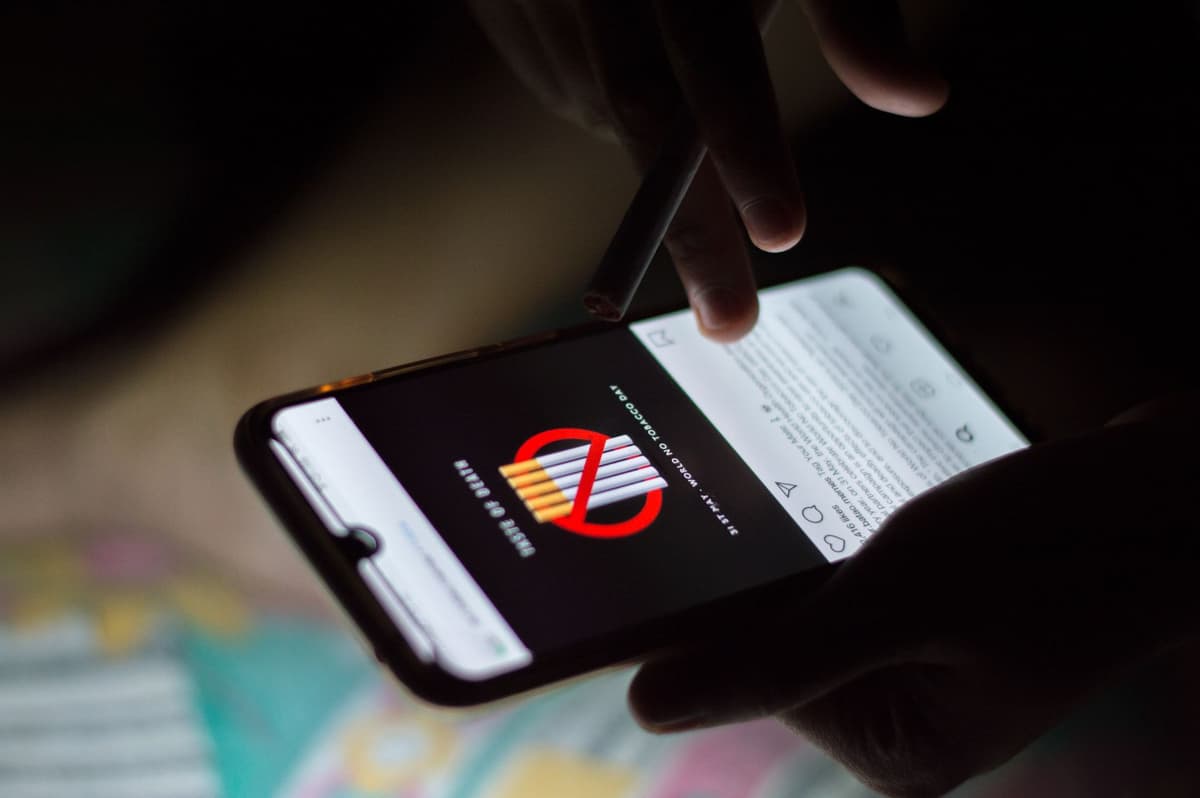
If these features are phased out or heavily restricted, the 'attention economy' faces a fundamental accounting crisis. Right now, Meta's average revenue per user (ARPU) in Europe is roughly $25.52. That number is built on the back of sheer volume—the more seconds you spend on the app, the more ad slots they can sell. If the EU forces a 'design for boredom' or at least a 'design for intentionality,' that revenue model doesn't just dip; it might collapse. It forces a pivot toward quality over quantity, which is something social media has never been particularly good at.
A Pivot to Where Exactly
What happens when 'time spent' is no longer a viable business metric? We might see a return to the subscription models that tech giants have spent years avoiding. If Meta can't monetize your addiction, they have to monetize your utility. This leads to a fascinating fork in the road: either the internet becomes a place of high-quality, paid tools, or it becomes a wasteland of ghost towns because nobody has the 'itch' to check them anymore. I’m genuinely unsure if these platforms have any value left once you remove the addictive hooks.
There is also the question of how you even measure 'addictive design' in a court of law. Does a 15% increase in retention qualify as a health hazard? Does the presence of a red notification dot constitute a breach of the DSA? The EU is currently looking at whether Meta’s systems exploit the 'inexperience and vulnerabilities' of minors, but the logic applies to all of us. We are all vulnerable to a well-timed dopamine hit. Watching a group of regulators try to quantify the 'stickiness' of an interface is like watching a group of architects try to legislate how much fun a playground should be.
What This Actually Means
This isn't just another fine; it’s a direct assault on the engineering philosophy of the last fifteen years. For the first time, 'user engagement' is being framed as a potential crime. If the EU sets a precedent here, the ripple effects will hit every app on your home screen. Developers will have to start asking 'will this make the user too happy for too long?' before they ship a new feature.
We might be witnessing the birth of 'Slow Tech.' Just as the slow food movement reacted to the industrialization of our diet, this regulatory push might force a more nutritious, less processed digital experience. It’s a gamble. We might find out that without the dopamine loops, we don't actually like these products at all. But I think I'd rather find that out now than spend another decade scrolling until my eyes ache.
Quick Answers
Is the EU banning Instagram?
No, they are investigating whether specific design features like infinite scroll and certain algorithms violate the Digital Services Act's safety requirements.
What is 'addictive design' anyway?
It refers to UI/UX choices—like variable rewards and frictionless scrolling—that are engineered to keep users on an app for as long as possible by triggering dopamine releases.
Will this change how my apps work?
Potentially, yes; if Meta is found in breach, they may have to offer 'neutral' versions of their feeds that don't use habit-forming algorithms to sort content.