The Ghost in the Browser Tab
There is something deeply hypnotic about watching a 3D crankshaft spin at 7,000 RPM inside a Chrome window. It isn’t just a game or a clever bit of JavaScript; it is a mathematical recreation of a thousand tiny explosions happening in sequence. As the automotive world shifts toward the silent, high-torque hum of electric motors, these high-fidelity simulators are quietly becoming the last repositories of mechanical intuition. We are essentially embalming the internal combustion engine (ICE) in code, ensuring that the violent, beautiful physics of the 20th century don't vanish just because we’ve stopped selling gas.
I wonder if we realize how much tactile knowledge is about to become abstract. When a kid in 2050 wants to understand why their grandfather obsessed over "valve float" or the specific rasp of a flat-plane crank, they won't go to a garage; they’ll go to a URL. This isn't just about nostalgia. It’s about the fact that an engine is a masterpiece of thermodynamics that we are collectively deciding to stop building. If we don't simulate it now, while the engineers who built the real things are still alive to verify the math, we lose the recipe forever.
Math as a Form of Preservation
Traditional museums are great for looking at the metal, but a static engine on a stand is a corpse. It tells you nothing about the way pressure waves move through an intake manifold or how a specific fuel-air ratio changes the color of a flame. Web-based simulators like the ones built by enthusiasts using real-time fluid dynamics are doing something a physical museum cannot: they are preserving the behavior of the machine. They allow us to poke the ghost and see how it reacts.
Take the work of developers who are modeling combustion stability down to the microsecond. They are using equations that have been refined since the mid-1800s to create a "living archive." It’s a strange paradox that the very technology replacing the ICE—high-performance computing and silicon—is also the only thing capable of keeping its memory functional. We are using the successor to build a digital sarcophagus for the predecessor, and the level of detail is staggering. You can hear the simulated metal expand as it gets hot. You can feel the struggle of the idle air control valve trying to keep the engine from stalling under load.
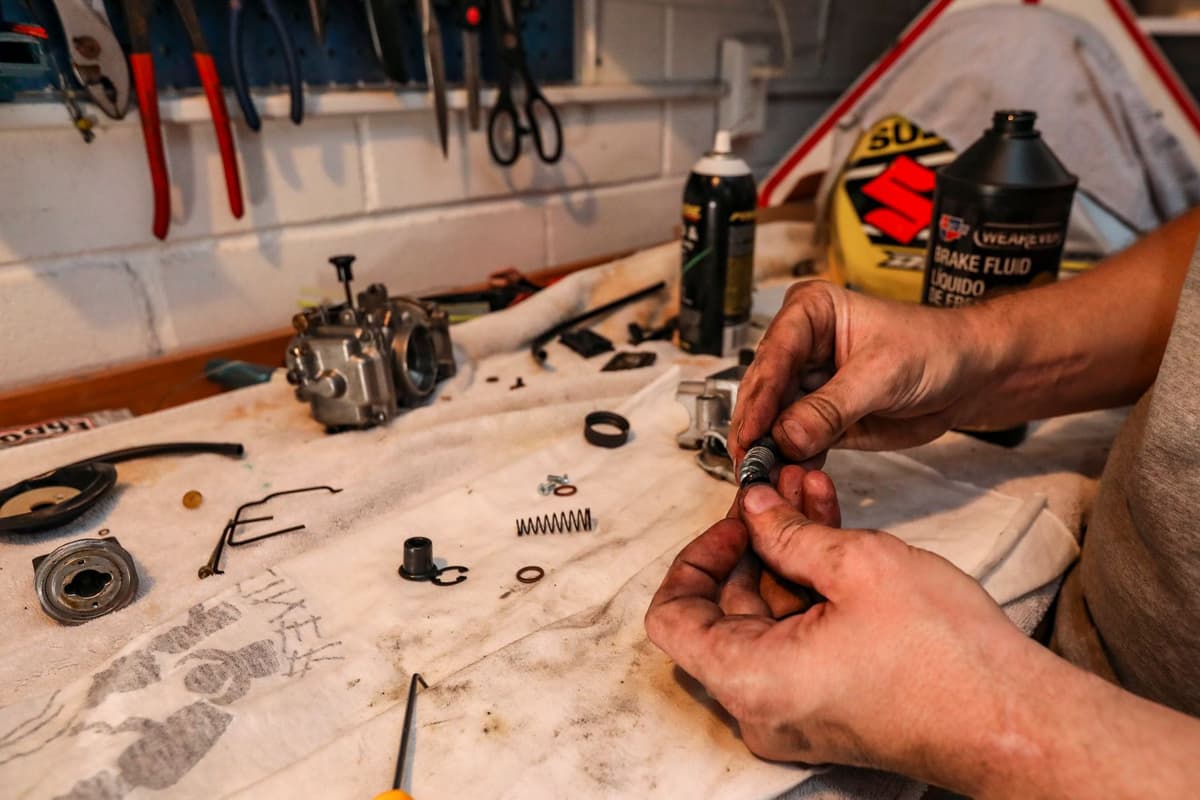
Photo by Mick Haupt on Pexels
The Thermodynamics of a New Dark Age
I’ve been thinking about what happens when the last gas station closes. Not the environmental impact—which is clearly a net positive—but the cultural vacuum. Mechanical engineering has been the backbone of human progress for over a century, and there is a specific kind of "mechanical sympathy" that comes from working with physical linkages and thermal cycles. If we move entirely to solid-state electronics, do we lose a part of our problem-solving DNA? These simulators might be the only bridge left.
- They allow for "impossible" experiments, like running an engine on pure hydrogen or changing the gravity of the simulation to see how oiling systems fail.
- They provide a zero-emission classroom where a student can blow up a virtual engine ten times a day without wasting a drop of fossil fuel or creates a single gram of CO2.
- They democratize specialized knowledge that used to be locked behind $50,000 dynamometer setups and proprietary software.
It makes me wonder if the "digital twin" is actually more important than the original. In a physical engine, you can't see the flame front propagate through the cylinder. In a simulator, you can pause time, slice the engine in half, and watch the atoms dance. We are gaining a perspective on the ICE just as we are walking away from it, like finally understanding a partner only after the divorce papers are signed.
What This Actually Means
We are entering an era of "clean mechanical heritage." The pivot to EVs is necessary for the planet, but the ICE is too complex and historically significant to simply let rust into the ground. These high-fidelity simulators represent a middle ground where we can appreciate the ingenuity of the past without the carbon debt. It’s a way to keep the fire burning without actually burning anything.
Ultimately, this is about more than just cars. It’s a blueprint for how we might preserve other "dirty" technologies as we transition to a sustainable future. We are learning how to separate the utility of a machine from its soul, porting the latter into a digital space where it can live forever, perfectly tuned and perpetually ready to start. I find it comforting that the sound of a cold-start V8 might never actually disappear; it's just moving to a different kind of architecture.
Quick Answers
Are these simulators actually accurate enough for real engineering?
Yes, many use the same Navier-Stokes equations and thermodynamic models used by professional OEMs during the design phase, just optimized for web browsers. They aren't just toys; they are mathematical mirrors of reality.
Why not just keep a few real gas engines in museums?
Fuel stability, gasket rot, and parts availability make maintaining a fleet of running 20th-century engines nearly impossible over a 100-year timeline. Digital files don't leak oil or require leaded gasoline to stay functional.
Is there a benefit to the environment here?
Absolutely, as it allows thousands of students to learn the principles of power generation and heat transfer without the massive carbon footprint and hazardous waste associated with running physical test benches.