Survival is rarely an accident in the global economy. For the École d'horlogerie de Trois-Rivières to remain the sole institution of its kind in Canada after 80 years suggests something far more significant than mere tradition. We are witnessing a sharp divergence in the labor market where the middle ground of 'skilled' work is being hollowed out by automation, leaving a high-value vacuum that only hyper-niche, manual expertise can fill. This isn't about the quaint charm of gears; it is about the cold reality of economic scarcity.
In a world where software can simulate almost any logical process, the physical manipulation of objects at a microscopic scale becomes a premium sovereign skill. The watchmaker represents the pinnacle of this defiance. When a technician sits at a bench in Trois-Rivières, they are engaging in a form of labor that is functionally immune to the pressures of generative AI or mass-market robotics. You cannot prompt a machine to possess the tactile intuition required to calibrate a balance spring by hand. That intuition is the new gold standard of job security.
The Paradox of the Digital Age
There is a profound irony in the fact that as our lives become more digitized, the demand for purely mechanical excellence skyrockets. The luxury watch market has seen exports from Switzerland alone reach approximately $28.5 billion in 2023. This growth isn't driven by a sudden need to tell time—your microwave and your phone do that with 100% accuracy. It is driven by a global class of consumers who are desperate for the authentic, the physical, and the permanent.
This demand creates a brutal bottleneck. A luxury brand can manufacture more steel cases, but it cannot manufacture more master watchmakers overnight. The three-year program in Trois-Rivières is a bottleneck by design. It requires a level of patience and neurological discipline that the modern education system has largely abandoned. By maintaining these standards, the school has inadvertently positioned its graduates as the ultimate specialized labor force in a market where 'rare' is synonymous with 'valuable.'
We often mistake progress for the replacement of the old by the new. In reality, progress often pushes the most refined versions of the old into the realm of high-stakes luxury. The students at this school are not learning a dying trade; they are mastering a language of precision that the digital world has forgotten how to speak. They are the mechanics of the elite, maintaining assets that are expected to outlast the very servers that currently run our global financial systems.
Sovereignty in the Smallest Details
When we talk about economic resilience, we usually discuss supply chains or energy independence. We rarely discuss the sovereignty of skill. Canada’s reliance on a single point of failure for horological education is a risk, but it also highlights the concentration of value. If this school were to close, the domestic capacity to service, repair, and innovate within high-end mechanical systems would evaporate.
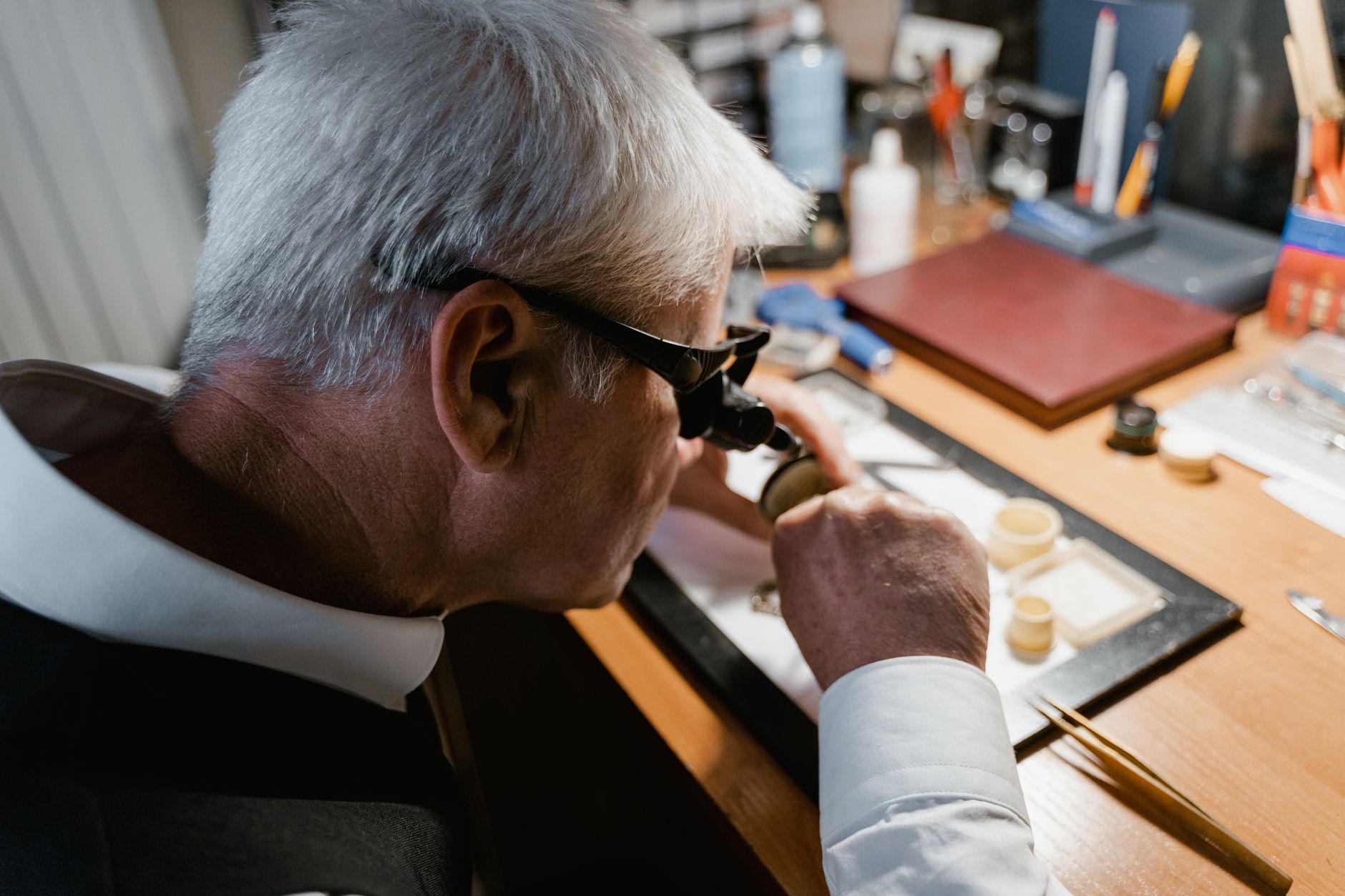
Photo by Tima Miroshnichenko on Pexels
This concentration of skill creates a micro-economy that is insulated from the typical boom-and-bust cycles of the tech sector. While software engineers face layoffs as companies 'optimize' through AI, the demand for someone who can troubleshoot a tourbillon remains constant. The skill is non-transferable to a machine, making the worker the ultimate owner of the means of production. In the 21st century, the most radical thing a worker can do is possess a skill that a computer cannot mimic.
This resilience is also a matter of geography. Trois-Rivières has become an unlikely node in a global network of prestige. It proves that specialized excellence does not need a sprawling tech hub to thrive; it only needs a commitment to a standard that does not compromise for the sake of speed. The school’s longevity is a testament to the fact that quality is its own marketing strategy.
The High Cost of Scalability
The obsession with scalability has ruined many industries. By trying to make everything faster and cheaper, we have created a world of disposable goods and fungible skills. Watchmaking is the antithesis of this trend. It is intentionally slow. It is stubbornly difficult. It is expensive because it must be. The École d'horlogerie de Trois-Rivières understands that the moment you try to scale the unscalable, you destroy the very value you are trying to capture.
We are seeing a return to the guild mentality, where the mastery of a specific craft provides a level of social and economic standing that a general degree no longer guarantees. This isn't a regression; it's a recalibration. As we automate the 'average,' the 'exceptional' becomes the only viable path for high-level human contribution. The students in Quebec are not just learning to fix watches; they are learning how to be indispensable.
This shift has implications for how we view vocational training across the board. If we treat trade schools as a backup plan for those who can't make it in the 'knowledge economy,' we are fundamentally misreading the market. The knowledge economy is being automated. The 'precision economy'—the world of high-end manufacturing, micro-mechanics, and artisanal engineering—is where the real growth lies.
What This Actually Means
The persistence of the École d'horlogerie de Trois-Rivières is a masterclass in economic positioning. It teaches us that in a saturated digital market, the most valuable assets are those that are physical, complex, and human-dependent. We are entering an era where the ability to manipulate matter with extreme precision will be more valuable than the ability to manipulate data.
For the broader economy, this means we must rethink our definition of 'high-tech.' A mechanical watch is a high-tech instrument, even if it doesn't have a battery. The tools and techniques taught in Trois-Rivières are a form of specialized technology that has been refined over centuries. To lose that knowledge would be a form of civilizational forgetting that no amount of cloud storage could fix.
Ultimately, the survival of this school is a reminder that excellence is its own hedge against inflation and automation. As long as there are people who value the permanent over the temporary, there will be a need for the hands that can build and maintain the permanent. The watchmakers of Trois-Rivières are not just keeping time; they are guarding the boundary of what it means to be a master of the physical world.
Quick Answers
Is watchmaking a viable career in the 21st century?
Yes, because the global luxury market is expanding and the supply of qualified technicians is shrinking, leading to high wages and extreme job security.
Why is this school specifically important to Canada?
It is the country's only pipeline for this specific expertise, making it a critical piece of cultural and economic infrastructure for the high-end retail and manufacturing sectors.
Can't robots eventually do this work?
While robots handle mass-production, the delicate adjustment, aesthetic finishing, and repair of unique mechanical movements require tactile feedback and judgment that current robotics cannot replicate.