The Midday Charity Hour
There is nothing quite like the sheer panic of an energy grid having too much of its own product. In Australia, the sun has become so aggressively productive that the market price for electricity during the day doesn't just hit zero; it goes through the floor into the basement of negative territory. Naturally, the solution isn't to build better storage or fix the aging infrastructure. Instead, we have decided to force retailers to give it away for free between 10 AM and 1 PM. It is the ultimate 'happy hour,' except instead of half-price appetizers, you get the privilege of running your dryer while the sun tries to melt your driveway.
This is the pinnacle of human planning. We spent decades worrying about running out of energy, only to reach a point where we have to legally mandate people to use it so the transformers don't decide to retire early via a spectacular explosion. It’s a bold strategy for the retailers, who I’m sure are thrilled to be the only businesses on earth required by law to give away their primary commodity for three hours every single day. I look forward to the local bakery being forced to give away sourdough every time the oven gets too hot.
Robots Tending the Sun-Drenched Fields
Enter the 'Solar Grazing' revolution, a term that sounds like something a yoga instructor would do on a retreat but is actually about sheep and silicon. Because we have all this free power and nowhere to put it, we’ve decided to turn farms into giant, automated playgrounds. Farmers are now deploying autonomous electric weeding robots that scurry around like high-tech beetles, zapping weeds with the precision of a surgeon. Since the power is free, these robots are essentially the only employees in history that don't cost anything to feed, provided they only work while the sun is high enough to cause second-degree burns.
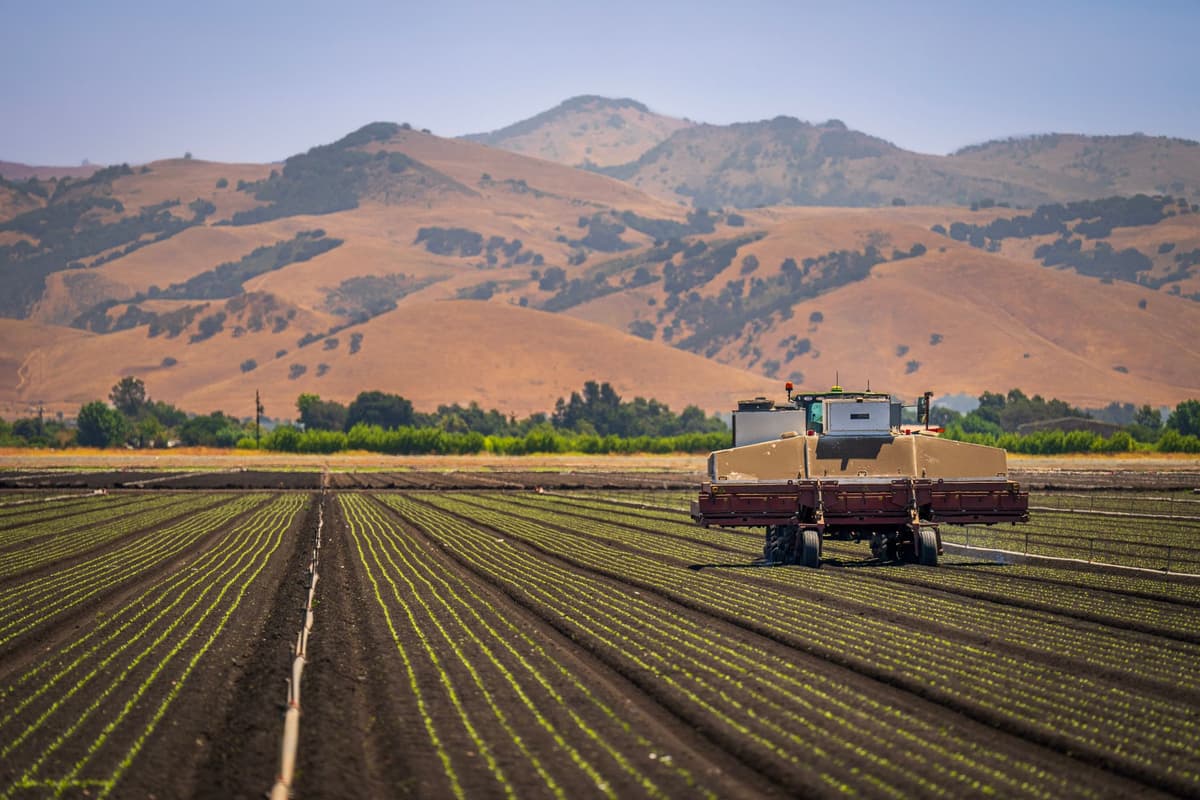
Photo by Mark Stebnicki on Pexels
We are witnessing the birth of a world where the peak of the day—traditionally the time when every sensible living thing hides in the shade—is now the most productive hour on the calendar. We’ve managed to turn heat-stress into a business model. While the sheep huddle under the solar panels, enjoying 'vertical cooling systems' powered by the surplus juice, the robots are out there doing the heavy lifting. It’s a charming vision of the future: a landscape of shimmering glass and steel where the only thing actually working is a machine that doesn't feel the 45-degree Celsius heat.
The Irony of Precision Cooling
There is a special kind of irony in using massive amounts of energy to cool down livestock that are only hot because we’ve paved their grazing land with heat-absorbing solar arrays. We have created a closed-loop system of absurdity. We harvest the sun to power a fan to cool the sheep that are living under the things harvesting the sun. It’s like wearing a heavy winter coat in July just so you have an excuse to carry around a portable air conditioner.
This 'Agrivoltaic' economy is touted as a miracle of carbon-neutral precision agriculture. In reality, it’s a desperate scramble to find a use for a surplus we can't manage. We are literally inventing ways to spend energy because we’ve become too good at making it and too bad at moving it. If we aren't careful, we might accidentally solve the climate crisis simply because we were too embarrassed to admit we didn't know how to turn the solar panels off.
What This Actually Means
At its core, the Australian 'Solar Grazing' mandate is a confession that our energy transition is being led by the weather rather than a coherent plan. By forcing retailers to subsidize midday power, the government is essentially betting that the private sector will invent enough gadgets—like weeding robots and livestock chillers—to soak up the excess. It is 'trickle-down thermodynamics,' where the overflow of a mismanaged grid eventually fuels a niche market for high-tech farm toys.
Ultimately, this turns the farm into a giant battery that doesn't actually store anything. We aren't saving the energy for later; we are just burning it as fast as possible on tasks that used to be done by hand or by nature. It’s a fascinating pivot. Instead of making energy cheaper for everyone all the time, we’ve made it free for a specific window, ensuring that the only people who truly benefit are the ones who can afford a fleet of autonomous robots and a sophisticated cooling infrastructure for their cows.
Quick Answers
Why is the power free only during the day?
Because that’s when the sun is out and the grid is literally screaming for mercy from the sheer volume of solar input. It’s less of a gift and more of an emergency evacuation of electrons.
Do the robots actually work?
They work perfectly as long as they stay within the Wi-Fi range and don't get stuck in a gopher hole. They are the hardest working employees on the farm from exactly 10 AM to 1 PM.
Will my power bill go down?
Only if you plan on doing your laundry, vacuuming, and industrial metal smelting exclusively during your lunch break. For everyone else, the retailers will likely find a very creative way to make up the lost revenue in the evening.