The Billion-Dollar Bare Hand
It takes a special kind of talent to set $800 million on fire and come away with nothing but sweaty palms and a broken supply chain. Since 2020, the U.S. government has been throwing cash at domestic nitrile glove production like a gambler at a high-stakes craps table who doesn't realize the dice are glued to the felt. The goal was simple: stop relying on Southeast Asia for the one thing standing between a line cook’s bacteria and your $18 artisanal burger. We failed. Spectacularly.
While the Department of Defense and HHS were busy cutting checks to companies that had never seen a vat of synthetic rubber in their lives, Malaysia and Thailand continued to do what they’ve always done—actually produce things. We currently import roughly 99% of our medical and food-grade gloves. If a single shipping lane in the South China Sea gets a metaphorical flat tire, the entire American protein processing industry effectively grinds to a halt because, apparently, we've forgotten how to make mittens out of petroleum.
A Fragile Chain of Chicken Nuggets
Most people think of medical gloves as something used by doctors to snap dramatically before an exam. In reality, the global food chain is the biggest addict in the room. From the massive poultry plants in Georgia to the sandwich shop down the street, the modern food system is built on a foundation of disposable blue plastic. It is the literal skin of the industry. Without it, the USDA inspectors go home, the assembly lines stop, and the supply of chicken nuggets dries up faster than a politician's promise.
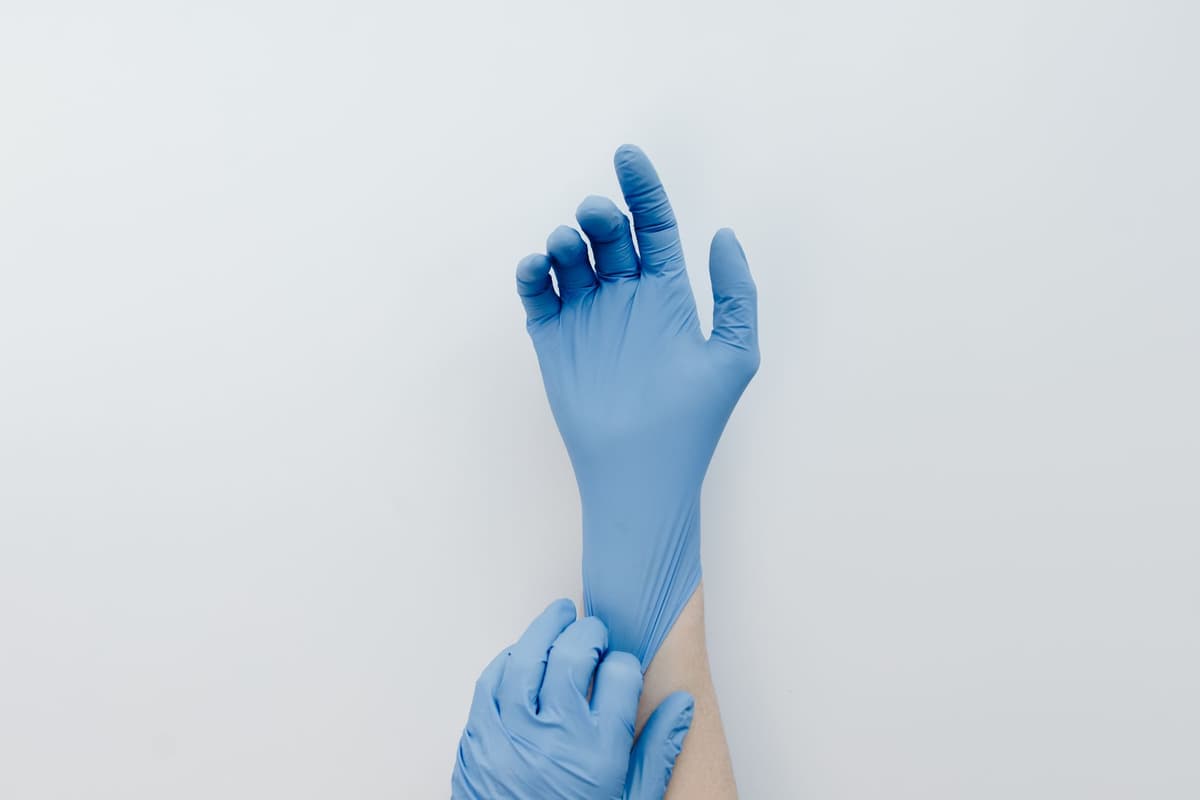
Photo by Tara Winstead on Pexels
We have created a system where the ability to safely process a cow depends entirely on the manufacturing output of a few concentrated industrial zones half a world away. This isn't just an inconvenience; it’s a single point of failure that we’ve decided to ignore because it’s cheaper to buy from overseas than to admit our "onshoring" initiatives were mostly just expensive press releases. We are one regional lockdown or trade spat away from eating dinner with our bare hands like it’s 1348.
The Art of the Failed Factory
Building a glove factory shouldn't be this hard. It’s a chemical dip-tank and a conveyor belt. Yet, the American attempts at this have been plagued by a mix of incompetence and market reality. When you give a company $100 million to build a plant, they tend to spend it on "consultancy fees" and "site preparation" rather than, you know, making gloves. By the time the factories were supposed to be online, the global price of gloves plummeted, and suddenly, the "patriotic" choice to buy American became a lot less appealing to procurement officers looking at their bottom lines.
- The US consumes roughly 100 billion gloves per year.
- Domestic production capacity currently sits at a rounding error.
- Most federal grants were awarded to startups with zero manufacturing history.
This is the hallmark of modern industrial policy: provide just enough funding to create a scandal, but not enough to actually build a competitive industry. We want the security of domestic production without the discomfort of actually paying for it or protecting it from international price dumping. It’s a strategy that works perfectly right up until the moment it doesn't.
What This Actually Means
This isn't really about gloves; it's about the fact that we have built a high-tech civilization on a pile of disposable toothpicks. We have optimized our food system for maximum efficiency and minimum resilience. Every time you see a "Made in the USA" sticker on a pack of bacon, remember that the hands that cut it were likely wrapped in imported rubber that we are physically incapable of replicating at scale on our own soil.
We spent a billion dollars to learn that you can’t simply wish a supply chain into existence with a government contract and a dream. The "Disposable Vulnerability" is a choice we make every day by prioritizing the lowest possible cost over the ability to function during a crisis. It’s a bold strategy, and I’m sure it will continue to work out exactly as well as it did in 2020.
Eventually, we might realize that being the world's most powerful economy doesn't mean much if you can't even manufacture the basic equipment required to make a sandwich safely. Until then, we’ll just keep writing checks and hoping the ships keep coming.
Quick Answers
Why can't we just make the gloves here?
We can, but it's expensive and the companies we gave money to were largely unqualified to run complex chemical manufacturing plants.
Does this really affect food prices?
Absolutely. If glove supplies tighten, processing plants slow down or shut down, which sends the price of meat through the roof faster than you can say "supply chain shock."
Where did the $1 billion go?
A mix of half-finished factories, corporate overhead, and a lot of very expensive PowerPoint presentations about how we were totally going to fix this.