Your Eyeballs Are Being Mugged
I used to think the pinnacle of visual manipulation was the Taco Bell commercial that made a lukewarm burrito look like a religious experience. I was wrong. We have now reached the point where scientists are using generative AI to create imagery specifically engineered to make your high-level visual cortex scream with joy while the rest of your brain sits in the corner wondering why we're staring at a pulsating neon blob of purple fractals. This isn't entertainment; it's a biological stick-up.
Imagine a world where you aren't watching a video because it has a good plot or even a cat doing something stupid. You’re watching it because the pixels have been mathematically optimized to stimulate your ventral stream—the part of your brain that recognizes objects—so intensely that your neurons start high-fiving each other. It’s the equivalent of a chef skipping the tongue entirely and just injecting liquid MSG directly into your cerebellum.
The Ventral Stream Is A Cheap Date
The ventral stream is basically the 'What' pathway of the brain. It’s the guy in the warehouse who identifies that a shape is a chair, a dog, or your ex-boyfriend’s questionable new haircut. Normally, this system is pretty discerning. But researchers found that by using a deep neural network to 'evolve' images, they can create 'synthetic controllers'—visual patterns that trigger neural firing rates far beyond what any natural object can achieve.
It’s like finding the cheat code for a video game, but the video game is your own perception. If a normal sunset gives your brain a 4/10 buzz, these AI-generated nightmares are a 15/10. Your brain sees these images and goes, "I don't know what that is, but it's the most 'THAT' thing I've ever seen!" It’s a super-stimulus. It’s like feeding a toddler a gallon of high-fructose corn syrup and a sparkler; the system just wasn't built to handle that much input without vibrating into another dimension.
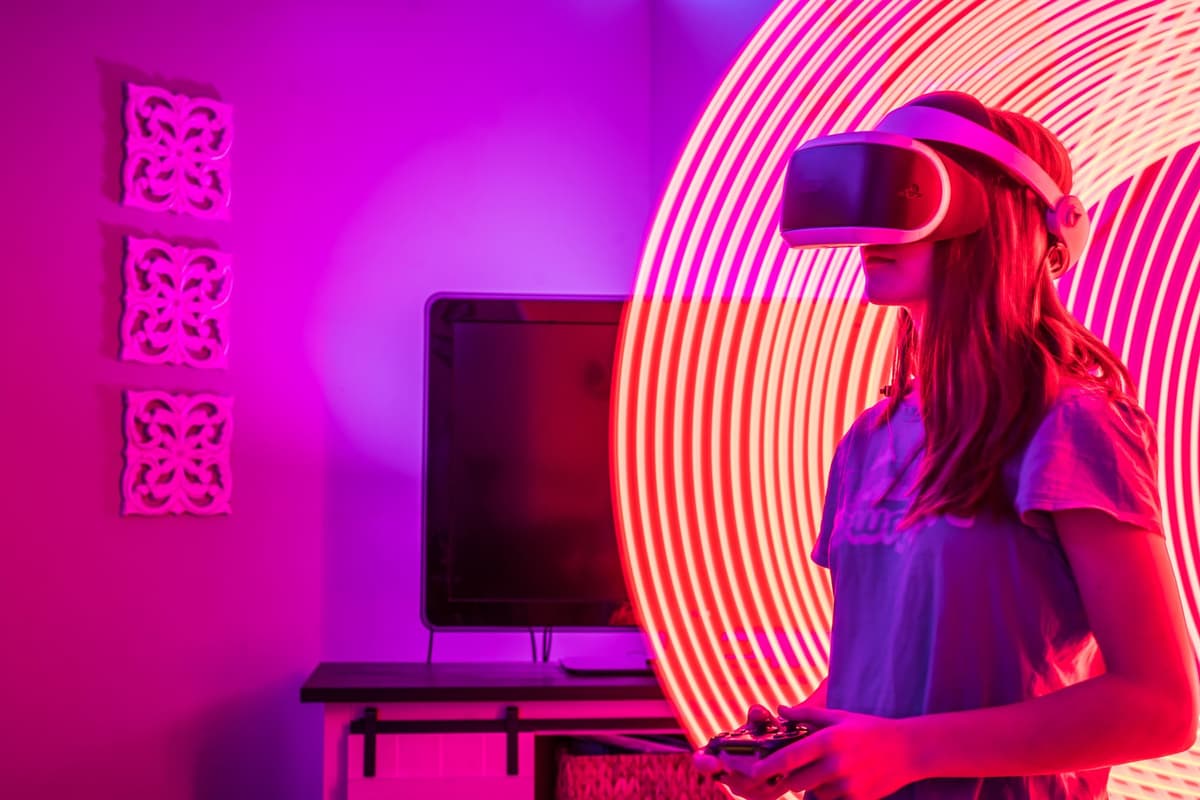
Photo by Jessica Lewis 🦋 thepaintedsquare on Pexels
We are talking about 'Inception' levels of interference, but instead of Leonardo DiCaprio whispering about dreams, it’s a bunch of math equations whispering, "Hey, you like circles? How about the MOST CIRCLE CIRCLE TO EVER CIRCLE?" It’s honestly rude. My brain has enough problems remembering where I put my keys; it doesn't need to be hijacked by a rogue algorithm trying to maximize its firing rate.
Narrative Is For Losers And Philosophers
For the last several thousand years, we’ve relied on things like 'story' and 'meaning' to keep people looking at things. We had to build characters and tension. Now? That’s for suckers who don’t have access to a H100 GPU cluster. Why bother writing a compelling protagonist when you can just show a 12-second clip of shimmering, iridescent geometric slime that triggers the same neural response as winning the lottery?
- No more character development. Just raw, unadulterated cortical stimulation.
- Forget the three-act structure. We're moving to the 'one-act seizure of the visual system.'
- Directors won't win Oscars; they'll win 'Highest Mean Firing Rate per Millisecond' awards.
This is the ultimate evolution of the 'iPad Kid' phenomenon. We’re all becoming iPad kids, staring at shimmering digital sludge because our lizard brains literally cannot look away. It’s a sensory hostage situation. If the content is optimized for the hardware of the eye and the wetware of the brain, the 'mind'—the part of you that actually has opinions—is just a passenger in a car that’s being driven into a ditch by a very shiny, very fast AI.
What This Actually Means
In the short term, this means your TikTok feed is about to get significantly weirder. We’re moving past 'content' and into 'stimuli.' If developers can figure out the exact sequence of pixels to keep you in a state of involuntary visual arousal, they will. They aren't trying to entertain you anymore; they're trying to farm your ventral stream for engagement metrics. It’s the industrialization of the double-take.
Long-term, we have to ask what happens to our ability to appreciate things that don't hack our biology. If we spend all day staring at 'neuro-optimized' imagery, a real-life tree is going to look like a boring, low-resolution piece of garbage. We are essentially building a digital heroin that bypasses the ego and goes straight for the neurons. It’s a fascinating, terrifying, and incredibly stupid time to have a face.
Eventually, we might need 'neural firewalls' just to walk down the street without getting catatonic from a billboard that’s been tuned to our specific visual frequency. Until then, I’ll be over here, staring at a blank wall and trying to remember what it feels like to have a thought that wasn't sponsored by an adversarial generative network.
Quick Answers
Is this actually dangerous for my brain?
Not in a 'your head will explode' way, but more in a 'your attention span will become the size of a caffeinated gnat' way. Your brain just gets exhausted from being poked by digital sticks.
Can I protect myself from these images?
Short of wearing a blindfold or moving to a cabin in the woods with no Wi-Fi, not really. Your visual system reacts faster than your conscious mind can say "Wait, that's just a math trick."
Why would anyone want to do this?
Money. If an advertiser can make you look at a screen for three seconds longer by using 'hyper-stimuli,' that’s worth billions. Biology is just the latest hurdle for the attention economy to jump over.