The Accidental Architect of the Sea
I’ve been staring at photos of dolosse—those massive, concrete jacks that look like someone dropped a giant’s toy set onto the shoreline—and wondering how something so brutalist could become so biological. Invented in 1963 by Eric Merrifield in East London, South Africa, the dolos was a response to a practical problem: the Indian Ocean is violent, and traditional square blocks keep getting tossed around like pebbles. The genius was in the geometry. By creating an 'H' shape with one twisted limb, Merrifield designed a block that doesn't just sit there; it entangles with its neighbors.
The math is fascinating because it relies on the energy of the wave to lock the blocks tighter together. But what we didn't plan for was how that same complexity creates a labyrinth of micro-habitats. When you drop a 30-ton dolos into the water, you aren't just building a wall. You are creating thousands of cubic meters of 'interstitial space'—the gaps between the limbs where the current slows down, the predators can't reach, and the sun still hits. It makes me wonder if we should be designing all our infrastructure with this kind of accidental generosity in mind.
A High-Rise for Abalone and Oysters
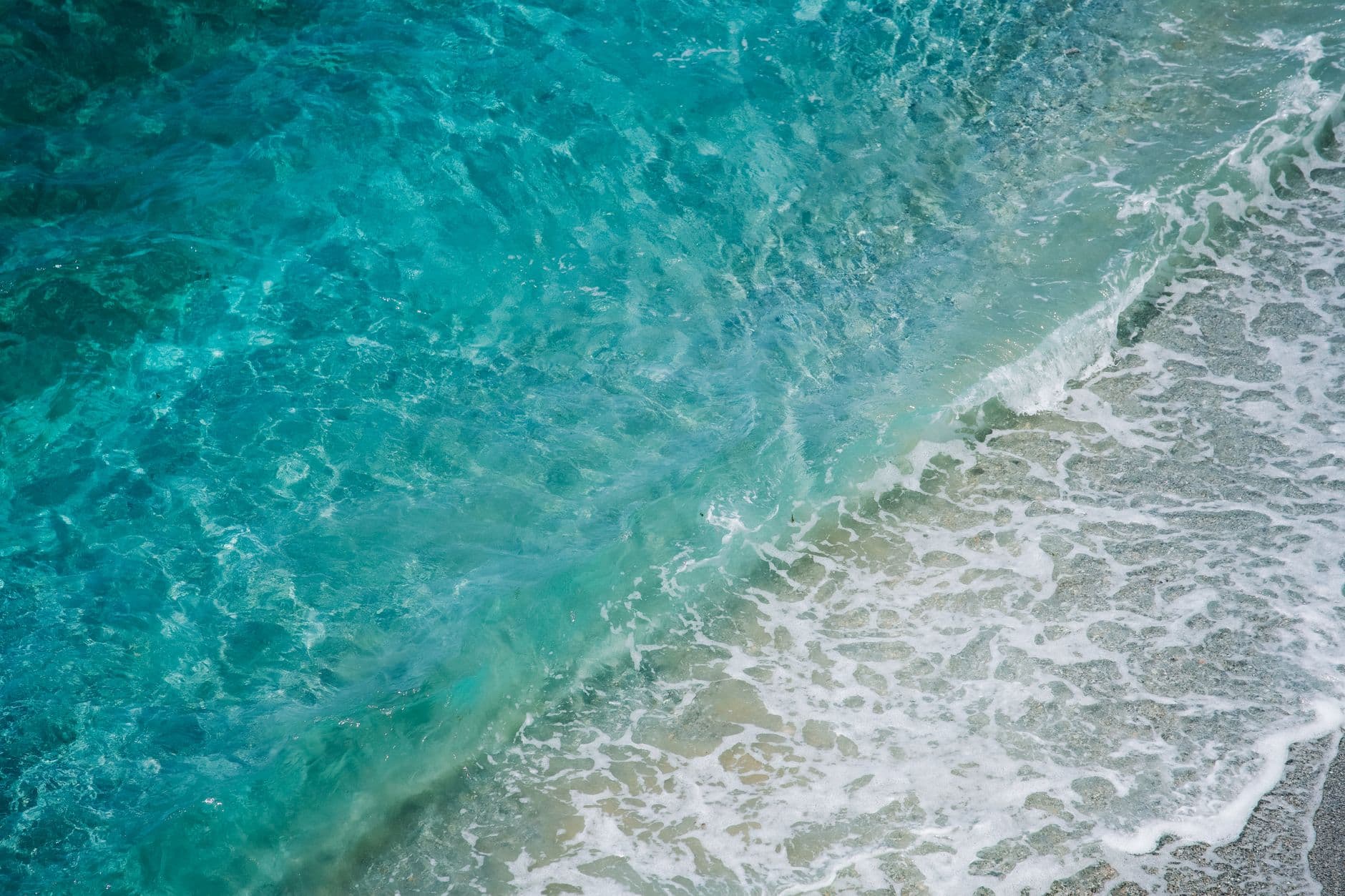
Coastal food systems are notoriously fragile because they exist in the 'crush zone' where the land meets the surf. If you've ever tried to farm mussels or protect an abalone nursery, you know that the biggest threat isn't just pollution—it's the sheer mechanical force of the water. Rising sea levels have turned standard swells into battering rams. This is where the dolos shifts from being a piece of civil engineering to a piece of agricultural equipment. By breaking the wave energy before it hits the shore, these blocks create 'pockets of calm' that are essential for aquaculture.
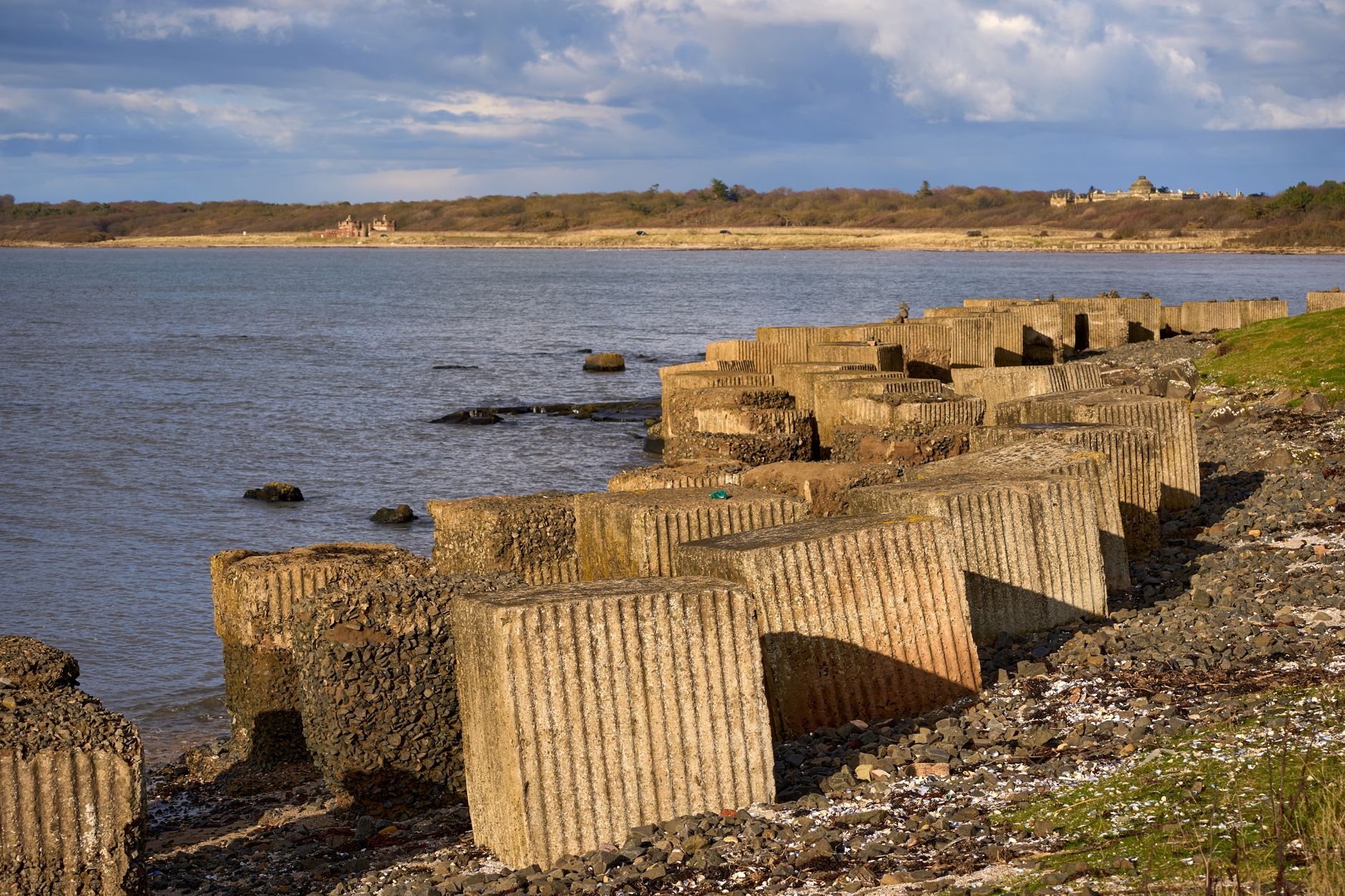
Photo by Valentine Kulikov on Pexels
Inside these concrete labyrinths, life takes hold with startling speed. In South African waters, the rough surface of the concrete—often made with local aggregates—becomes a perfect anchor for kelp holdfasts and crustose coralline algae. Once the plants arrive, the fish follow. We are seeing a phenomenon where these artificial reefs are actually more productive than some natural rocky shorelines because they provide more surface area per square meter. It’s a vertical farm, just one that we didn't have to plant.
- The complex shape prevents 'scour' (the erosion of the seabed at the base of the structure).
- The voids between blocks act as nurseries for juvenile reef fish that eventually populate commercial fishing grounds.
- The concrete acts as a thermal buffer, protecting intertidal species from the extreme heat of low-tide sun exposure.
Securing the Economy of the Shoreline
There is a direct line between the stability of a harbor wall and the price of fish at your local market. If a storm surge wipes out a pier or destroys a coastal road, the entire supply chain for local seafood collapses. In places like the Port of Richards Bay, which uses over 10,000 dolosse, the infrastructure isn't just protecting ships; it's protecting the processing plants and the cold storage facilities that keep small-scale fisheries alive. Without that geometric shield, the 'blue economy' would be at the mercy of every passing cyclone.
What really piques my curiosity is the longevity of these structures. A well-cast dolos can last 50 years or more. Over that half-century, it isn't just a static object; it becomes a biological record. Scientists are finding that the layers of calcium carbonate deposited by shellfish on these blocks actually help sequester carbon. It’s a tiny amount per block, sure, but when you consider there are millions of these things lining the coasts of South Africa, Japan, and the Mediterranean, the scale starts to look significant.
What This Actually Means
We often think of 'nature-based solutions' as things like planting mangroves or restoring salt marshes—and we should absolutely do those things. But the dolos suggests a third category: 'nature-adjacent' engineering. It’s the idea that we can build the heavy, brutal things we need for survival in a way that invites the rest of the planet to move in and help out. We didn't intend to build a reef; we intended to build a shield. The fact that the ocean turned one into the other is a lucky break we should be studying more closely.
As sea levels continue to rise—projections suggest a global increase of up to 1 meter by 2100—we are going to be building a lot more sea walls. If we just build flat, vertical concrete slabs, we create biological deserts. If we build with the complexity of the dolos, we might actually be able to save the very food systems that the rising tide is trying to swallow. It’s a rare case where the 'ugly' industrial solution is actually the more harmonious one.
Ultimately, the dolos reminds us that geometry matters. The way we shape our world dictates what can live in the gaps we leave behind. If we’re smart, we’ll start designing those gaps on purpose. We might find that the best way to feed a hungry planet is to give the ocean a better place to hide its young.
Quick Answers
Why is it called a dolos?
The name comes from the Afrikaans word for a sheep's knucklebone, which South African children traditionally used as toy playing pieces that resemble the block's shape.
Does the concrete hurt the water quality?
Modern marine concrete is designed to be pH-neutral once cured, and the rapid growth of algae and shellfish quickly 'skins' the block, sealing it from the environment.
Can't we just use natural rocks?
Natural rocks are often rounded and will roll during massive storm surges; the dolos is specifically designed to 'lock' with others, making the entire wall act as a single, flexible unit.