The Soleus Muscle Is Basically A Secret Engine
We have spent decades being told that unless you are wearing neon spandex and sweating through a headband while a guy named Chad screams at you to 'find your limit,' it doesn't count. The fitness industry is built on the lie that exercise must be a miserable, hour-long ritual of self-flagellation. Then comes the soleus muscle—a thin slice of meat tucked behind your calf—to tell us that we’ve been overthinking it. It turns out that doing 'soleus pushups' (which is just a fancy way of saying 'bouncing your heels while sitting down') can lower blood sugar spikes by 52% after a meal.
Imagine that. You are sitting there, appearing to be a normal, functioning employee, but underneath the desk, your legs are vibrating like a nervous Chihuahua. To the outside world, you look like you’re waiting for a very important phone call or perhaps you’ve had four espressos too many. In reality, you are a metabolic god. You are burning through glucose like a teenager with a stolen credit card at a candy store, and you aren't even out of breath.
This isn't just a 'hack'; it’s a glitch in the human operating system. The soleus is unique because it doesn't rely on glycogen—the stuff your muscles usually store and burn through in a panic. Instead, it pulls blood glucose directly from your system. It’s the only part of your body that operates with the efficiency of a Toyota Prius while the rest of you is a gas-guzzling 1974 Humvee idling in a Chick-fil-A drive-thru.
The Era Of The Micro-Dose
The traditional fitness paradigm is a binary: you are either a 'runner' or you are a 'sentient potato.' This is exhausting. The emerging science of 'exercise snacks' suggests we should treat movement like we treat Pringles—small, frequent, and slightly addictive. Research shows that 40 seconds of high-intensity movement—think running up the stairs like a monster is chasing you—is enough to reset your insulin sensitivity for hours.
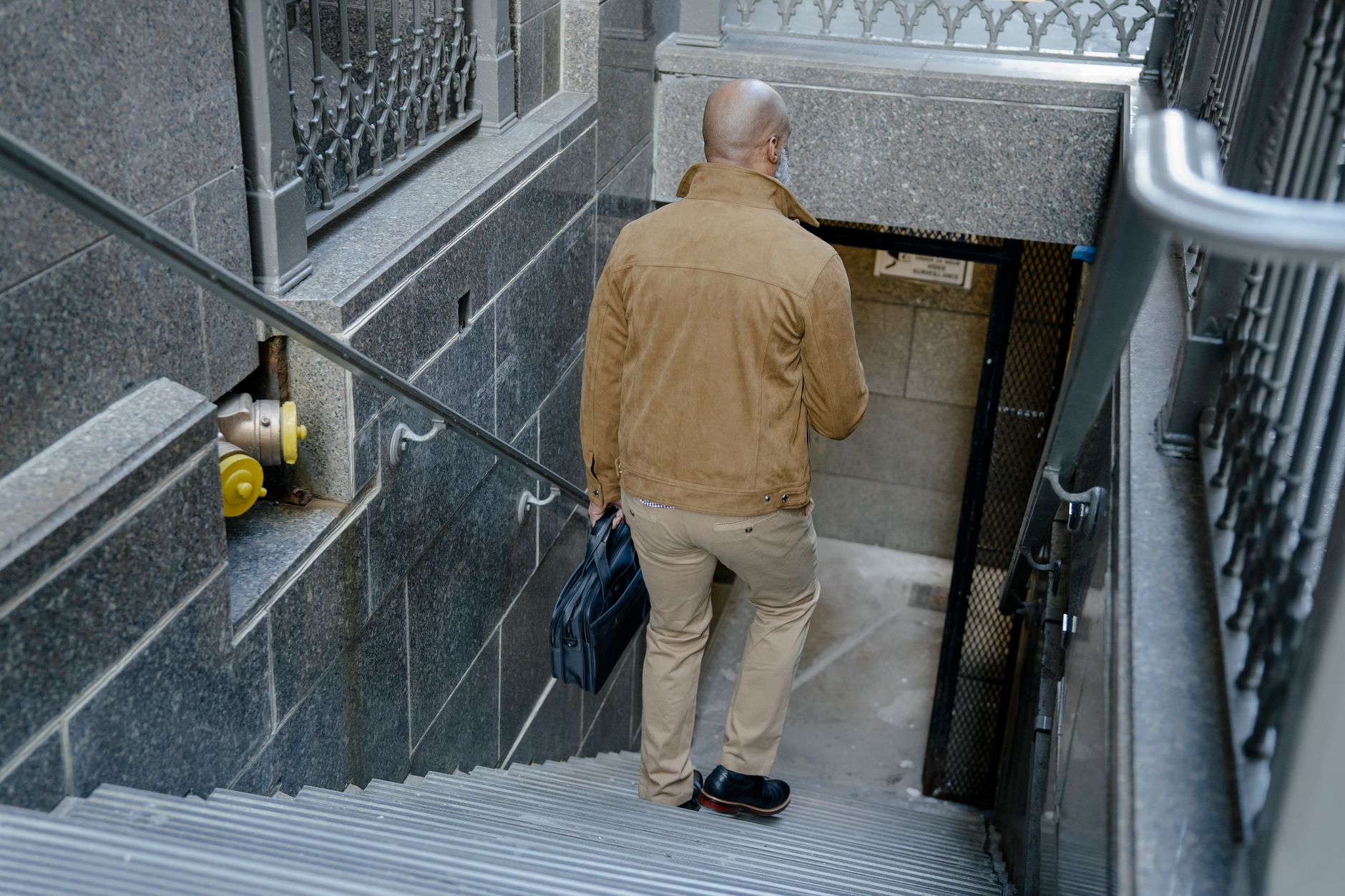
Photo by Barbara Olsen on Pexels
Think about the social implications. You’re in a high-stakes board meeting. The CEO is talking about 'synergy' and 'vertical integration.' Suddenly, your Apple Watch pings. You stand up, do ten frantic jumping jacks while maintaining eye contact with the CFO, and then sit back down without explanation. This is the future of health. It’s chaotic, it’s weird, and it’s significantly more effective than that dusty treadmill in your basement that currently functions as a very expensive coat rack.
We have been conditioned to believe that health requires a 'session.' We need the right shoes, the right playlist, and a water bottle that holds three gallons of liquid. Micro-dosing movement removes the barrier of 'effort.' If you can do it while your microwave is heating up a questionable burrito, you have no excuse. It’s the ultimate democratization of fitness: even the laziest among us can participate if the requirement is only sixty seconds of vibrating.
Glucose Is The Villain In This Sitcom
When we eat, our blood sugar levels go up. In a healthy world, our bodies handle this like a professional valet parking cars. In our modern, sedentary world, the valet has fallen asleep in the breakroom, and the cars (glucose) are just crashing into each other in the lobby. This leads to type 2 diabetes, heart disease, and that general feeling of being a damp sponge by 3:00 PM.
- Postprandial glucose spikes are the silent killers of the cubicle farm.
- Sitting still for 8 hours is basically telling your pancreas to 'take the day off.'
- A 2-minute walk every hour is more effective for blood sugar than one giant gym session at 6:00 PM.
- Your body wasn't designed to be a right angle for a third of its life.
By introducing these 'snacks,' we are essentially poking the valet with a stick every twenty minutes. It keeps the system honest. You don't need to run a marathon to fix your metabolism; you just need to stop being a statue. The sheer absurdity of 'exercise snacks' is that they work better than the 'all-or-nothing' approach because nobody actually does the 'all,' but everyone can do the 'snack.'
What This Actually Means
We are moving toward a world where 'working out' isn't a destination, but a background process. It’s the software update that runs while you’re using the computer. If we can accept that bouncing our heels and sprinting to the mailbox are legitimate medical interventions, we might actually survive the 21st century without our pancreases going on permanent strike.
This is a call to action for the fidgeters. For years, teachers told you to stop tapping your foot. They were wrong. You weren't being annoying; you were optimizing your metabolic health. You were a pioneer of the soleus pushup before it was cool. So go ahead, bounce that heel. Do a lap around the kitchen while the coffee brews. Be the person who does squats in the elevator.
Ultimately, the goal isn't to look like a fitness influencer. The goal is to make sure your blood doesn't turn into maple syrup while you're filling out spreadsheets. It’s a low bar, but thanks to the soleus muscle, it’s a bar we can actually clear without breaking a sweat.
Quick Answers
Do I really have to call them 'exercise snacks'?
Unfortunately, yes, because 'intermittent muscular contractions' sounds like a labor complication and 'fidgeting' doesn't get you a book deal.
Is the soleus pushup basically just a seated calf raise?
Yes, but calling it a 'pushup' makes it sound like you're a Navy SEAL instead of someone trying to justify staying on the couch for another three hours.
Can I do this while driving?
Technically yes, but please use your left foot for the bouncing so you don't accidentally play a game of 'Fast and Furious' with the minivan in front of you.
How many 'snacks' do I need a day?
Aim for one every hour. If you start feeling like a normal person who has energy, you've probably done enough.