Your Soul-Crushing Cosmic Notification Has Arrived
For centuries, astronomers had it too easy. They sat in cold domes, looked through glass, and felt a profound sense of wonder while pointing a telescope at a single, lonely smudge in the sky. It was quiet, it was deliberate, and frankly, it was inefficient. The Vera C. Rubin Observatory is here to fix that by replacing awe with a 3.2-gigapixel camera that functions less like a window to the heavens and more like a high-speed scanner for a cosmic grocery store. Starting in 2025, the Legacy Survey of Space and Time (LSST) will generate 10 million alerts per night. That’s 10 million things changing, moving, or exploding while you’re trying to sleep.
We have successfully transitioned from the era of the "Stargazer" to the era of the "Database Administrator." If you were hoping for more grainy photos of nebulae to put on your desktop background, you’re looking at the wrong project. This is about the firehose. It’s about 60 petabytes of raw data over a decade. We aren’t looking for the meaning of life anymore; we’re looking for a slightly more efficient way to write a Python script that filters out the 9,999,999 alerts that aren't actually interesting.
The World's Largest Digital Camera Is Judging You
The hardware is undeniably impressive, in the same way a giant industrial shredder is impressive. The camera is roughly the size of a small SUV and weighs 3,000 kilograms. It’s designed to capture the entire visible southern sky every few nights. It’s the ultimate celestial surveillance state. While previous telescopes were like reading a book one word at a time, the Rubin is like trying to read the entire library at once while someone screams the page numbers at you through a megaphone.
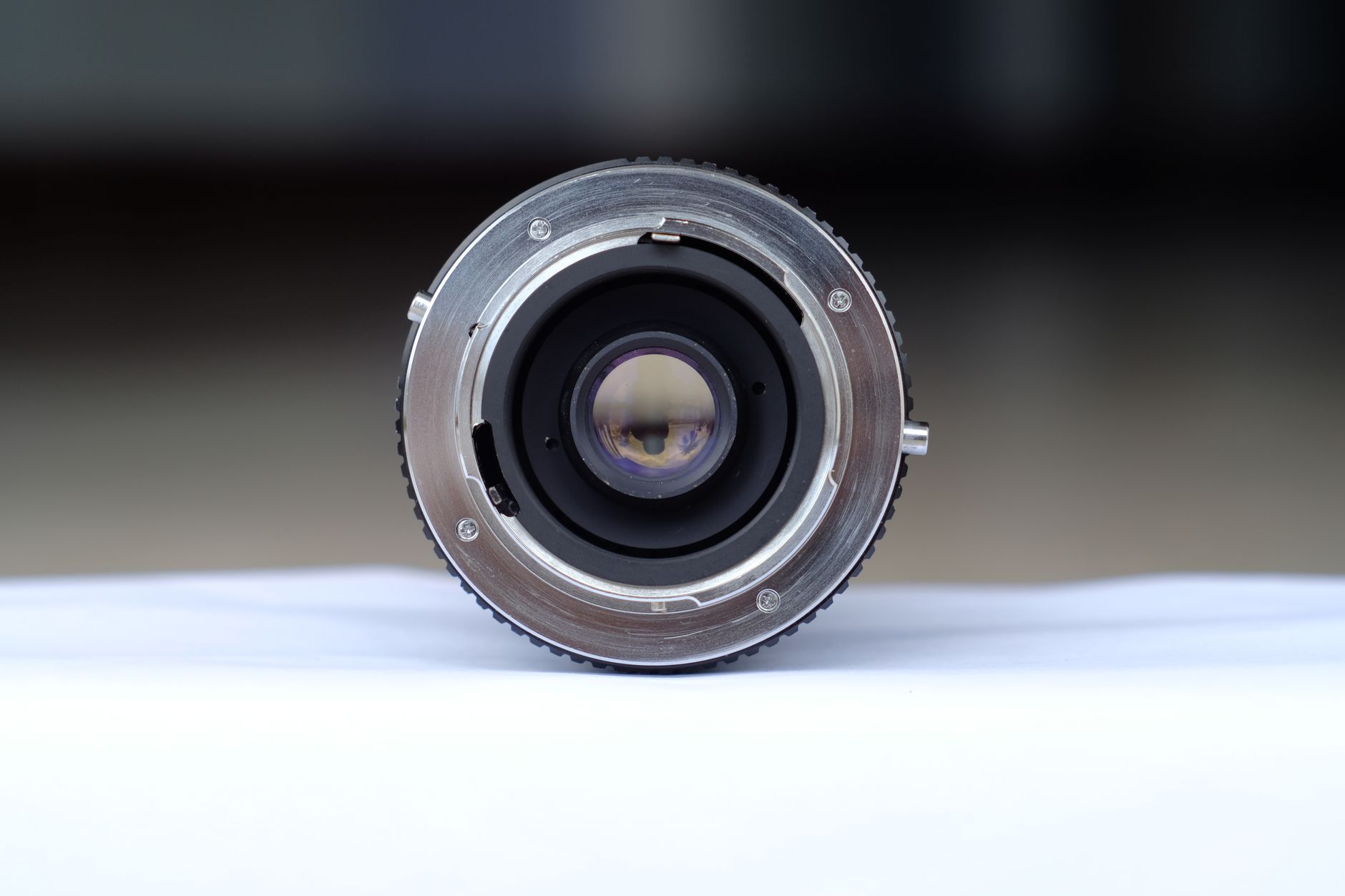
Photo by Nguyen Huy on Pexels
This $473 million piece of equipment is designed to find dark matter and dark energy, which are basically the two things we know the least about despite them making up 95% of the universe. We’re going to collect billions of galaxies' worth of data to prove that we still don't know what's going on, but now we'll have the spreadsheets to prove it. It’s a very expensive way to confirm our own ignorance at scale. The goal isn't to look at a star; it's to catalog 20 billion of them so we can ignore the ones that aren't behaving statistically significant ways.
Why Look at Stars When You Can Look at Code?
The real tragedy—or triumph, depending on how much you hate fresh air—is what this does to the astronomer. The romantic image of a scientist with a thermos of coffee staring into the abyss is dead. The new astronomer is a person in a cubicle, staring at a terminal, swearing at a machine learning model that just classified a speck of dust as a supernova. You don't "discover" a planet in 2025. You write an algorithm that identifies a recurring dip in a light curve across four terabytes of CSV files, and then you spend six months arguing about the error bars.
- Astronomers will spend 90% of their time debugging cloud computing costs.
- The "eureka" moment has been replaced by a "successful build" notification.
- Looking at the sky with your actual eyes is now considered a hobby for people who don't have enough RAM.
We are essentially building a giant CCTV system for the Milky Way. It’s the Ring doorbell of the cosmos. Every time a star flickers, the Rubin Observatory pings us. "Movement detected in Sector 4G." It’s usually nothing. A passing asteroid. A distant explosion that happened three billion years ago. But we have to log it. We have to store it. We have to make sure the data is clean for the next generation of researchers who will also not look at the sky.
What This Actually Means
This shift represents the final industrialization of curiosity. We’ve decided that the universe is too big to be appreciated, so we’ve opted to process it instead. By turning space into a stream of real-time alerts, we’ve managed to apply the same dopamine-loop mechanics of social media to the study of the ancient vacuum. It’s not about the depth of the observation; it’s about the breadth of the dataset. We are no longer explorers; we are auditors of the infinite.
Ultimately, the Rubin Observatory will probably find something incredible. It will likely reveal secrets about the expansion of the universe that change everything we think we know. But it will do so by burying us in so much information that the only way to understand the universe is to let a computer explain it to us. We’ve built a machine to see what we can’t, and in doing so, we’ve ensured that we’ll never actually have to look again.
Quick Answers
Can I see the pictures this camera takes?
Technically yes, but they’re so large you’d need 1,500 high-definition TV screens just to display one full-size image, so maybe just stick to Instagram.
What happens if the 10 million alerts go unread?
Nothing, the universe continues to expand in total indifference, but a PhD student somewhere will probably have a panic attack about their missed data points.
Is this going to find aliens?
It’s mostly going to find billions of rocks and distant explosions, but if an alien fleet moves fast enough, they’ll definitely end up as a very confusing blip in a 2027 data release.