The Great Flattening and the Great Regret
For a solid decade, the high priests of UI design told us that depth was a sin. They took away our glossy buttons, our faux-leather calendars, and our felt-green Game Center backgrounds, replacing them with a flat, sterile aesthetic that feels like living inside a spreadsheet. We were told this was 'modern.' We were told this was 'efficient.' What they didn't mention is that a flat interface has all the soul of a hospital waiting room at 3:00 AM.
Enter the reMarkable 2, a device marketed specifically to the person who thinks a regular iPad is too loud and a physical notebook is too heavy. It is the pinnacle of minimalist hardware: thin, gray, and aggressively silent. So, naturally, the first thing people did once they got their hands on it was figure out how to make it look like a sentient diary from a 1990s YA fantasy novel. The 'Tom Riddle’s Diary' mod is the ultimate middle finger to the cult of minimalism, and frankly, it’s the most honest thing to happen to consumer tech in years.
We are witnessing a desperate, frantic crawl back to skeuomorphism—the design practice of making digital things look like physical things. But this isn't the shiny plastic skeuomorphism of the early iPhone. This is 'Enchanted Object' design. People don't want a tool; they want a talisman. They want to feel like writing a grocery list is a high-stakes ritual involving ancient ink and questionable moral consequences.
Paying for the Privilege of Friction
There is a specific irony in spending $299 on a device, plus another $100 for a stylus that 'feels like pencil on paper,' only to spend your weekend installing custom Linux scripts so the screen looks like yellowed parchment. We have reached peak luxury when we pay four figures to simulate the experience of a $5 Moleskine. The reMarkable community is essentially a group of people who want to live in a library but are allergic to dust.
This isn't just about Harry Potter nostalgia. It’s a visceral rejection of the 'glass slab' era of computing. When every app on your phone looks like a colorful lozenge, the brain starts to rot. By hacking an e-ink tablet to mimic a magical artifact, users are trying to trick their dopamine receptors into believing that their 'Action Items for Q3' are actually forbidden spells. It is a coping mechanism for the crushing boredom of the digital workforce.
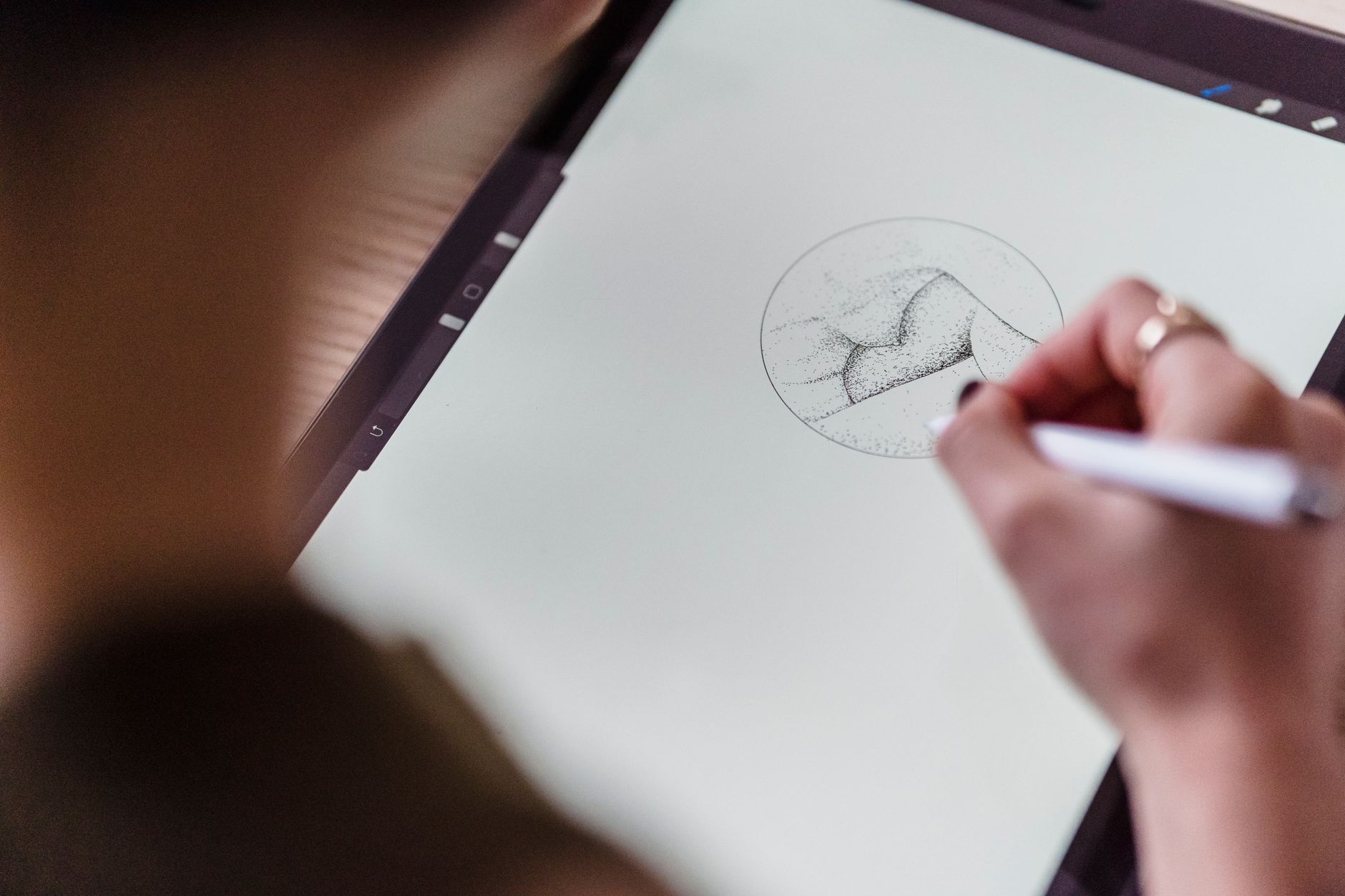
Photo by Michael Burrows on Pexels
Consider the mechanics of the mod itself. It adds visual weight. It adds 'dirt' and 'grime' to a pristine digital surface. We spent thirty years trying to get the dust out of the machine, and now we are manually coding the dust back in. It turns out that when you remove all the friction from life, you just slide off the edge of the world. People want their tech to have a history, even if that history is a localized .png file of a coffee stain.
The Rise of the Digital Haunted House
Designers call this 'digital skeuomorphism,' but it's really just a cry for help from people who miss having stuff. Our music is in the cloud, our books are on a server, and our money is a flickering number on a screen. We are physically untethered, so we overcompensate by making our remaining physical objects look like they were pulled out of a shipwreck.
- We buy 'distressed' digital filters for photos we took on 48-megapixel sensors.
- We download 'lo-fi' background noise to drown out the silence of our noise-canceling headphones.
- We skin our e-readers to look like Tom Riddle's diary because the alternative is admitting we are just staring at a highly organized pile of sand and electricity.
The industry is starting to notice. You can see it in the way 'Lo-Fi' aesthetics have moved from niche YouTube streams to mainstream product marketing. Companies are realizing that 'clean and simple' is actually just another word for 'boring and forgettable.' The next generation of gadgets won't be thinner; they'll be weirder. They'll have brass dials and wood grain and software that pretends to be sentient.
If a company released a tablet tomorrow that looked like an old leather-bound tome out of the box, they wouldn't be able to keep it in stock. We are tired of the future. The future is a white room with no corners. We want a past that never existed, delivered via a high-speed Wi-Fi connection and a USB-C charging port.
What This Actually Means
The 'Tom Riddle' mod is a canary in the coal mine for the death of 'Good Design' as defined by Silicon Valley. For years, the goal was to make tech invisible. But humans don't like invisible things; we like things we can grip, things that look like they have a story, and things that don't look like they were designed by an algorithm trying to save 2% on manufacturing costs.
We are moving into an era of 'maximalist utility.' Users are no longer content with a tool that just works; it has to perform. It has to act as a prop in the movie of our lives. If that means hacking a perfectly good Linux-based tablet to look like a cursed object that houses a fragment of a dark wizard's soul, so be it. It beats looking at another Helvetica-heavy UI for eight hours a day.
Ultimately, this trend proves that the 'Paperless Office' was a lie we told ourselves to feel sophisticated. We don't actually want to be paperless. We just want the benefits of digital storage without the aesthetic tax of living in a minimalist dystopia. We want the magic, we just don't want to carry the actual weight of the book.
Quick Answers
Is the 'Tom Riddle's Diary' mod actually functional?
It’s as functional as any other PDF template, meaning it does exactly what your brain tells it to do until you realize you're still just writing a grocery list.
Why is e-ink the target for this 'enchanted' aesthetic?
Because e-ink doesn't glow like a radioactive brick, making it the only screen technology that doesn't immediately shatter the illusion of being a 19th-century scholar.
Will Apple or Google ever adopt this 'gritty' design style?
Probably not, as their brand identities are built on the idea that the world is a sterile, fingerprint-free laboratory where everyone wears beige.
Does this mean minimalism is dead?
Minimalism isn't dead; it's just being haunted by the ghosts of the textures it tried to kill.