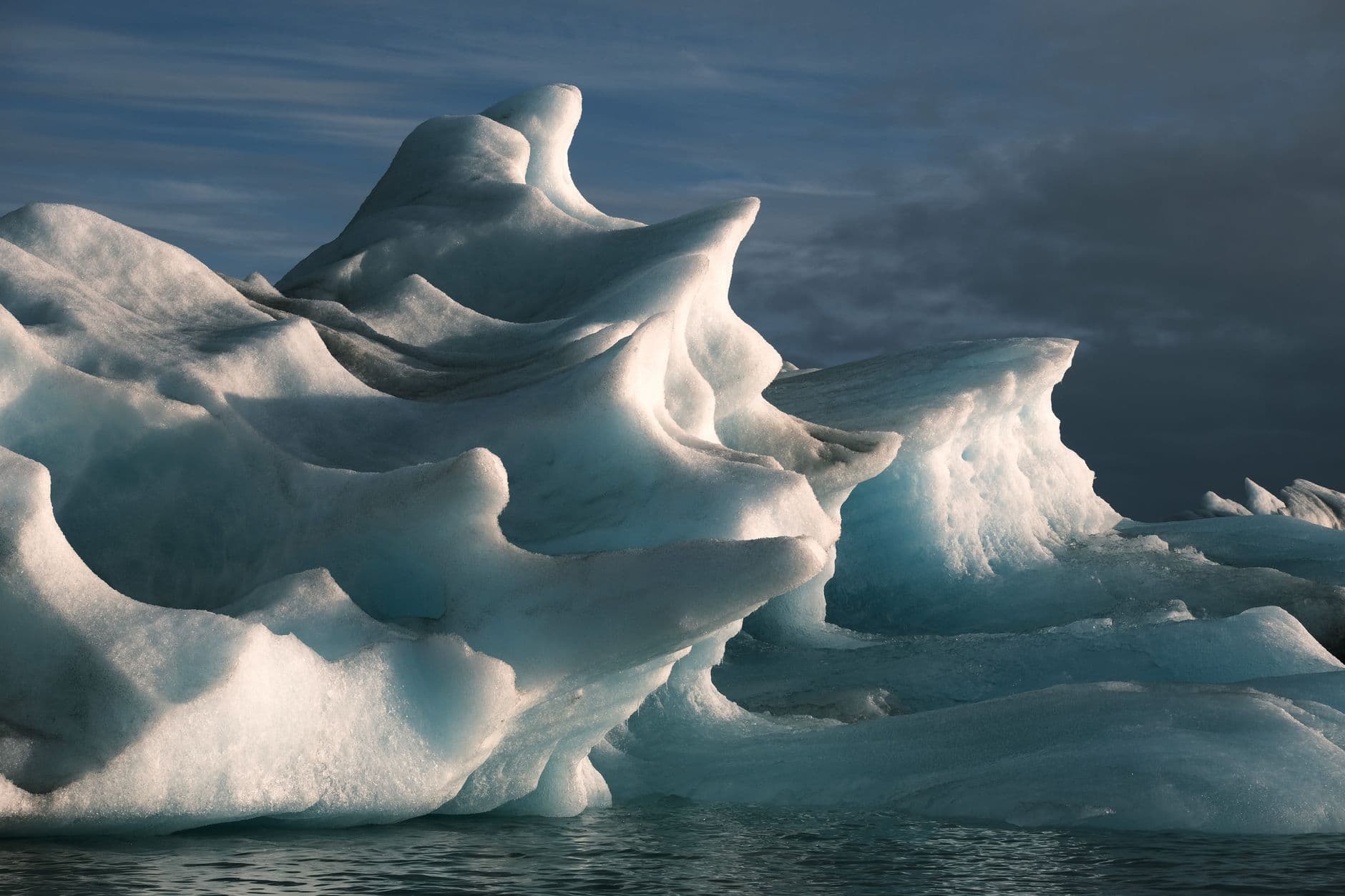
The climate conversation has officially entered its 'desperate garage DIY' phase. Having failed to curb carbon emissions through diplomacy, policy, or basic common sense, some scientists are now proposing that we simply cover the Arctic in giant sheets of glass. More specifically, they want to scatter trillions of hollow glass microspheres over the melting sea ice to mimic the reflective properties of healthy, white snow. It is the planetary equivalent of painting a rotting roof white and hoping the house doesn't collapse.
This is not a theoretical whiteboard exercise. A non-profit called Arctic Ice Project has already conducted tests using these silica beads on frozen lakes in Minnesota and Alaska. The logic is simple: white ice reflects up to 90% of sunlight, while dark open ocean absorbs 94% of that heat. If we lose the ice, we lose our shield. But trying to fix a global heat engine with a massive bag of synthetic craft glitter is a gamble that ignores how oceans actually work.
The Glitter Bomb in the Global Current
These hollow glass microspheres are incredibly small, measuring about 35 micrometers in diameter—thinner than a human hair. The pitch is that they are made of silica, which is just sand, so they must be harmless. But there is a massive difference between a sandy beach and a floating slurry of synthetic, light-bending dust suspended in the most fragile ecosystem on Earth.
Once you dump millions of tons of these beads onto the ice, they do not stay there. The ice melts, freezes, shifts, and eventually flows. These microspheres are destined for the global ocean conveyor belt—the massive, interconnected system of deep-ocean currents that regulates global climate. We have no actual data on what happens when you introduce a massive, artificial suspension of light-filtering silica into the upper layers of the water column.
It is not just about water movement; it is about light. Marine life at the poles relies on highly specific, seasonal light cues. Diatoms and phytoplankton—the literal foundation of the marine food web—depend on the dim light filtering through the ice to trigger their spring blooms. If you artificially block or scatter that light with a layer of engineered glass, you risk silencing the starter pistol for the entire Arctic food chain.
The Fallacy of the Safe Synthetic
Proponents of this passive geoengineering method love to use the word 'inert.' They claim that because silica is chemically inactive, it cannot poison the fish or bioaccumulate up the food chain. This is a remarkably narrow definition of safety. A material does not need to be toxic to be destructive.
Consider the zooplankton. These tiny organisms are filter feeders; they sweep the water for anything of a certain size and swallow it. If the water is thick with millions of floating glass beads, the zooplankton will eat them. They will not die of poisoning; they will starve with full stomachs because their digestive tracts are packed with indigestible glass bubbles.
Furthermore, we have to look at the scale of this proposal. To make any meaningful dent in Arctic albedo, we would need to cover an area of roughly 100,000 square kilometers. That requires producing, transporting, and dispersing about 15 million tons of these microspheres every single year. The carbon footprint of manufacturing that much specialized glass—which requires heating silica to over 1,000 degrees Celsius—ironically undermines the very cooling we are trying to achieve.
The Moral Hazard of the Quick Fix
Every time a geoengineering project gets funding, a lobbyist somewhere gets their wings. The moment we accept 'glassing the Arctic' as a viable backup plan, the pressure to stop burning fossil fuels drops. It creates a dangerous illusion of control, suggesting we can keep polluting as long as we have enough synthetic dust to throw at the symptoms.
- It shifts the burden of proof: Instead of proving a technology is 100% safe before deployment, we are rushing to deploy because the alternative is catastrophic.
- It creates geopolitical chaos: Who decides the optimal temperature of the Arctic? If Russia wants ice-free shipping lanes and Canada wants frozen permafrost, who controls the glass dispensers?
- It is irreversible: Once you scatter trillions of microscopic beads into the Arctic Ocean, you cannot vacuum them back up. There is no 'undo' button.
We are treating the Earth like a broken smartphone—hoping that if we shake it enough or stick it in a bowl of dry rice, it will somehow reboot. But the planetary system is not modular. You cannot patch the cryosphere without rewriting the code for the biosphere.
What This Actually Means
We have reached the point where the risks of doing nothing are starting to look comparable to the risks of doing something incredibly stupid. The Arctic is warming nearly four times faster than the rest of the planet. We are staring down ice-free summers by the 2030s, which will trigger feedback loops that we are entirely unprepared to handle.
But treating the symptoms with high-tech dust is a classic human error. We prefer complex, active engineering solutions over the simple, passive discipline of restraint. Building a giant mirror in the north is vastly more appealing to our species than simply leaving the oil in the ground.
Ultimately, the glass bead experiment is a monument to our own stubbornness. If we go ahead with it, we aren't saving nature; we are putting it on life support with a machine we don't fully know how to operate. We might cool the water, but we will likely poison the well in the process.
Quick Answers
Are these glass beads toxic to marine life?
Chemically, no, because they are made of silica. Physically, yes, as they can be ingested by filter-feeding zooplankton, blocking their digestive systems and disrupting the base of the marine food chain.
How much would this project cost?
Estimates suggest that treating a meaningful portion of the Arctic would cost upwards of $1 billion to $5 billion annually, not including the massive carbon footprint associated with manufacturing the glass.
Has this actually been tested in the ocean?
No. Testing has been restricted to small-scale trials on frozen lakes and land-based ice, meaning we have zero real-world data on how these beads behave in moving ocean currents.